

Morning routines for balanced blood sugar can steady blood sugar by working with your body’s natural hormone rhythms. Hydration, light movement, smart breakfast choices, and early stress control reduce morning glucose spikes, improve insulin sensitivity, and set up smoother energy all day.
Key takeaways
- Morning highs often come from the dawn phenomenon, not just what you ate.
- Start with water and a few minutes of movement to blunt early glucose rise.
- Eat a protein forward, high fiber breakfast; keep refined carbs small.
- Take a short post breakfast walk to reduce the glucose spike.
- Manage morning stress and sleep, since cortisol swings raise glucose.
- Watch caffeine, because it can raise glucose for some people with diabetes.
Why mornings are tricky for blood sugar
Many people wake up with higher glucose even if they didn’t eat late. A big reason is the dawn phenomenon, a natural early morning rise in hormones like cortisol and growth hormone that signals the liver to release glucose for energy. If your insulin response is reduced, as in type 1, type 2, or insulin resistance, that glucose rise shows up as higher morning numbers, which can feel frustrating or confusing.
In simple terms, your body is preparing you to wake up and function, and part of that preparation is pushing extra sugar into the bloodstream. Morning spikes can happen even with a perfect dinner the night before, so it’s not your fault, it’s biology. The good news is that steady morning habits like hydration, light movement, and a balanced breakfast can work with this rhythm to soften and manage those rises.
Simple Morning Routines For Balanced Blood Sugar
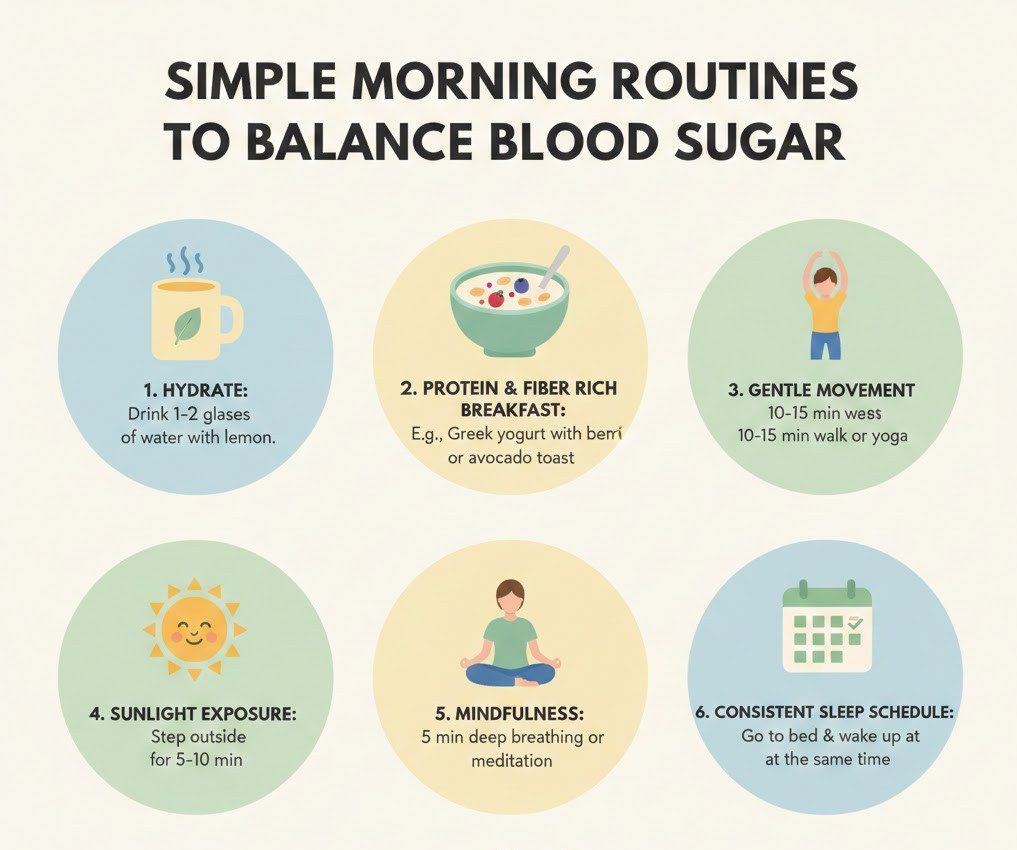
The first hour after waking sets your glucose “tone” for the day. These routines are easy, realistic habits that work with your natural hormone rhythm to reduce morning spikes and keep energy steadier. Pick a few and repeat them daily for the best effect.
1. Hydrate first, before anything else
After hours without fluids, your blood is slightly more concentrated, and that can make glucose readings look higher. Starting with water helps your kidneys clear excess sugar more efficiently and supports smoother circulation. Aim for one to two glasses right away. If you like, add a slice of lemon or a pinch of salt for taste. Try to drink water before tea or coffee so caffeine hits a hydrated system. This is a small habit, but over weeks it can noticeably soften that early glucose rise.
2. Get 5 to 10 minutes of gentle movement soon after waking
You do not need a hardcore workout to help your sugar. Even light movement tells your muscles to start using glucose for fuel, so less stays floating in the bloodstream. It also blunts the dawn phenomenon created by early morning hormones. Good options include an easy walk, stretching, a short yoga flow, marching in place, slow stair climbing, or a few body weight moves like sit to stands, wall push ups, or gentle squats. The key is to move consistently every morning, not to exhaust yourself.
3. Take sunlight and calm your nervous system
Morning stress spikes cortisol, and cortisol pushes glucose upward. Giving your body a calm start keeps that hormone surge from overshooting. Step outside or sit near a bright window for five to ten minutes. Natural light helps your body clock and supports better insulin sensitivity later in the day. Pair that with two to three minutes of slow breathing. For example, inhale for four seconds and exhale for six to eight. This simple reset can lower stress eating later and smooth out morning numbers.
4. Eat a protein forward, high fiber breakfast
Breakfast is where many people accidentally start a sugar roller coaster. Start with protein and fiber first, then add carbs in smaller, slower digesting portions. Protein slows digestion, fiber reduces spikes, and you stay full longer so you are less likely to crash mid morning. Examples that work well are eggs or tofu with vegetables plus a small whole grain roti or toast, curd or Greek yogurt with nuts and berries, lentil or chickpea chilla with salad, or oats cooked with milk or soy milk plus chia and peanut butter. If you enjoy fruit, pair it with protein instead of eating it alone.
5. If you drink coffee, pair it with food and keep it moderate
Some people see a glucose bump from caffeine, especially when coffee is the first thing in the stomach. Caffeine can raise adrenaline and cortisol, which may push sugar higher. The easiest fix is timing. Have coffee after breakfast or alongside a protein based snack. Also keep added sugar minimal. If you suspect coffee spikes you, try a smaller cup, half caf, or shift it later by one hour and see if your readings improve.
6. Walk for 10 to 15 minutes after breakfast
This is one of the most reliable ways to reduce the post breakfast spike. When you walk, your muscles pull glucose out of the blood without needing much insulin. Even a slow stroll counts. You can walk inside your house, around your neighborhood, or while doing errands. If walking is not possible, light activity like sweeping, washing dishes, or tidying up right after eating can still help. Think of it as telling your body to use the fuel you just ate.
7. Do a quick check in, not a perfection check
Morning numbers are not a moral score. They are data. Many people wake up high because of biology, not because they did something wrong at dinner. If you monitor glucose, look at patterns across a week instead of reacting to one day. Notice what happens when you hydrate, move, change breakfast, or delay coffee. If fasting sugar stays high even with a solid routine, that is a good moment to talk to your clinician about medication timing, sleep, or other causes.
What to Do If Your Fasting Sugar Is Still High
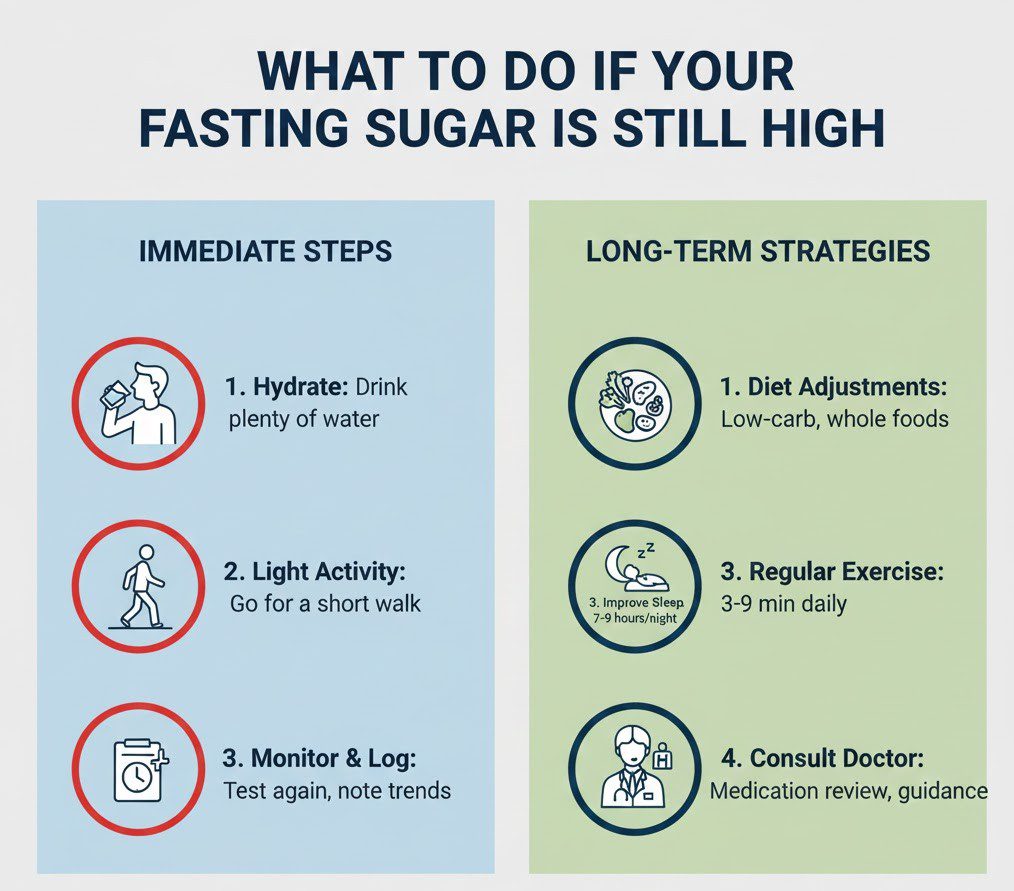
Even with a solid routine, some people still wake up high because overnight hormones and liver glucose release can overpower insulin sensitivity. Think of routines as a strong baseline, then use the steps below to troubleshoot patterns instead of chasing single readings.
- Check your dinner timing and carbs: A late, carb heavy dinner can extend glucose elevation into the night. Try eating dinner earlier when possible, and keep the biggest starch portions at lunch instead. At dinner, build the plate around vegetables and protein, then add a smaller serving of slower carbs like beans, whole grains, or sweet potato.
- Review bedtime snacks: If you need a snack, make it small and protein or fiber based. Examples are a spoon of peanut butter, a handful of nuts, plain yogurt, or a boiled egg. Sugary or refined snacks before bed often push fasting numbers up, while a balanced snack may help steady overnight glucose.
- Prioritize sleep quality: Poor or short sleep raises cortisol and reduces insulin sensitivity the next morning. A consistent bedtime, dark cool room, and limiting screens right before sleep can improve fasting trends over time.
- Look at stress and recovery: Chronic stress keeps cortisol elevated, which signals the liver to release more glucose overnight. Simple evening decompression, like a short walk, stretching, journaling, or slow breathing, can reduce the hormonal push that drives morning highs.
- Talk to your clinician about medication timing: If fasting sugars stay high most mornings, it may be a medication or insulin timing issue rather than a routine problem. Many people need adjustments such as shifting evening meds, changing doses, or adding a long acting option. Do not change meds on your own, use your data to guide a conversation.
Best Breakfast Plate for Stable Glucose
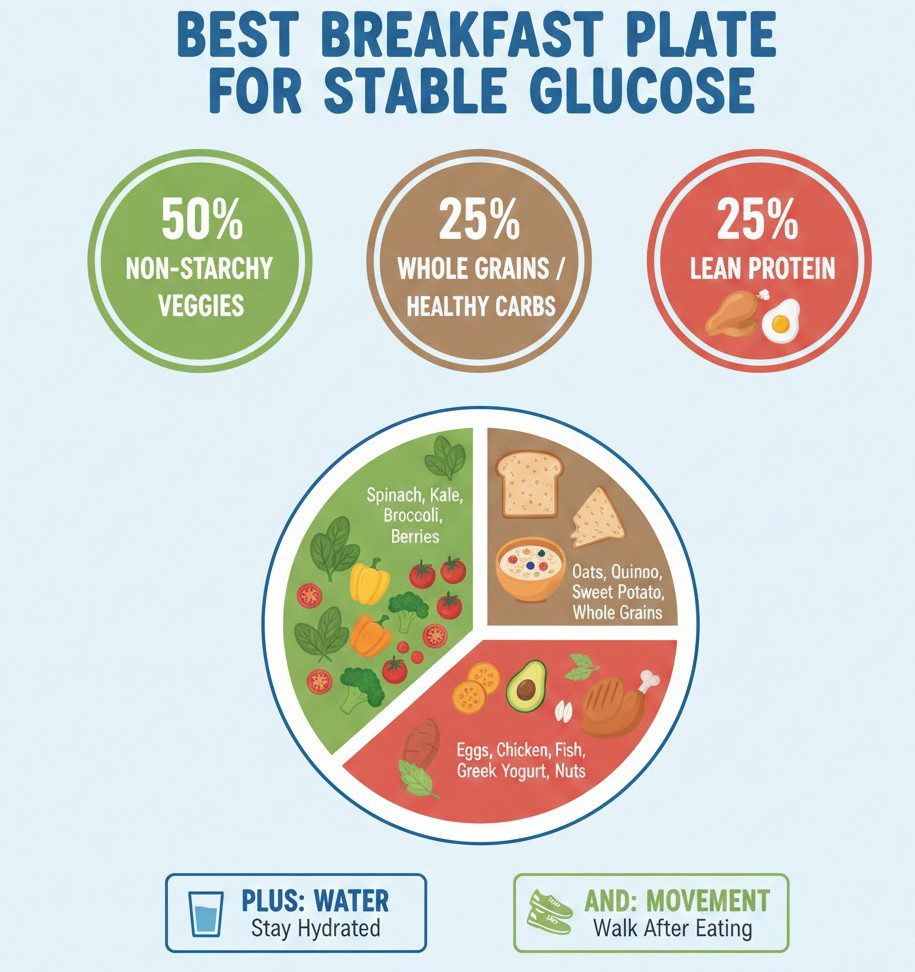
A steady breakfast is less about “no carbs” and more about smart balance. When you build your plate around protein, fiber rich plants, and slow carbs, your body digests food more slowly and the glucose rise stays smoother. Use the same simple plate idea at breakfast that diabetes guidelines recommend for any meal.
- Start with protein first: Aim for about 15-25 g protein at breakfast, such as eggs, Greek yogurt/curd, tofu, paneer, lentils, or beans. Protein slows digestion, reduces the glucose spike, and keeps you full longer.
- Add high fiber carbs, not refined ones: Choose slow, fiber rich carbs like oats, whole grain roti or toast, beans, chickpeas, berries, apples, or extra vegetables. Keep portions moderate so carbs support energy without creating a sharp rise.
- Include healthy fat: Add a small serving of nuts, seeds, avocado, olive oil, or nut butter. Healthy fats steady glucose by slowing absorption and also reduce cravings later in the morning.
- Half your plate non starchy veggies when possible: Spinach, tomatoes, mushrooms, cucumbers, peppers, or leftover sabzi add bulk and fiber with very little glucose impact, making the meal more balanced.
- Keep added sugar low: Skip sweet cereals, pastries, fruit juice, flavored yogurt, and sugary chai or coffee addins. These raise glucose quickly and lead to crashes later.
- If you want fruit, pair it: Have fruit with protein or fat like nuts, yogurt, or eggs instead of eating it alone. Pairing slows absorption and prevents a rapid spike.
- Portion guide (simple): Build your plate as ½ fiber/veg, ¼ protein, ¼ slow carbs, plus one small thumb size serving of healthy fat.
Morning Mistakes That Spike Blood Sugar
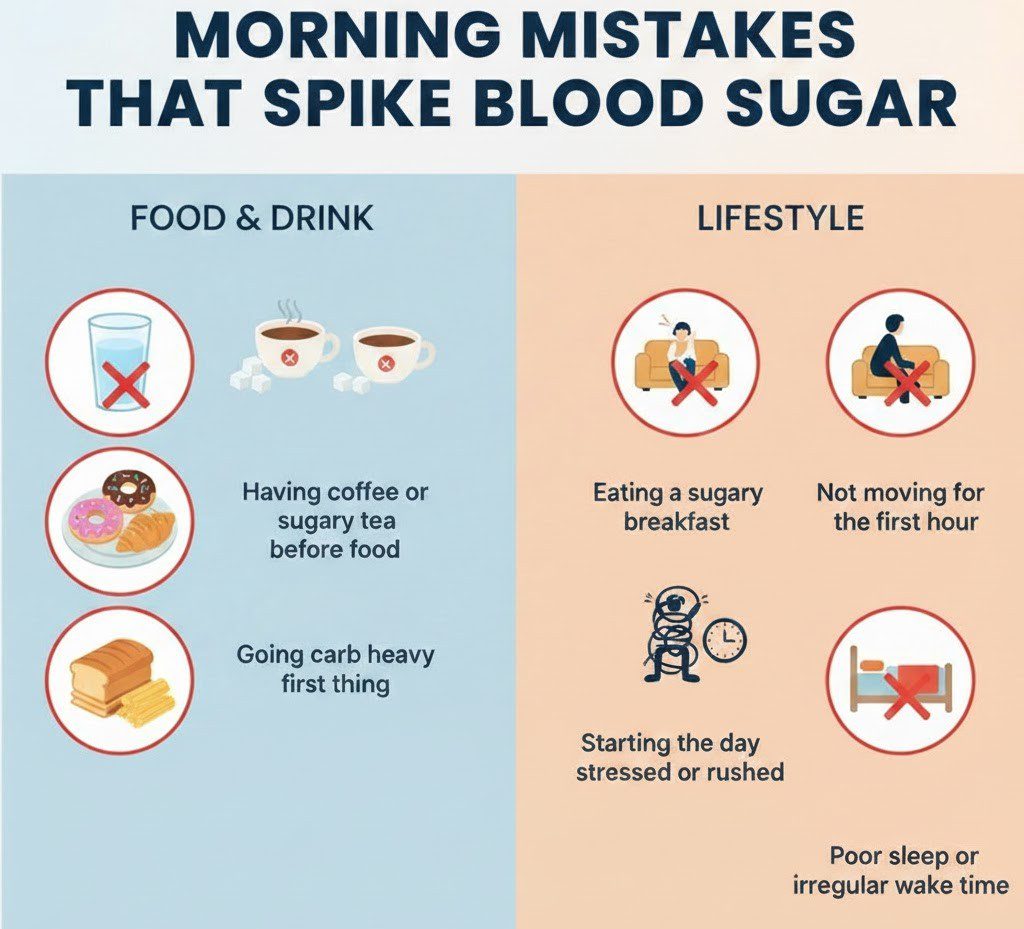
Even with a good routine, a few common morning habits can quietly push glucose higher and set you up for energy crashes later. The goal isn’t to be perfect, it’s to notice patterns and swap small behaviors that make a big difference.
- Skipping water after waking: Overnight dehydration makes blood more concentrated, so glucose reads higher and clears more slowly. Starting the day dry can exaggerate fasting numbers.
- Having coffee or sugary tea before food: Caffeine on an empty stomach can raise cortisol and adrenaline, which tells your liver to release more glucose. Sweetened drinks double the spike.
- Eating a sugary breakfast: Pastries, sweet cereals, flavored yogurt, white toast with jam, or fruit juice cause a rapid rise, then a crash that triggers hunger and cravings.
- Going carb heavy first thing: Large portions of refined carbs in the morning spike more because insulin sensitivity is often lower early due to the dawn phenomenon.
- Not moving for the first hour: Sitting still lets morning hormones push glucose up without any muscle use to pull sugar out of the blood. Even 5-10 minutes of light movement helps.
- Skipping breakfast when your body doesn’t like it: Some people see glucose climb mid morning if they don’t eat, because the liver keeps releasing sugar. If your numbers rise when you skip, a small balanced breakfast may work better.
- Starting the day stressed or rushed: Checking work messages immediately, rushing to get ready, or waking anxious boosts cortisol, and cortisol raises blood sugar even before you eat.
- Poor sleep or irregular wake time: Short or low quality sleep increases insulin resistance the next morning, making fasting sugar higher and breakfast spikes sharper. Consistency matters as much as duration.
Best Low Spike Breakfast Ideas
A low spike breakfast is built for steady energy, not a fast sugar rush. The trick is simple: start with protein, add fiber rich plants, keep carbs slow and moderate, and include a little healthy fat. Here are easy combinations you can rotate through the week.
- Egg or tofu bhurji with veggies and a small whole grain roti
- Plain Greek yogurt or curd with nuts/seeds and berries or apple slices
- Lentil or chickpea chilla with salad or leftover sabzi
- Oats cooked in milk or soy milk with chia/flax and peanut butter
- Paneer or grilled tofu with cucumber and tomato, plus a few nuts
- Moong dal cheela or sprouts salad with lemon and a small fruit
- Vegetable omelet with avocado or a light olive oil drizzle
- Savory daliya (broken wheat) cooked with veggies, served with a boiled egg or curd on the side
- Unsweetened sattu drink with roasted chana or a handful of nuts
- Leftover dal with a small portion of brown rice or millet and vegetables
Sample Morning Routine
A short, consistent morning routine can help reduce dawn phenomenon spikes, improve insulin sensitivity, and set up smoother energy for the rest of the day. Here’s a simple routine you can follow:
- 0-2 minutes (Hydrate): Drink 1-2 glasses of water after waking, optionally with lemon or a pinch of salt.
- 2-7 minutes (Gentle Movement): Do a slow walk, light stretching or yoga, marching in place, stair walking, or wall pushups or sit to stands.
- 7-9 minutes (Sunlight and Breathing): Get natural light and do 2 minutes of slow breathing (inhale 4 seconds, exhale 6-8 seconds).
- 9-15 minutes (Balanced Breakfast): Build a plate with one quarter protein, half vegetables or other fiber rich foods, one quarter slow carbs, and a small portion of healthy fat.
- 15-20 minutes (Post Breakfast Movement): Take a 10-15 minute walk or do gentle household movement such as tidying or washing dishes.
When to Seek Medical Help
Even with good morning routines, some signs mean you should speak with a healthcare professional. Seek medical advice if you notice:
- Fasting blood sugar stays high most mornings despite a good routine.
- Post meal glucose continues rising even after walking or activity.
- Frequent symptoms like excessive thirst, urination, fatigue, or blurry vision.
- Morning spikes worsen even when diet and activity are controlled.
- Uncertainty about medication timing or dosage adjustments.
- Sudden low blood sugar (hypoglycemia) or high sugar emergencies with severe symptoms.
Conclusion
Morning routines that work with your body’s early hormone rise can keep blood sugar steadier all day. Start by drinking water right after waking and doing 5-10 minutes of light movement to blunt the dawn phenomenon spike. Eat a protein forward, high fiber breakfast with slow carbs and a little healthy fat, and keep refined carbs and added sugar small. If you drink coffee or tea, have it after breakfast since caffeine can raise glucose in some people. Finish with a 10-15 minute walk or gentle chores to flatten the post breakfast rise, and if fasting sugars stay high often, review dinner, sleep, stress, and medication timing with your doctor.
FAQs
Why is my blood sugar high in the morning even if I ate a healthy dinner?
This is often due to the dawn phenomenon, a natural early morning rise in hormones like cortisol and growth hormone that signal the liver to release glucose. It’s normal, and morning routines like hydration and light movement can help manage it.
How soon after waking should I check my blood sugar?
If you monitor fasting glucose, it’s best to check after hydration but before breakfast to get a baseline. Patterns over a week matter more than a single reading.
Can coffee or tea affect my morning blood sugar?
Yes, caffeine can raise glucose in some people. To reduce spikes, drink coffee or tea after breakfast and avoid added sugar.
What should I eat for a low spike breakfast?
Focus on protein, fiber rich vegetables, slow digesting carbs, and a small amount of healthy fat. Examples: eggs or tofu with veggies, Greek yogurt with nuts and berries, oats with chia and peanut butter.
Is a short walk after breakfast really necessary?
Yes. 10-15 minutes of walking or light activity helps muscles absorb glucose without relying on insulin, reducing post breakfast spikes.
What if my fasting sugar remains high despite good habits?
High fasting sugar may be due to overnight liver glucose release, stress, poor sleep, or medication timing. Discuss patterns with your doctor rather than chasing single readings.
How long do I need to follow a morning routine to see results?
Consistency matters more than perfection. Many people notice improvements in 1-2 weeks, but full stabilization may take longer depending on individual insulin sensitivity and lifestyle.
Can skipping breakfast affect blood sugar?
For some, skipping breakfast can trigger mid morning spikes as the liver continues to release glucose. A balanced breakfast usually stabilizes morning levels.
How can I make my morning routine easier on busy days?
Even 5-10 minutes of hydration, movement, and sunlight makes a difference. You can also prep a quick balanced breakfast the night before.
When should I seek medical help?
See a healthcare professional if fasting blood sugar stays high, post meal spikes persist, you have frequent symptoms like thirst or fatigue, or if you’re unsure about medication timing.
References
- Amar Hospital. (2025, September 19). Simple Morning Routine to Help Control Diabetes. Retrieved November 27, 2025, from https://amarhospital.com/morning-routine-for-diabetes/
- Diabetes management: How lifestyle, daily routine affect blood sugar. (2024, January 6). Mayo Clinic. Retrieved November 27, 2025, from https://www.mayoclinic.org/diseases-conditions/diabetes/in-depth/diabetes-management/art-20047963
- 8 Things You Can Do Each Morning to Control Your Diabetes. (n.d.). Altais. Retrieved November 27, 2025, from https://altais.com/blog/8-things-you-can-do-each-morning-to-control-your-diabetes/
- Manaker, L. (2025, September 29). Morning Habits to Lower Blood Sugar and Inflammation. EatingWell. Retrieved November 27, 2025, from https://www.eatingwell.com/anti-inflammatory-habits-before-noon-for-diabetes-11811244
- These Morning Habits Will Help Regulate Your Blood Sugar Levels Naturally. (2025, June 23). NDTV. Retrieved November 27, 2025, from https://www.ndtv.com/health/these-morning-habits-will-help-regulate-your-blood-sugar-levels-naturally-8738453

Dr. Aaron Liu, MD, FACE, is an endocrinologist with 14 years of experience managing diabetes, insulin resistance, and metabolic disorders. He completed his medical training at Columbia University Vagelos College of Physicians and Surgeons and fellowship in Endocrinology at Mount Sinai Hospital. Dr. Liu’s expertise lies in integrating precision nutrition and advanced glucose monitoring for improved glycemic control. He has authored continuing education modules for the American Diabetes Association on lifestyle-based diabetes reversal.