
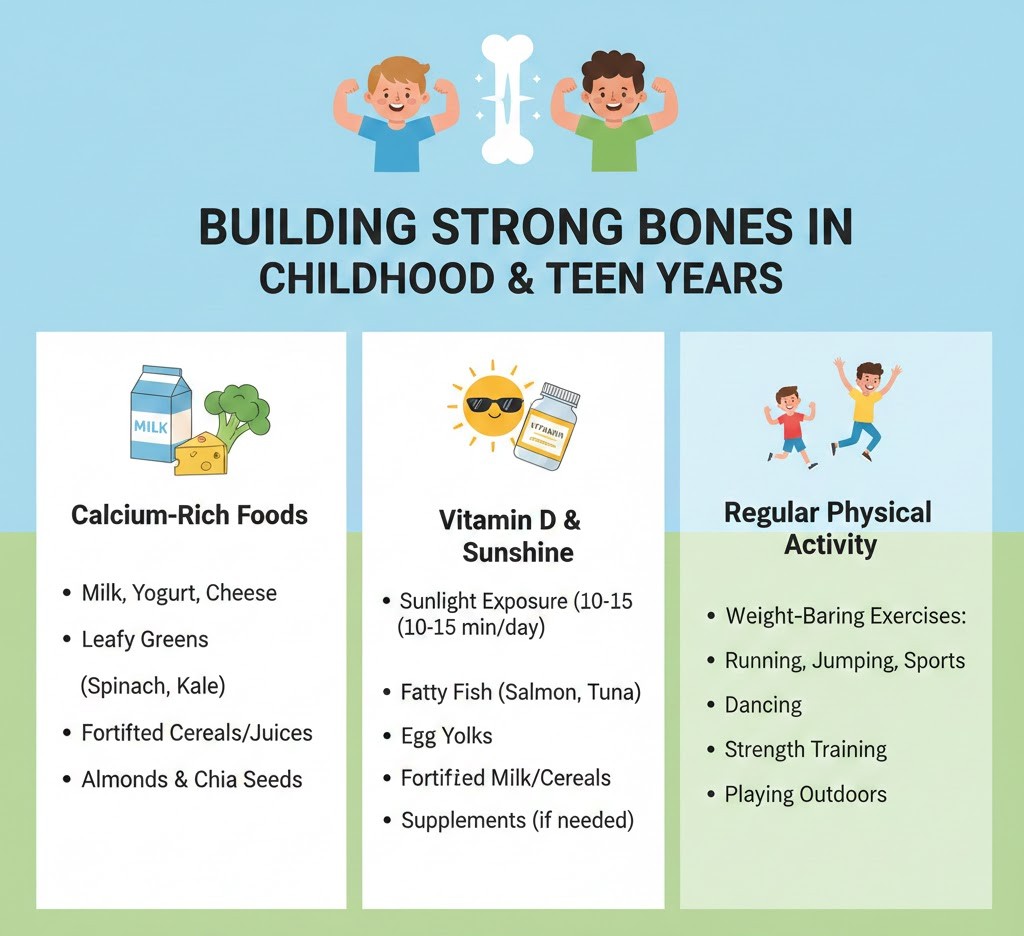
Strong bones start with what you do early on, so it’s important to build strong bones in childhood and the teen years. During these formative years, bones grow rapidly, reaching peak mass by the late teens to early twenties. Habits developed during this time set the stage for bone health decades later. Proper nutrition, regular physical activity, and healthy lifestyle choices are essential to help children and teens achieve their full skeletal potential. Investing in bone strength early ensures better mobility, fewer fractures, and reduced risk of osteoporosis later in life.
Key Takeaways
- Up to 90% of peak bone mass is built by age 18 in girls and age 20 in boys.
- Adequate calcium, vitamin D, protein, and magnesium are essential for skeletal growth.
- Weight bearing and muscle strengthening exercise is crucial for stimulating bone formation.
- Poor diet, inactivity, smoking, and excessive soda consumption can weaken bones early.
- Building strong bones early reduces the risk of fractures and osteoporosis in adulthood.
- Healthy habits developed in youth support long term mobility, posture, and physical performance.
How Bones Grow: Understanding the Process
Bone growth during childhood and adolescence is a dynamic process that builds the foundation for lifelong skeletal health. Bones are not fixed structures, they are living tissues that continuously grow, repair, and remodel. Understanding how bones develop highlights why proper nutrition, exercise, and healthy habits are essential during the early years.
Bones grow in two main ways:
1. Longitudinal Growth (Bones Getting Longer)
This type of growth increases height and occurs at the growth plates soft cartilage areas at the ends of long bones such as the arms, legs, and fingers.
During this process
- Growth plates slowly turn cartilage into hardened bone.
- New cartilage forms at one end while the other end turns into mature bone (ossification).
- This cycle continues until the growth plates close.
Growth timing differs by sex:
- Girls (ages 14-16): Growth plates close earlier due to earlier puberty.
- Boys (ages 16-18): Growth plates stay open longer, supporting later growth spurts.
2. Appositional Growth (Bones Getting Thicker and Stronger)
This growth increases bone width and overall strength, helping the body handle increased weight and physical activity.
During this process:
- Bone-building cells add new layers to the outer surface.
- Bone-removing cells reshape older bone from the inside.
- This balance keeps bones strong without becoming too heavy.
Appositional growth is most active during childhood, puberty, and teen years, and continues into early adulthood as the body reaches full size.
Why Is Bone Development Important in Childhood & Teens
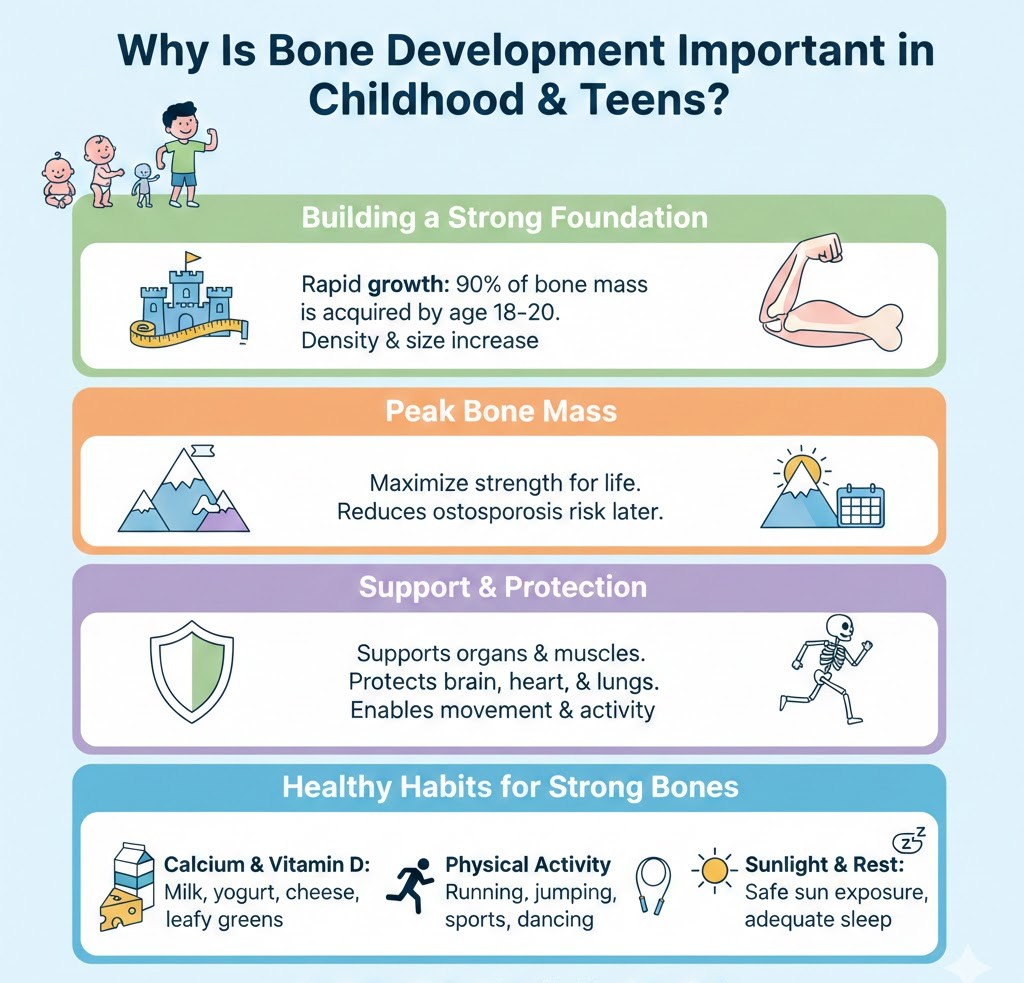
Bone development during childhood and adolescence is essential because this is when the skeleton grows the fastest. The body continuously builds and remodels bone tissue, but the rate of formation is highest before adulthood. Up to 90% of peak bone mass is achieved by the late teenage years, making this period the most influential stage for lifelong skeletal health. Achieving maximum bone density early provides several lifelong benefits:
- Reduced fracture risk during sports, play, and later stages of life
- Improved posture and alignment during rapid growth phases
- Greater physical strength and endurance
- Lower likelihood of osteoporosis and brittle bones after age 50
- Enhanced balance and coordination, reducing the risk of falls
- Better protection for joints, lowering the likelihood of early arthritis
During childhood and adolescence, bones respond more effectively to nutrition, physical activity, and healthy habits than at any other time in life. This means positive actions like eating calcium rich foods or participating in weight bearing exercises have a stronger, long lasting impact.
Consequences of Poor Bone Development in Youth
A lack of proper bone growth during childhood and adolescence can have serious and lasting effects. These early years are a crucial window for building strong, dense bones that support the body throughout adulthood. When this opportunity is missed, the skeleton enters adulthood with a weaker foundation, increasing the risk of multiple health concerns. Children and teens who do not achieve optimal bone mass may experience:
- Early onset bone loss
- Recurrent injuries, especially fractures
- Delayed growth or poor posture
- Long term complications such as osteoporosis, chronic pain, and reduced mobility
Since the bones built during youth serve as a lifelong reserve, supporting strong bone development early is one of the most valuable investments in long term health, mobility, and overall well being.
Causes and Risk Factors for Poor Bone Development
Healthy bone growth depends on proper nutrition, physical activity, hormones, and overall health. When any of these areas are disrupted, it can negatively impact the strength and density of developing bones. Several biological causes and lifestyle related risk factors can interfere with bone formation, slow growth, or increase the likelihood of weakened bones during childhood and adolescence. Understanding these early helps parents and caregivers take preventive steps to support strong skeletal development.
Biological Causes
These are internal factors that directly affect how bones grow and develop. They often influence bone formation at a cellular or hormonal level and may require medical attention or long term monitoring.
- Vitamin D or calcium deficiency limits bone mineralization and prevents bones from hardening properly.
- Hormonal imbalances affect growth plate activity and bone formation.
- Chronic illnesses like celiac disease, asthma, or kidney disorders can interfere with nutrient absorption and bone metabolism.
- Genetic factors play a role, especially if there is a family history of osteoporosis or naturally weak bones.
Risk Factors
These lifestyle related habits or environmental influences increase the likelihood of poor bone development. While not direct causes, they weaken bone strength over time and make the skeleton more vulnerable.
- Sedentary lifestyle or lack of active play reduces bone stimulation and strength.
- Excessive screen time leads to low physical activity and poor posture.
- Unbalanced diets high in processed foods, soda, or caffeine decrease nutrient intake essential for bone growth.
- Low body weight caused by poor nutrition or restrictive eating habits weakens the skeleton.
- Smoking or early alcohol use in older teens negatively affects bone formation.
- Inadequate sunlight exposure limits vitamin D production.
Signs and Symptoms of Weak Bone Health in Youth
Weak bone health in children and teens can be difficult to identify, as early changes often occur silently without immediate discomfort. Recognizing subtle warning signs can help parents take action before problems progress or lead to serious complications.
- Frequent fractures from minor injuries
- Slow healing after bone or joint injuries
- Poor posture or slouching
- Bone pain in legs, arms, or back
- Fatigue, weakness, or low energy during activity
- Delayed growth or shorter than expected height
- Brittle nails or dental problems related to mineral deficiencies
Natural Ways to Build Strong Bones in Childhood and Teen
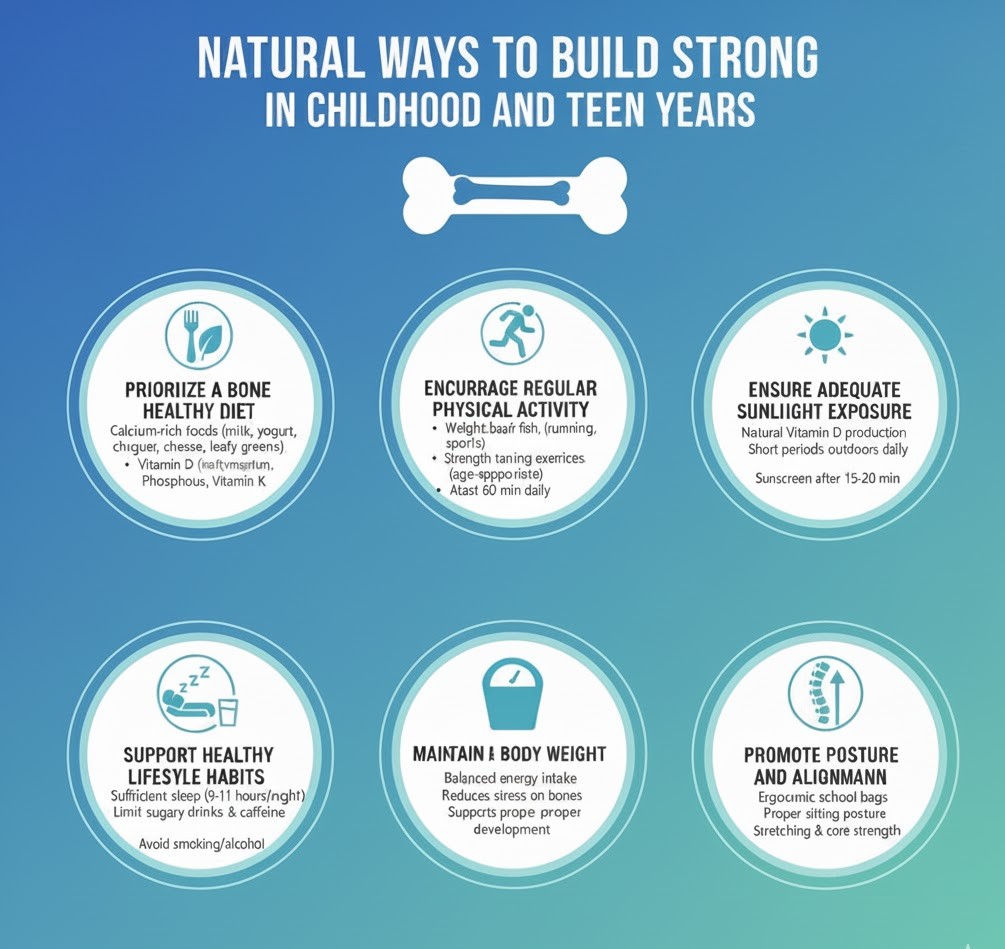
Building strong bones during childhood and adolescence requires a combination of good nutrition, regular physical activity, and healthy lifestyle habits. Because these years are the most critical for achieving peak bone mass, even small daily choices can have a big impact on long term skeletal health. Encouraging positive habits early helps children and teens develop strong, dense bones that will support their bodies throughout adulthood.
1. Prioritize a Bone Healthy Diet
A balanced diet is the foundation of strong bone development. Children and teens should regularly include foods rich in bone building nutrients.
- Calcium Rich Foods: Milk, yogurt, cheese, tofu, almonds, chia seeds, broccoli, and fortified cereals provide the minerals needed to strengthen and harden bones.
- Vitamin D Sources: Egg yolks, salmon, fortified milk, and safe sunlight exposure help the body absorb calcium efficiently.
- Protein Sources: Lean meats, fish, lentils, eggs, beans, and dairy products support bone structure and repair.
- Magnesium and Vitamin K: Leafy greens, nuts, whole grains, and avocados contribute to bone mineralization and proper calcium utilization.
2. Encourage Regular Physical Activity
Movement plays a major role in bone development. Weight bearing and resistance exercises stimulate bone forming cells, encouraging bones to grow thicker and stronger. Effective bone building activities include:
- Running or jogging
- Jumping rope
- Basketball, soccer, or tennis
- Dancing and gymnastics
- Hiking or active outdoor play
- Playground climbing
- Light strength training for older children and teens
Active play is especially important for younger children because it exposes bones to short bursts of impact, which triggers natural bone growth.
3. Ensure Adequate Sunlight Exposure
Sunlight helps the body produce vitamin D, which is essential for calcium absorption and strong bone development. Encouraging children and teens to spend 10 to 20 minutes outdoors most days with safe, moderate exposure can significantly support healthy bone growth. Regular sunlight boosts bone density and contributes to overall physical development. Outdoor play also increases movement, giving bones the stimulation they need to grow stronger. In areas with limited sunlight, vitamin D rich foods or doctor recommended supplements may be necessary to maintain healthy levels.
4. Support Healthy Lifestyle Habits
Healthy daily habits play a major role in building strong bones during childhood and adolescence. Simple routines followed consistently can enhance bone growth, improve nutrient absorption, and protect developing bones from long term damage.
- Ensure enough sleep: Growth hormone, which supports bone and muscle development, is released during deep sleep. Children and teens need 8 to 10 hours of rest each night.
- Promote proper hydration: Water helps transport nutrients like calcium and magnesium throughout the body.
- Limit sugary drinks and soda: Excess sugar and caffeine can weaken bone structure over time.
- Reduce screen time: More screen time often means less physical activity, which is crucial for bone development.
5. Maintain a Healthy Body Weight
Maintaining a healthy body weight is essential for proper bone development during childhood and adolescence. Extreme underweight or overweight conditions can negatively impact growing bones and interfere with overall skeletal strength.
- Being underweight reduces bone mass, slows bone formation, and increases the risk of fractures due to limited nutrient intake.
- Being overweight places excess pressure on growing bones and joints, which may lead to posture issues, joint pain, and early wear on developing bone structures.
A balanced, healthy weight supports optimal bone growth, improves stability, and reduces the likelihood of injuries as children become more active.
6. Promote Posture and Alignment
Good posture is an often overlooked but essential part of healthy bone development. Proper posture ensures that the spine, hips, and joints are correctly aligned, reducing strain on the bones and supporting muscles. Encourage children to sit, walk, and stand with good posture to help their bodies grow evenly and efficiently. Strong posture habits improve:
- Spinal alignment, allowing the backbone to grow and function correctly
- Muscle balance, helping muscles work together and support bone growth
- Overall skeletal strength, reducing stress and preventing early bone problems
Developing good posture early helps prevent long term issues such as chronic back pain, spinal curvature, and weakened bone structure.
Signs That Require a Doctor’s Evaluation
While many bone health issues can be improved through nutrition and lifestyle changes, some warning signs indicate that professional medical help may be necessary. Early evaluation can prevent long term complications and ensure that a child or teen receives the right support for healthy bone development.
Children and teens should see a healthcare professional if they experience:
- Multiple fractures from minor falls or routine activities
- Persistent bone, back, or joint pain that does not improve
- Noticeably delayed growth or slower physical development compared to peers
- Symptoms of vitamin D deficiency such as fatigue, muscle aches, or frequent illness
- Difficulty with physical activity, frequent weakness, or reduced endurance
Conclusion
Building strong bones during childhood and adolescence is essential for lifelong health. These years are when bones grow fastest and reach peak density, making nutrition, exercise, and healthy habits extremely important. Adequate calcium, vitamin D, protein, and minerals support bone formation, while weight bearing activities help bones grow stronger. Poor diet, inactivity, and unhealthy habits can weaken developing bones, increasing the risk of fractures and osteoporosis in adulthood. Recognizing early signs like fractures, poor posture, or fatigue can help parents take timely action. Establishing healthy routines early creates a strong skeletal foundation that supports mobility, posture, and long term wellness.
FAQs
Why is bone development so important during childhood and adolescence?
These years are when bones grow the fastest and gain most of their lifelong density. Strong bone development during this period reduces the risk of fractures, poor posture, and osteoporosis later in life.
What nutrients are essential for healthy bone growth?
Calcium, vitamin D, protein, magnesium, and vitamin K are key. These nutrients help build bone structure, improve mineral absorption, and support overall growth.
How much physical activity do children and teens need for strong bones?
At least 60 minutes of daily activity is recommended. Weight bearing exercises like running, jumping, playing sports, and climbing help strengthen bones naturally.
Can poor diet or lifestyle habits weaken bones early?
Yes. High soda intake, processed foods, excessive screen time, smoking, and inactivity can significantly weaken developing bones and increase long term health risks.
How can parents tell if a child has weak bone health?
Warning signs include frequent fractures, bone or joint pain, slow healing, fatigue during activity, poor posture, or delayed growth. If these signs appear, medical evaluation is recommended.
How much calcium does a child or teen need daily?
Most children and teens need 1,000-1,300 mg of calcium per day, depending on age. Dairy, leafy greens, tofu, nuts, and fortified foods are excellent sources.
How important is sunlight for bone health?
Sunlight helps the body produce vitamin D, which is essential for absorbing calcium. About 10-20 minutes of sunlight most days supports healthy bone development.
Can strength training help build stronger bones in teens?
Yes, when done safely and age appropriately. Light strength training increases bone density, improves posture, and supports muscle growth.
What is peak bone mass, and when is it reached?
Peak bone mass is the maximum strength and density bones can achieve. Most girls reach it by 18-20 years, and boys by 20-25 years.
When should a child see a doctor for bone related concerns?
If they experience repeated fractures, persistent bone pain, slow growth, difficulty with activity, or symptoms of vitamin D deficiency, a healthcare provider should be consulted.
References
- Bone Growth and Development | Biology for Majors II. (n.d.). Lumen Learning. Retrieved November 13, 2025, from https://courses.lumenlearning.com/wm-biology2/chapter/bone-growth-and-development/
- Pitone, M. L. (n.d.). 3 Ways to Build Strong Bones | Nemours KidsHealth. Retrieved November 13, 2025, from https://kidshealth.org/en/parents/strong-bones.html
- Top Tips for Parents to Build Strong Bones in Kids’ Growth. (2024, September 26). Kidsville Pediatrics. Retrieved November 13, 2025, from https://www.kidsvillepeds.com/blog/1222126-building-strong-bones-in-childhood-a-parents-guide-to-bone-health/
- Youth and Bone Health: Why Building Strong Bones Early Matters. (2024, August 21). MSK Doctors. Retrieved November 13, 2025, from https://search.mskdoctors.com/doctors/ella-mcaleese/articles/youth-and-bone-health-why-building-strong-bones-early-matters

Aubrey Carson is an RDN with 9 years across hospital, outpatient, and private practice settings. They earned an MS in Clinical Nutrition from Tufts University – Friedman School (2016) and completed a Dietetic Internship at Mayo Clinic. Aubrey specializes in micronutrient assessment, evidence-based supplementation, and patient education. Their work includes CE presentations for the Academy of Nutrition and Dietetics and collaborations with Mass General Brigham on nutrition education resources.