
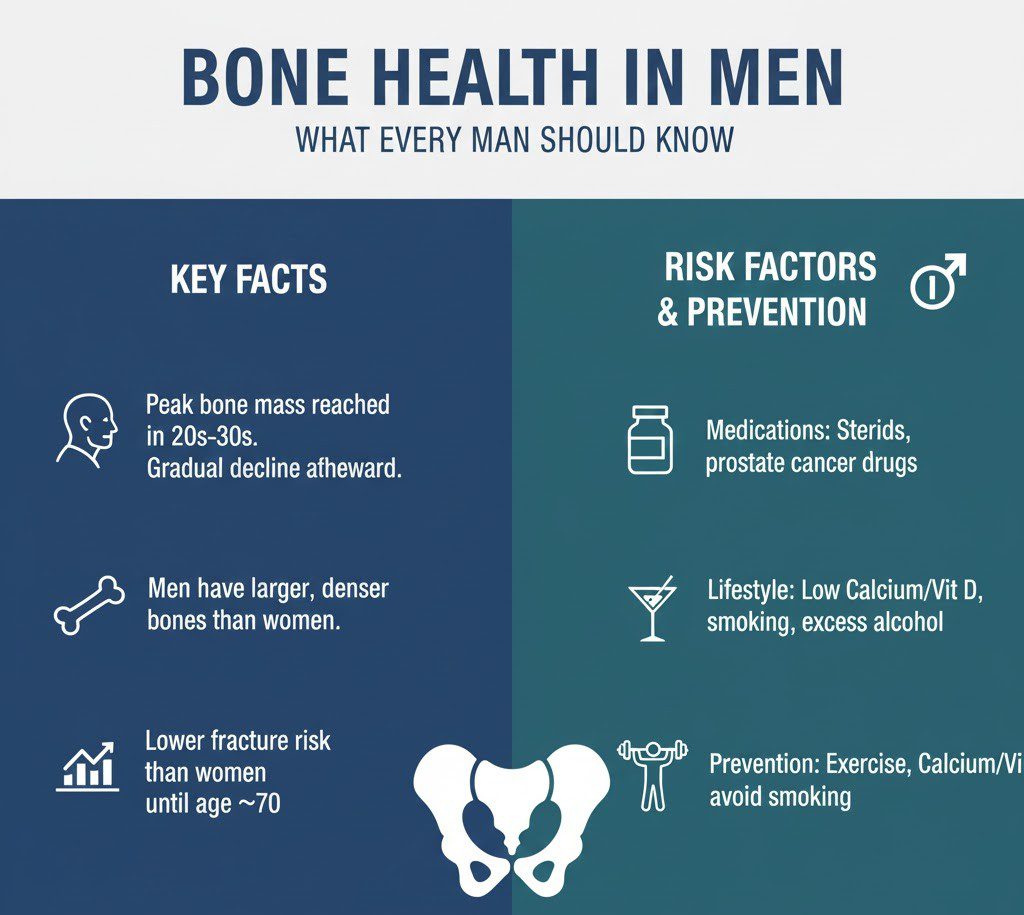
Bone Health in Men is often overlooked, yet it’s vital for strength, mobility, and long-term independence. Although osteoporosis is seen as a women’s issue, men also face gradual bone loss often diagnosed late, with serious complications. Aging, hormone shifts, poor diet, and inactivity can speed bone weakening, raising fracture risk. Learning how to protect bone health at every stage helps men stay active, resilient, and healthy for life.
Key Takeaways
- Men begin to lose bone mass gradually after age 30, raising the risk of osteoporosis and fractures later in life.
- Adequate calcium, vitamin D, and regular resistance or weight bearing exercise are essential to maintain strong bones.
- Hormonal balance, particularly healthy testosterone levels, supports bone density and strength.
- Smoking, heavy alcohol use, poor nutrition, and inactivity accelerate bone loss and weaken skeletal structure.
- Regular bone density screening and early prevention strategies help detect issues before serious complications arise.
- A balanced diet rich in protein, magnesium, and vitamin K promotes bone formation and long term skeletal health.
What Is Bone Health
Bone health refers to the strength, structure, and density of bones that support the body and protect vital organs. Throughout life, bones constantly renew themselves through a process called remodeling, where old tissue is replaced with new. Peak bone mass is usually reached by age 30, after which gradual bone loss begins. Maintaining strong bones requires adequate calcium and vitamin D, regular weight-bearing exercise, and healthy hormone levels. Good bone health ensures stability, mobility, and overall vitality, helping prevent fractures and osteoporosis while supporting an active, independent lifestyle as you age.
Why Bone Health Matters in Men
Bone health is vital for men because strong bones provide the foundation for movement, balance, and overall physical strength. As men age, gradual bone loss can weaken this foundation, increasing the risk of fractures, especially in the hips, spine, and wrists. Fractures in older men often take longer to heal and can lead to reduced mobility, chronic pain, and loss of independence. Unlike women, men are less likely to be screened for osteoporosis, meaning problems are often detected only after a significant injury has occurred.
Healthy bones also support muscle function, joint stability, and posture, all of which are essential for maintaining an active lifestyle. Poor bone health can affect everyday activities such as walking, lifting, or even standing for long periods. Beyond physical limitations, weakened bones can contribute to fatigue and reduced confidence in movement. Protecting bone health helps men stay strong, active, and independent throughout life, reducing the risk of long term complications and improving overall quality of life.
Causes and Risk Factors of Bone Loss in Men
Bone loss in men develops gradually and is often unnoticed until a fracture or weakness occurs. It results from a combination of biological causes that directly weaken bones and risk factors that increase the likelihood of bone deterioration. Recognizing both is essential for prevention and early treatment.
Causes of Bone Loss in Men
These are the underlying biological and medical factors that directly weaken bones by disrupting the natural process of bone renewal. They lead to reduced bone density, slower bone formation, and greater fragility over time.
- Aging: After the age of 30, bone building cells become less active while bone breakdown continues, leading to gradual density loss.
- Low Testosterone Levels: Reduced hormone levels with age slow down bone formation and increase bone fragility.
- Vitamin D or Calcium Deficiency: A lack of these nutrients prevents proper bone mineralization, making bones weak and brittle.
- Chronic Health Conditions: Illnesses such as diabetes, hyperthyroidism, kidney disease, or digestive disorders interfere with calcium absorption and bone renewal.
- Certain Medications: Long term use of corticosteroids, cancer therapies, or anticonvulsants can directly damage bone tissue and accelerate bone loss.
Risk Factors for Bone Loss in Men
These are lifestyle habits or conditions that increase the likelihood of bone loss but do not directly cause it. They can speed up bone deterioration when combined with aging, poor nutrition, or hormonal changes.
- Family History: Having a close relative with osteoporosis increases your likelihood of developing weak bones.
- Sedentary Lifestyle: Lack of regular physical activity, especially weight bearing or resistance exercise, reduces bone density and flexibility.
- Smoking and Excessive Alcohol Use: Both impair calcium absorption and slow bone building activity over time.
- Poor Diet: Consuming too few nutrients and too many processed foods weakens bone structure and reduces muscle support.
- Low or High Body Weight: Being underweight limits bone strength, while obesity adds stress on bones and joints.
- Inadequate Sun Exposure: Limited sunlight lowers vitamin D levels, which are vital for calcium absorption.
- Chronic Stress and Poor Sleep: High cortisol levels and insufficient rest can interfere with the body’s natural bone repair process.
By identifying these causes and risk factors early, men can take proactive measures such as improving diet, staying active, monitoring hormone levels, and getting regular screenings. These small but consistent habits play a major role in preventing bone loss and maintaining skeletal health throughout life.
Signs and Symptoms of Poor Bone Health
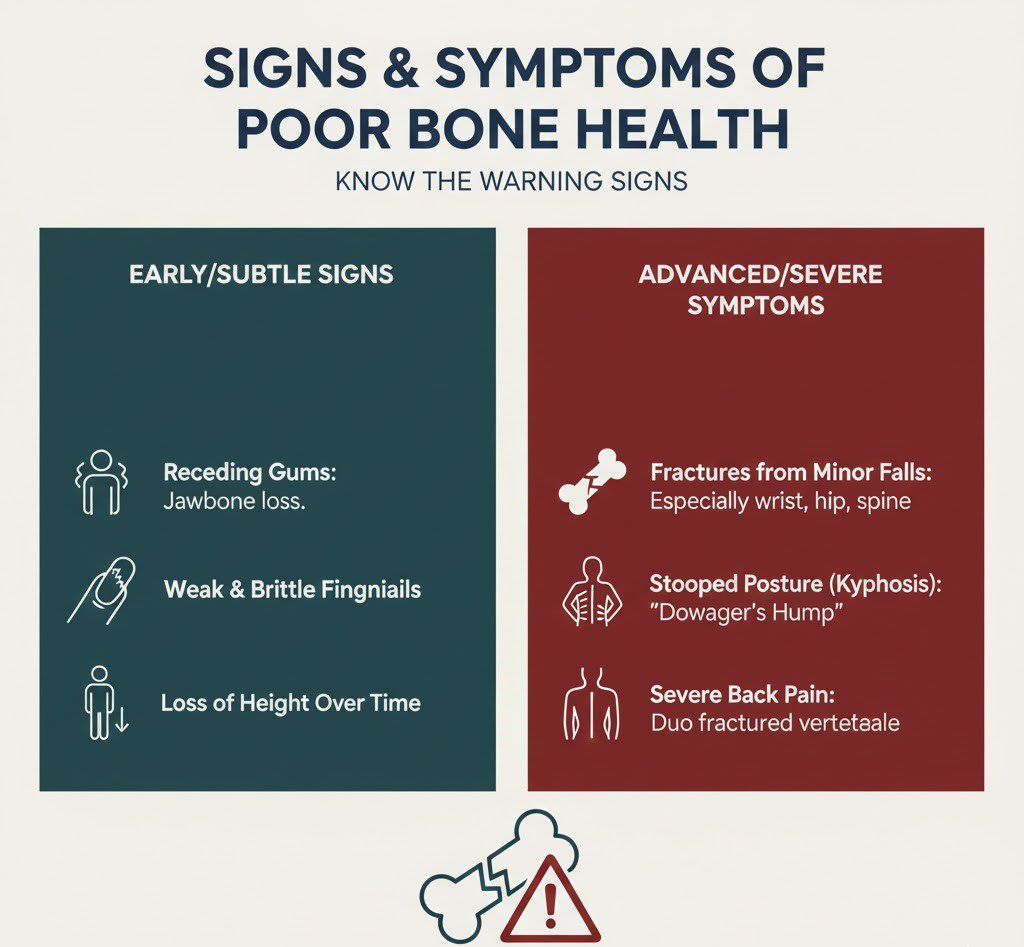
Bone problems often progress quietly over time, making it difficult to notice changes until the bones have already weakened. Early warning signs can be subtle but are important indicators that your bone density or strength may be declining. Recognizing these symptoms helps men take proactive steps to protect bone health and prevent serious complications like fractures or osteoporosis.
- Frequent Back Pain: Persistent or unexplained back pain may indicate small spinal fractures caused by weakened bones.
- Loss of Height: Gradual shrinking or a noticeable reduction in height can result from compression fractures in the spine.
- Stooped or Bent Posture: A curved back or slouched posture often develops as spinal bones weaken and collapse.
- Bone Fractures from Minor Injuries: Breaking a bone easily from a simple fall or light impact can signal low bone density.
- Reduced Grip Strength: Weaker hand strength may be an early sign of bone and muscle loss.
- Joint or Hip Pain: Ongoing discomfort in the hips, knees, or wrists can indicate weakened supporting bones.
- Balance Issues or Frequent Falls: Poor bone health often coincides with muscle weakness and reduced coordination.
- Brittle Nails and Weak Teeth: Fragile nails or dental problems can reflect low calcium and mineral deficiencies affecting bone health.
- Fatigue and Weakness: Persistent tiredness may accompany weakened bones and reduced muscle support.
Natural Ways to Strengthen Bone Health in Men
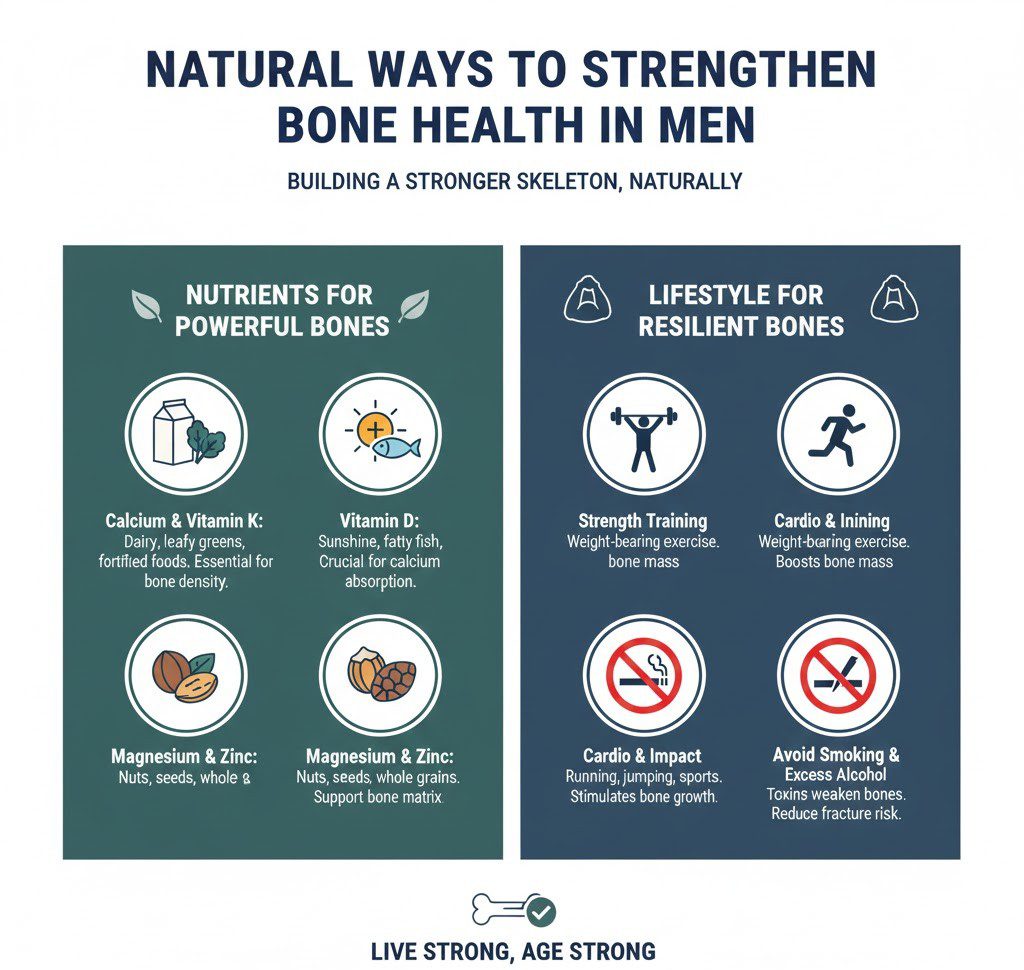
Maintaining strong bones is not just about preventing bone loss, it’s about building resilience, flexibility, and long term vitality. Bone strength depends on a combination of good nutrition, regular exercise, and healthy lifestyle habits that support the body’s natural bone building process. Making consistent, small changes in daily life can significantly improve bone density and reduce the risk of fractures as men age.
- Eat a Balanced, Bone Healthy Diet: Include foods rich in calcium, vitamin D, protein, and magnesium. Dairy products, leafy greens, almonds, tofu, fish with edible bones, and fortified cereals are excellent choices for bone nourishment.
- Get Enough Vitamin D: Spend 10-20 minutes in sunlight several times a week or include vitamin D rich foods like salmon, egg yolks, and fortified milk. If you have limited sun exposure, consider a supplement after consulting your doctor.
- Engage in Weight Bearing and Resistance Exercises: Activities such as brisk walking, jogging, stair climbing, push ups, and light weightlifting help stimulate bone formation and improve balance and coordination.
- Avoid Smoking and Limit Alcohol Consumption: Both tobacco and alcohol interfere with calcium absorption and slow down the production of new bone tissue.
- Maintain a Healthy Weight: Being underweight can lead to lower bone mass, while excess weight can put additional stress on bones and joints. Aim for a balanced, stable weight to protect your skeleton.
- Monitor Hormone Levels: Testosterone plays a crucial role in bone strength. If you experience fatigue, muscle loss, or bone pain, ask your healthcare provider to check your hormone levels.
- Ensure Proper Sleep and Stress Management: Quality sleep allows the body to rebuild and repair bone tissue, while chronic stress raises cortisol levels that can weaken bones over time.
- Stay Hydrated and Limit Processed Foods: Adequate hydration supports nutrient transport to bones, while reducing salt, caffeine, and sugary foods helps prevent calcium depletion.
Diagnosis and Testing for Bone Health
Early diagnosis of bone loss helps prevent fractures and serious complications. Regular testing allows men to detect changes in bone density before symptoms appear. Diagnosis usually begins with a medical evaluation, where the doctor reviews risk factors, symptoms, and medical history, followed by a physical exam to check posture, height changes, and spine alignment early indicators of weakened bones. If bone loss is suspected, the doctor may recommend diagnostic tests such as bone density scans or blood work to confirm bone health status and determine the extent of bone thinning or damage.
Here are the common test for bone health:
- Bone Mineral Density (BMD) Test / DEXA Scan: A quick, painless scan that measures bone strength in areas like the hips, spine, and wrists. It helps detect early bone thinning or osteoporosis.
- Blood Tests: Used to check calcium, vitamin D, testosterone, and thyroid levels that affect bone metabolism.
- Urine Tests: Measure bone turnover markers to show how fast bones are breaking down and rebuilding.
- X rays or MRI Scans: Help identify hidden fractures or structural bone changes.
Who Should Get Tested
Bone health testing is especially important for men who may be at higher risk of bone loss or fractures. You should consider a bone density test if you:
- Are over the age of 50: Bone density naturally declines with age, increasing the risk of osteoporosis.
- Have a family history of osteoporosis or frequent fractures: Genetics play a key role in bone strength and fragility.
- Have low testosterone levels or hormonal imbalances: Reduced hormone levels weaken bone structure and slow bone formation.
- Take long term medications like corticosteroids or cancer treatments: These can interfere with calcium absorption and bone metabolism.
- Live a sedentary lifestyle or have poor nutrition: Lack of exercise and low intake of calcium or vitamin D significantly increase the risk of bone thinning.
Lifestyle Tips for Better Bone Health
Building and maintaining healthy bones requires consistent effort and smart lifestyle choices. Small daily habits can make a big difference in protecting bone density and preventing fractures as men age.
- Stay Active: Include weight bearing and resistance exercises such as walking, jogging, climbing stairs, or lifting weights to strengthen bones and improve balance.
- Eat Nutritious Meals: Choose foods rich in calcium, vitamin D, protein, and magnesium such as dairy products, leafy greens, nuts, and fish to support bone growth and renewal.
- Get Sunlight Exposure: Spend a few minutes outdoors each day to boost vitamin D production, which helps your body absorb calcium effectively.
- Avoid Harmful Habits: Quit smoking, limit alcohol intake, and reduce processed foods high in salt and caffeine, as they can weaken bones over time.
- Maintain a Healthy Weight: Keep your body weight in a balanced range. Being underweight lowers bone mass, while obesity puts extra stress on bones and joints.
- Manage Stress and Sleep Well: Quality sleep and stress control are vital for bone repair and hormone balance. Practice relaxation, deep breathing, or yoga to reduce stress levels.
- Schedule Regular Checkups: Get routine bone density screenings and discuss your risk factors with your healthcare provider to detect early bone changes.
When to Consult Your Doctor
Even with a healthy lifestyle, it’s important to recognize when professional medical advice is needed. Early consultation with a doctor can help diagnose bone problems before they lead to serious complications.
You should talk to your healthcare provider if you:
- Experience frequent or unexplained back or joint pain
- Notice a loss of height or changes in posture
- Suffer fractures from minor falls or injuries
- Feel persistent fatigue, weakness, or stiffness
- Have risk factors such as low testosterone, long term medication use, or family history of bone disease
Conclusion
Bone health is vital for men’s strength, mobility, and long term well being, yet it’s often overlooked. As men age, hormonal changes, poor nutrition, and inactivity can lead to gradual bone loss, increasing the risk of fractures and osteoporosis. Maintaining strong bones requires balanced nutrition, adequate calcium and vitamin D, regular weight bearing exercise, and healthy lifestyle habits. Early testing and medical checkups help detect bone thinning before serious damage occurs. By managing risk factors, avoiding smoking and excessive alcohol, and staying active, men can preserve bone density, prevent fractures, and maintain independence and vitality throughout life.
FAQs
At what age do men start losing bone density?
Men typically begin to lose bone mass after the age of 30. The process is gradual, but bone loss can accelerate with poor nutrition, low testosterone, and lack of exercise.
Can men develop osteoporosis?
Yes. Although more common in women, men can also develop osteoporosis, especially after age 50 or if they have risk factors like hormonal imbalance or prolonged medication use.
What are the main nutrients needed for strong bones?
Calcium, vitamin D, protein, magnesium, and vitamin K are essential for maintaining bone strength and supporting bone formation.
How can exercise improve bone health?
Weight bearing and resistance exercises such as walking, jogging, or lifting weights stimulate bone growth, improve density, and enhance balance to prevent falls.
Does testosterone affect bone health?
Yes. Testosterone supports bone density by promoting bone tissue formation. Low levels can lead to weaker bones and a higher risk of fractures.
How can I tell if my bones are getting weaker?
Early signs include frequent back pain, loss of height, posture changes, or fractures from minor falls. A bone density test can confirm bone strength.
What foods should men avoid for better bone health?
Limit processed foods, excessive salt, caffeine, and sugary drinks, as they can reduce calcium absorption and weaken bone structure over time.
How often should men get their bone density checked?
Men over 50, or those with risk factors like family history or long term steroid use, should discuss bone density testing with their doctor every 1-2 years.
Can lifestyle changes reverse bone loss?
While severe bone loss can’t be fully reversed, a healthy diet, regular exercise, adequate vitamin D, and medical treatment can significantly slow or stop further loss.
When should I consult a doctor about my bone health?
Consult your doctor if you experience unexplained pain, frequent fractures, or height loss, or if you have risk factors such as low testosterone, poor nutrition, or chronic illness.
References
- Bone health: Tips to keep your bones healthy. (n.d.). Mayo Clinic. Retrieved November 12, 2025, from https://www.mayoclinic.org/healthy-lifestyle/adult-health/in-depth/bone-health/art-20045060
- Five Things Men Should Know About Bone Health. (n.d.). Rebound Orthopedics & Neurosurgery. https://www.reboundmd.com/news/five-things-men-should-know-about-bone-health
- How to Have Healthy Bones | Bone Health Tips for All Ages. (n.d.). PACE Hospitals. Retrieved November 12, 2025, from https://www.pacehospital.com/how-to-have-health-bones

Aubrey Carson is an RDN with 9 years across hospital, outpatient, and private practice settings. They earned an MS in Clinical Nutrition from Tufts University – Friedman School (2016) and completed a Dietetic Internship at Mayo Clinic. Aubrey specializes in micronutrient assessment, evidence-based supplementation, and patient education. Their work includes CE presentations for the Academy of Nutrition and Dietetics and collaborations with Mass General Brigham on nutrition education resources.