
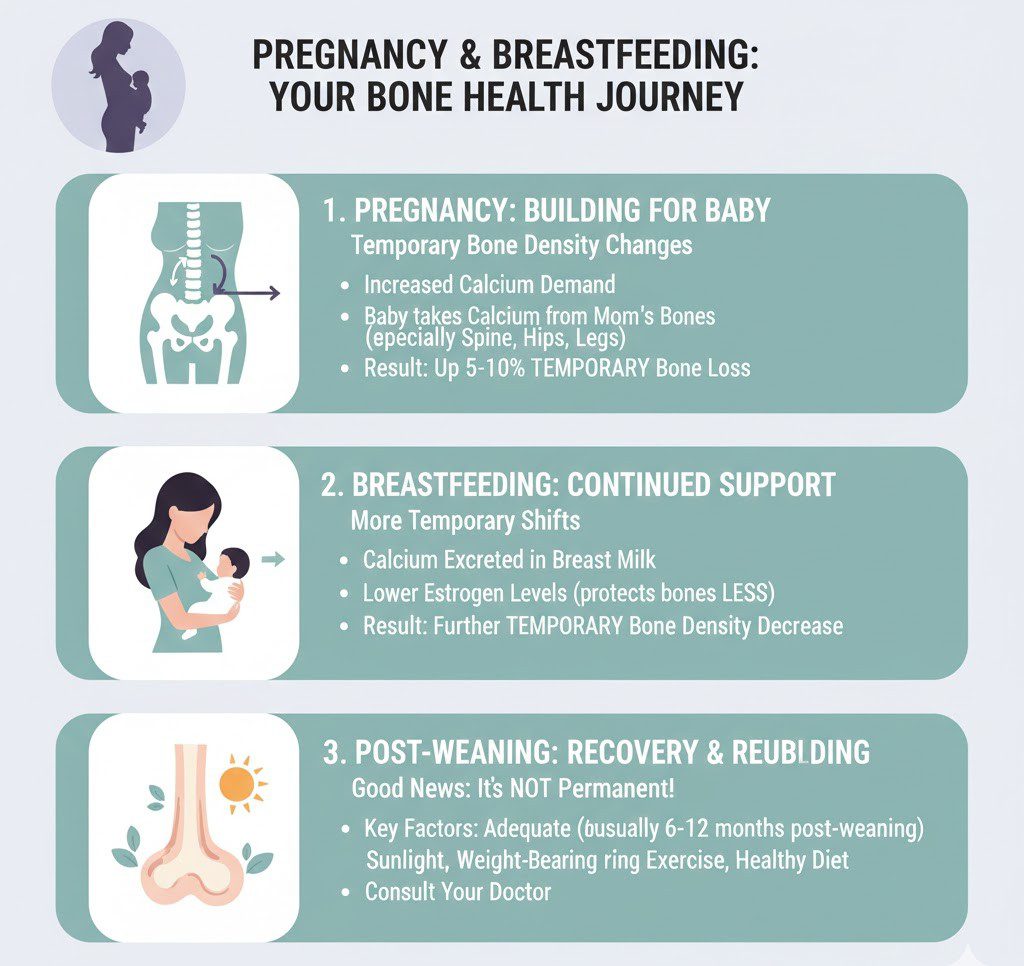
Understanding how pregnancy and breastfeeding affect your bone health is essential for protecting your strength throughout motherhood. During these stages, your body undergoes major hormonal and metabolic changes to support fetal development and milk production. These changes temporarily influence calcium balance, bone remodeling, and bone density. Knowing what happens to your bones and how to support them can help prevent complications and promote lifelong skeletal health.
Key Takeaways
- Pregnancy increases calcium absorption to help protect the mother’s bones.
- Breastfeeding may cause temporary bone loss, but most women regain bone density after weaning.
- Hormonal changes, especially shifts in estrogen, strongly influence bone remodeling.
- Low calcium or vitamin D levels increase the risk of bone weakening during motherhood.
- Proper nutrition, physical activity, and routine medical monitoring support long-term bone strength.
Why Bone Health Matters During Pregnancy & Breastfeeding
Bone health plays a vital role during pregnancy and breastfeeding because your body undergoes major metabolic and hormonal changes that affect how calcium is used and stored. During pregnancy, your body naturally prioritizes your baby’s growth, increasing the demand for minerals that help form the developing skeleton. Even if you are consuming enough nutrients, your body ramps up calcium absorption and circulation to support both mother and baby, making it essential to maintain strong bones throughout this period.
Breastfeeding places an additional layer of responsibility on your bones. To produce nutrient-rich breast milk, your body temporarily shifts how it manages minerals, which can influence bone strength if nutritional intake is inadequate. Although these changes are usually reversible, supporting your bone health through proper nutrition and lifestyle habits helps ensure both immediate well-being and long-term skeletal strength. Maintaining healthy bones during this stage not only benefits you now but also reduces your risk of bone density loss later in life.
How Pregnancy and Breastfeeding Affect Bone Health
Pregnancy and breastfeeding place unique demands on your body, especially on your bones. During these stages, your body adjusts how it uses, absorbs, and stores calcium to support both your health and your baby’s development. Understanding these natural changes helps you protect your long-term bone strength.
Pregnancy and Bone Health
Pregnancy increases your calcium needs because your baby relies on you to build a healthy skeleton. To meet these rising demands, your body becomes more efficient at absorbing calcium and uses protective hormones to maintain bone strength. Here are the ways how pregnancy affects your bones:
- Higher calcium needs: During pregnancy, your baby requires a large amount of calcium to build bones, especially in the third trimester. This increases your body’s overall calcium demand.
- More calcium absorption: Your body naturally absorbs calcium from food more efficiently during pregnancy, helping protect your bones.
- Temporary calcium borrowing: If your diet doesn’t provide enough calcium, your body may temporarily take small amounts from your bones to supply the baby.
- Hormonal protection: Pregnancy hormones such as estrogen and calcitonin protect your bones by reducing bone breakdown, so most women maintain healthy bone density.
Breastfeeding & Bone Health

Breastfeeding also influences bone health because your body uses stored calcium to enrich breast milk. Lower estrogen levels during this time increase bone turnover, which can lead to temporary and harmless bone density changes. Below are the main ways breastfeeding impacts your bones:
- Calcium release from bones: While breastfeeding, your body uses calcium from your bones to enrich breast milk, which can cause temporary bone density loss.
- Lower estrogen levels: Breastfeeding reduces estrogen, a hormone that protects bone leading to increased bone turnover for a short time.
- Temporary bone loss: This bone loss is normal and usually mild; it does not mean long-term bone weakness.
- Bone recovery after weaning: Once breastfeeding slows or stops, estrogen levels rise again, and your bones naturally rebuild calcium. Most women regain full bone density within 6-12 months postpartum.
Causes of Bone Loss During Pregnancy and Breastfeeding
Bone loss during pregnancy and breastfeeding happens because your body must supply extra calcium for your baby’s growth and for breast milk production. If your diet doesn’t provide enough calcium or vitamin D, your body temporarily uses calcium from your bones. Hormonal changes, especially shifts in estrogen also influence bone remodeling, causing mild, temporary bone density changes that usually reverse after breastfeeding ends.
Here are the key causes of bone loss:
- Increased calcium demand for your baby’s bones, especially in the third trimester.
- Temporary calcium borrowing from the mother’s bones if intake is low.
- Lower estrogen levels during breastfeeding, which increase bone breakdown.
- Calcium release from bones to enrich breast milk.
- Low calcium or vitamin D intake, reducing bone mineralization.
- Closely spaced pregnancies, giving bones less time to recover.
- Underlying conditions (thyroid, parathyroid issues, or very low body weight).
Who Is at Higher Risk of Bone Loss
While most women recover bone density naturally after pregnancy and breastfeeding, certain factors can increase the risk of more noticeable or prolonged bone loss. Women who fall into these categories may need closer monitoring, higher nutrient intake, or medical guidance to protect their bone health during this stage.
- Low calcium or vitamin D intake: Women who do not consume enough calcium-rich foods or have low vitamin D levels are more likely to experience bone density changes.
- Thyroid or parathyroid disorders: These conditions can disrupt calcium balance and increase bone breakdown.
- Multiple closely spaced pregnancies: Not allowing enough time for the body to replenish bone minerals between pregnancies can increase the risk.
- Very low body weight: Underweight women or those with a history of eating disorders have lower baseline bone reserves.
- Hormonal conditions like PCOS: Hormonal imbalances may affect bone density and calcium regulation.
- Family history of osteoporosis: Genetics can play a major role in long-term bone strength.
- Long-term steroid use: Medications such as corticosteroids can weaken bones over time.
- Limited physical activity: Lack of weight-bearing exercise reduces bone-building stimulation.
Essential Nutrients for Strong Bones
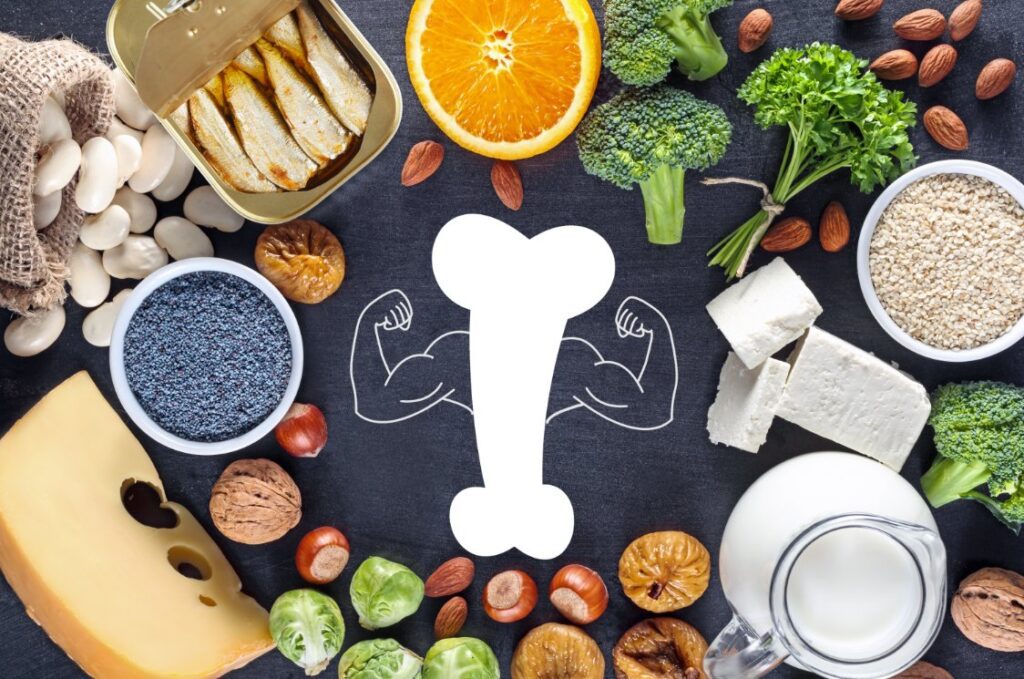
Supporting your bone health during pregnancy and breastfeeding begins with getting the right nutrients. These nutrients help maintain bone strength, improve calcium absorption, and support the natural rebuilding process that occurs after breastfeeding. Ensuring adequate intake protects both your bones and your baby’s development.
- Calcium: Needed for bone strength, fetal bone formation, and breast milk production.
- Vitamin D: Helps the body absorb calcium and supports bone mineralization.
- Magnesium: Aids bone structure and regulates calcium and vitamin D levels.
- Vitamin K: Helps bind calcium to bones and supports bone formation.
- Protein: Builds the foundation of bone tissue and maintains muscle strength.
- Phosphorus: Works with calcium to form strong bones and teeth.
- Omega-3 Fatty Acids: Reduce inflammation and support healthy bone metabolism.
How to Protect Your Bones During Pregnancy and Breastfeeding
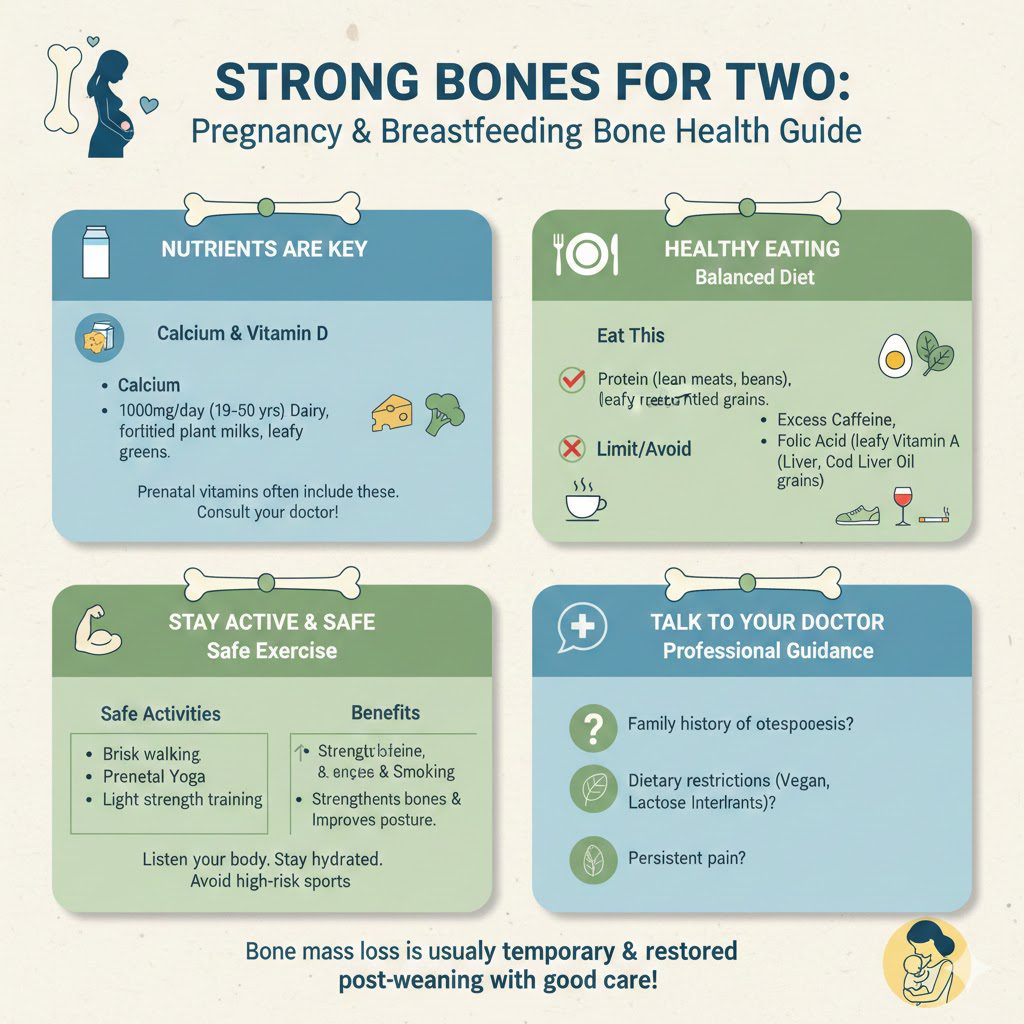
Protecting your bones during pregnancy and breastfeeding involves adopting healthy habits that support calcium balance, hormone regulation, and overall bone strength. Here are some effective ways to maintain strong bones during this stage:
- Eat enough calcium-rich foods: Adequate calcium intake ensures your body has enough minerals to support your baby’s developing skeleton while protecting your own bone reserves.
- Get adequate vitamin D: Vitamin D helps your body absorb calcium efficiently, reducing the need for your bones to supply extra minerals during pregnancy and breastfeeding.
- Stay physically active: Weight-bearing exercises stimulate bone-forming cells, helping maintain bone density and muscle strength during and after pregnancy.
- Maintain a healthy weight: Being underweight increases the risk of bone loss, while maintaining a healthy weight supports hormonal balance essential for bone protection.
- Practice good posture and gentle movement: Proper alignment reduces stress on your spine and joints, which is especially important as your body changes throughout pregnancy.
- Give your body recovery time between pregnancies: This allows your bones to rebuild the minerals they lose during pregnancy and breastfeeding.
- Eat a nutrient-rich diet while breastfeeding: A balanced diet rich in calcium, vitamin D, protein, and magnesium supports both milk production and the restoration of bone density after weaning.
- Have regular checkups: Monitoring your calcium levels, vitamin D status, and overall health helps detect deficiencies early and prevent bone-related complications.
- Use supplements if needed: Calcium or vitamin D supplements can help meet daily requirements when dietary intake is insufficient, strengthening your bones during this high-demand period.
Common Myths About Pregnancy, Breastfeeding, and Bone Health
Many misconceptions about pregnancy, breastfeeding, and bone health can create unnecessary fear or confusion for new mothers. Understanding what is true and what is not helps you make confident decisions that support both your health and your baby’s development. Here are some of the most common myths and the facts that correct them:
Myth 1: Pregnancy permanently weakens your bones
Pregnancy does not cause long-term bone loss. Your body increases calcium absorption and uses protective hormones to maintain bone strength throughout pregnancy.
Myth 2: Breastfeeding leads to irreversible bone loss
Bone loss during breastfeeding is temporary and naturally reverses after weaning. Most women regain full bone density within 6-12 months postpartum.
Myth 3: You must take high-dose calcium supplements during pregnancy
Supplements are only needed if your calcium intake is low. Most women can get enough calcium from food with proper diet guidance.
Myth 4: Exercising during pregnancy is unsafe for your bones
Safe, moderate weight-bearing exercise such as walking, prenatal yoga, or light resistance training helps protect bone health during pregnancy.
Myth 5: You lose bone strength every time you breastfeed
Bone changes happen gradually and are part of the body’s natural milk-production process. They do not occur with each feeding.
Myth 6: Only underweight women lose bone during pregnancy
Women with low calcium intake, vitamin D deficiency, thyroid issues, or closely spaced pregnancies can also experience bone changes, regardless of body size.
Myth 7: Breastfeeding mothers should avoid strength training
Light-to-moderate strength training is safe, improves posture, and supports bone rebuilding after pregnancy when done with medical clearance.
Myth 8: Milk production drains all your calcium stores
Your body efficiently regulates calcium during breastfeeding. As long as you get enough calcium and vitamin D, your bones remain protected.
Myth 9: You cannot rebuild bone after pregnancy or breastfeeding
Bone density naturally rebounds after breastfeeding ends. With good nutrition and activity, you can regain and even improve bone strength.
Myth 10: Women with family history of osteoporosis should avoid breastfeeding
Breastfeeding is safe even for women with genetic risk factors. They may simply need closer monitoring of calcium and vitamin D levels.
Conclusion
Pregnancy and breastfeeding naturally affect bone health due to increased calcium needs and hormonal changes. During pregnancy, the body boosts calcium absorption and uses protective hormones to maintain bone strength, though it may temporarily draw calcium from the mother’s bones if intake is low. Breastfeeding can cause mild, temporary bone loss because estrogen levels drop and calcium is released into breast milk, but bone density usually returns to normal after weaning. Low calcium or vitamin D, closely spaced pregnancies, low body weight, or hormonal disorders can increase risks. Adequate nutrition, regular activity, and routine checkups help protect bone health.
FAQs
How Pregnancy and Breastfeeding Affect Your Bone Health?
Pregnancy increases calcium absorption to support the baby’s growth, while breastfeeding can cause temporary bone loss due to lower estrogen and calcium release into breast milk. Most women regain bone density after weaning.
Why does breastfeeding cause temporary bone loss?
During breastfeeding, estrogen levels drop and calcium is taken from the mother’s bones to enrich breast milk. This increases bone turnover but is generally reversible once breastfeeding ends.
Can pregnancy weaken my bones if I don’t get enough calcium?
Yes. If your calcium intake is low, the body may draw calcium from your bones to meet the baby’s needs, which can lead to mild, temporary bone density reduction.
How much calcium do pregnant and breastfeeding women need?
Most women need about 1,000 mg of calcium per day. Teens may need up to 1,300 mg. Adequate intake protects bone strength and supports fetal and infant development.
What role does vitamin D play during pregnancy and breastfeeding?
Vitamin D helps the body absorb calcium efficiently. Low vitamin D levels can reduce calcium absorption, increasing reliance on bone stores and elevating the risk of bone loss.
Which women are at higher risk of bone density loss during these stages?
Women with low calcium or vitamin D intake, closely spaced pregnancies, thyroid or hormonal disorders, very low body weight, or limited physical activity are at higher risk.
Do hormones affect bone health during pregnancy and breastfeeding?
Yes. Pregnancy hormones like estrogen protect bones, while lower estrogen during breastfeeding increases bone breakdown. These changes normalize after weaning.
How can exercise support bone health during pregnancy?
Weight-bearing activities such as walking, light strength training, and prenatal yoga help activate bone-building cells, maintain strength, and support posture.
Is bone loss during breastfeeding permanent?
No. Bone density usually returns to pre-pregnancy levels within 6-12 months after breastfeeding ends, as hormones and mineral balance return to normal.
When should I talk to a doctor about bone concerns?
Consult your doctor if you experience severe back pain, frequent fractures, low nutrient levels, hormonal issues, or if you have risk factors like long-term steroid use.
References
- How pregnancy impacts bone health. (n.d.). Envision Radiology. Retrieved November 14, 2025, from
https://www.envrad.com/how-pregnancy-impacts-bone-health/ - Pregnancy, Breastfeeding, and Maternal Bone Health: What You Should Know. (n.d.). Westover Hills Women’s Health. Retrieved November 14, 2025, from https://www.westoverhillswomenshealth.com/blog/pregnancy-breastfeeding-and-maternal-bone-health-what-you-should-know
- Wendy, IBCLC. (n.d.). What To Know About Breastfeeding and Bone Health. Motherlove. Retrieved November 14, 2025, from https://motherlove.com/blogs/all/what-to-know-about-breastfeeding-and-bone-health

Aubrey Carson is an RDN with 9 years across hospital, outpatient, and private practice settings. They earned an MS in Clinical Nutrition from Tufts University – Friedman School (2016) and completed a Dietetic Internship at Mayo Clinic. Aubrey specializes in micronutrient assessment, evidence-based supplementation, and patient education. Their work includes CE presentations for the Academy of Nutrition and Dietetics and collaborations with Mass General Brigham on nutrition education resources.