
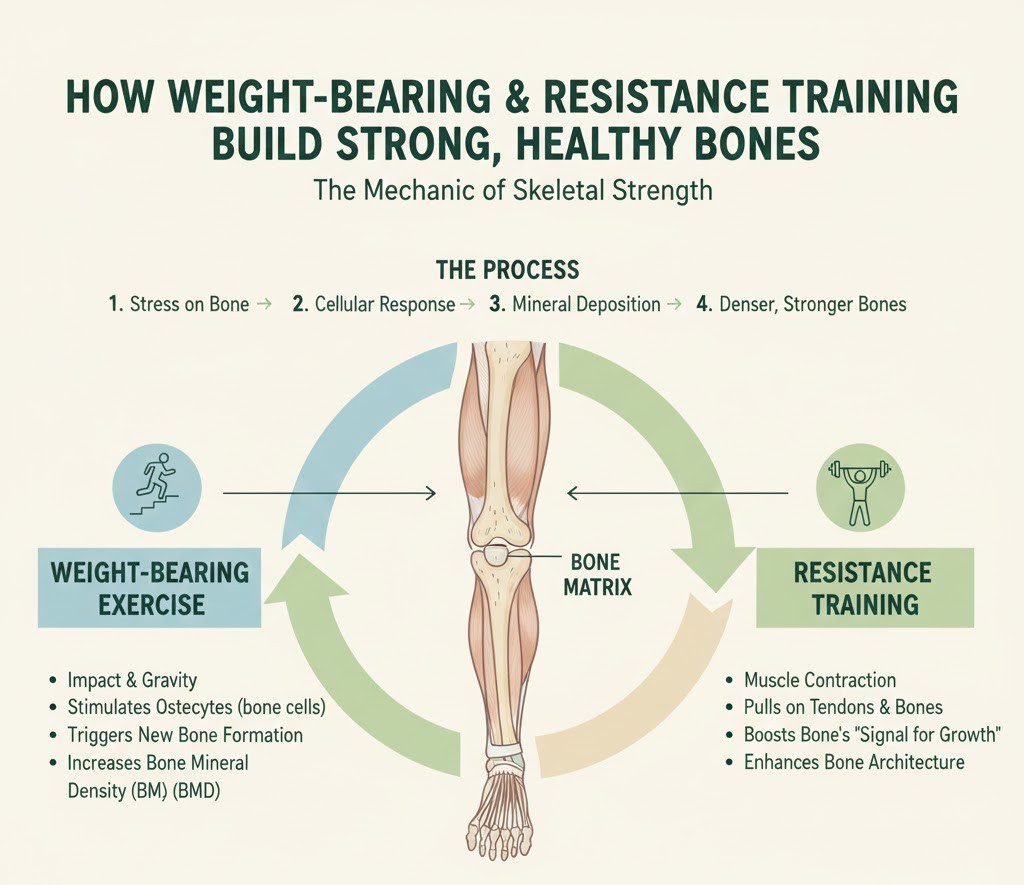
Understanding how the body maintains bone strength is important at every stage of life. Many people hear about how weight bearing exercise and resistance training build healthy bones, but may not fully understand why these forms of exercise make such a difference. Bones are living tissue that respond to movement, pressure, and muscle activity. When you engage in exercises that challenge your muscles and require your body to support its own weight, your bones adapt by becoming denser and stronger. Learning how these activities influence bone health can help you make informed choices that support long term strength, mobility, and overall well being.
Key Takeaways
- Weight bearing exercises help strengthen bones by applying gentle stress that stimulates bone growth.
- Resistance training increases muscle strength, which in turn supports and reinforces bone structure.
- Regular physical activity is one of the most effective ways to maintain bone density as you age.
- A combination of weight-bearing movements and strength training offers the greatest benefit for long term bone health.
- Proper nutrition, including adequate calcium and vitamin D, supports the bone building effects of exercise.
Why Bone Strength Matters
Bones are dynamic, living tissues that continuously break down and rebuild. After age 30, the body naturally loses bone faster than it can replace it, increasing the risk of bone thinning, osteopenia, and osteoporosis especially without proper exercise and nutrition. Modern sedentary habits, including long periods of sitting and low daily movement, accelerate this decline by reducing the mechanical stimulation bones need to stay strong.
Weight-bearing and resistance exercises help counteract this process by applying healthy stress to the bones, activating bone forming cells, and slowing deterioration. These natural strategies make it possible for individuals to build and maintain strong bones safely and effectively, supporting lifelong mobility and bone health without relying on medication.
Understanding Bone Structure and How Exercise Affects It
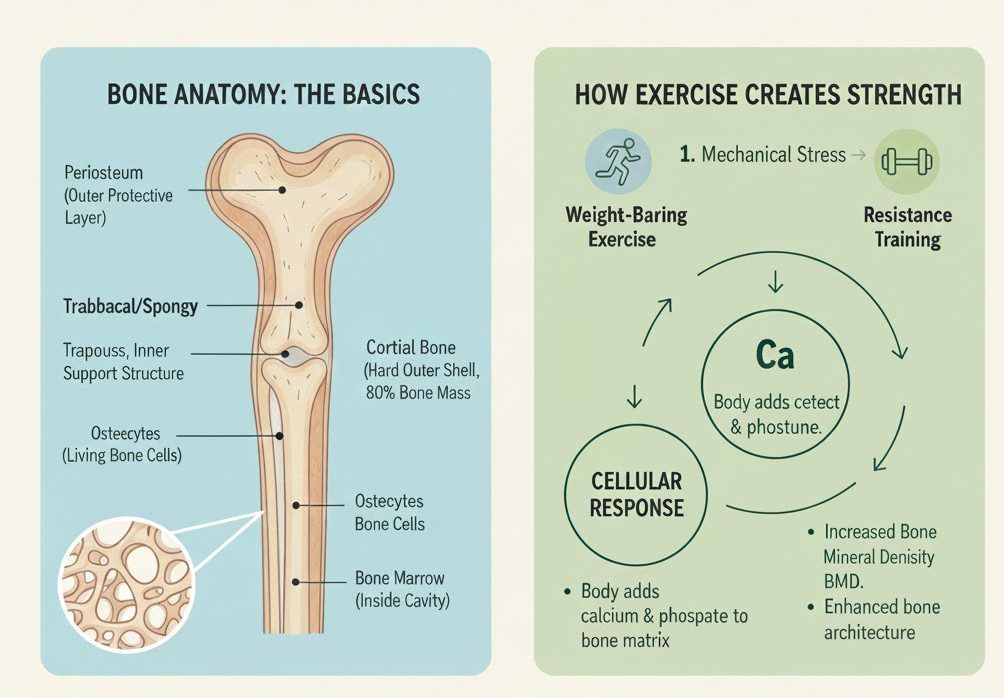
Bones are complex, living structures made up of several key components. The outer layer, called cortical bone, is dense and strong, providing protection and support for daily movement. The inner layer, known as trabecular (spongy) bone, has a honeycomb-like structure that helps absorb impact and adapt to stress. Together, these layers contain minerals like calcium and phosphorus, flexible collagen fibers, and active bone cells osteoblasts (build bone), osteoclasts (break down bone), and osteocytes (maintain bone). This combination gives bones both strength and flexibility while allowing them to respond to physical stress.
Exercise strengthens bone through two main mechanisms:
- Mechanical Loading: Activities such as walking, jumping, or lifting create impact or pressure on the skeleton. This force triggers bone cells, especially osteoblasts to build new bone tissue, increasing density and strength.
- Muscle Contraction Forces on Bone: When muscles contract during resistance training, they pull on the bones they are attached to. This tension stimulates mineralization and encourages the bones to adapt by becoming thicker and stronger.
Weight Bearing Exercise for Bone Health
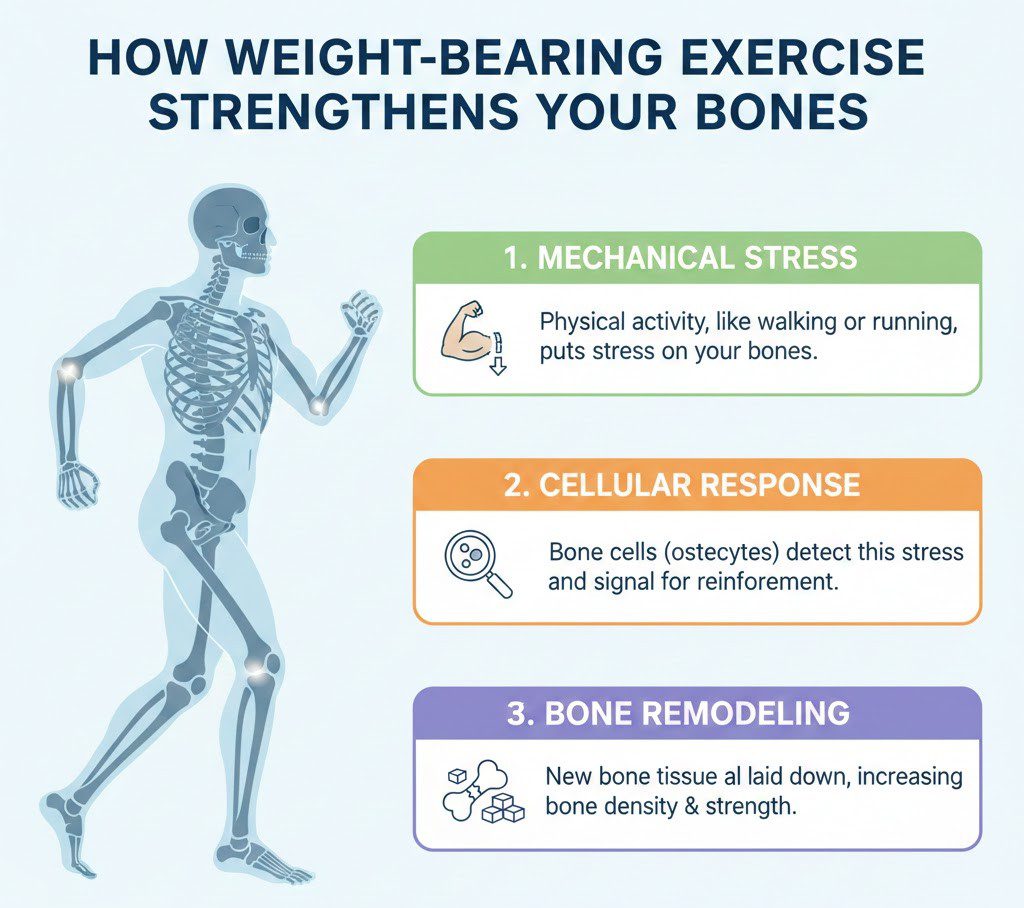
Weight-bearing exercises require the body to work against gravity, forcing the bones to support your weight during movement. This mechanical stress stimulates bone forming cells, increases bone mineral density, and strengthens the joints. Over time, these exercises enhance skeletal resilience and reduce the risk of bone related conditions.
Benefits of Weight-Bearing Exercises
These exercises provide multiple advantages that support both bone strength and overall physical function. They not only help maintain bone density but also improve the way your body moves and stabilizes itself. Below are the key benefits of incorporating weight-bearing activities into your routine:
- Strengthen hip, spine, and leg bones
- Improve balance, stability, and coordination
- Reduce fracture risk
- Slow age-related bone loss
- Enhance joint flexibility and mobility
- Boost lower-body muscle strength, which supports bone health
- Improve posture and alignment through better skeletal support
- Increase overall endurance and cardiovascular fitness
- Support healthy weight management, which reduces bone stress
- Improve daily functional movement, making tasks like walking, climbing stairs, and standing easier
Weight-bearing activities for stronger bones
Here are some simple and effective weight-bearing exercises you can incorporate:
- Brisk walking
- Hiking
- Jogging or running
- Jump rope
- Dancing or Zumba
- Stair climbing
- Tennis or basketball
How Resistance Training Builds Strong Healthy Bones
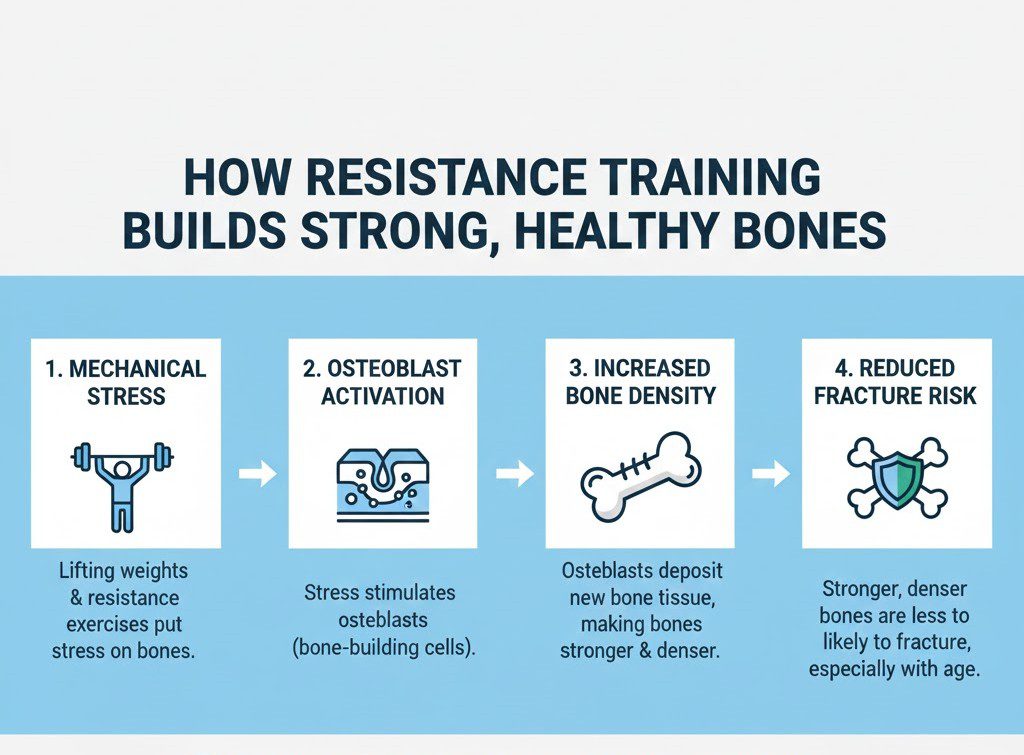
Resistance training applies targeted load and tension to the muscles, which in turn pull on the bones. This muscle contraction force promotes bone remodeling and increases overall bone mass. Because it affects multiple skeletal areas, strength training is one of the most effective methods for improving full body bone density.
Benefits of Resistance Training
Resistance training provides a wide range of benefits that support both bone structure and muscular health. It promotes the growth of stronger bones while also improving posture and everyday movement. Here are the major advantages of adding strength training to your routine:
- Increases total bone mineral density
- Strengthens wrists, hips, and spine (common fracture sites)
- Enhances muscle strength and joint stability
- Improves posture and spinal alignment
- Supports weight management, which helps protect bone health
- Increases overall functional strength, making daily activities easier
- Improves balance and reduces fall risk, especially in older adults
- Boosts metabolism by increasing lean muscle mass
- Enhances joint protection by strengthening surrounding muscles
- Reduces the risk of age-related bone and muscle degeneration
Examples of Resistance Training
Here are some effective resistance training options:
- Dumbbells, kettlebells, barbells
- Resistance bands
- Weight machines
- Bodyweight exercises (squats, lunges, push-ups, planks)
Best Exercises for Building Strong Bones
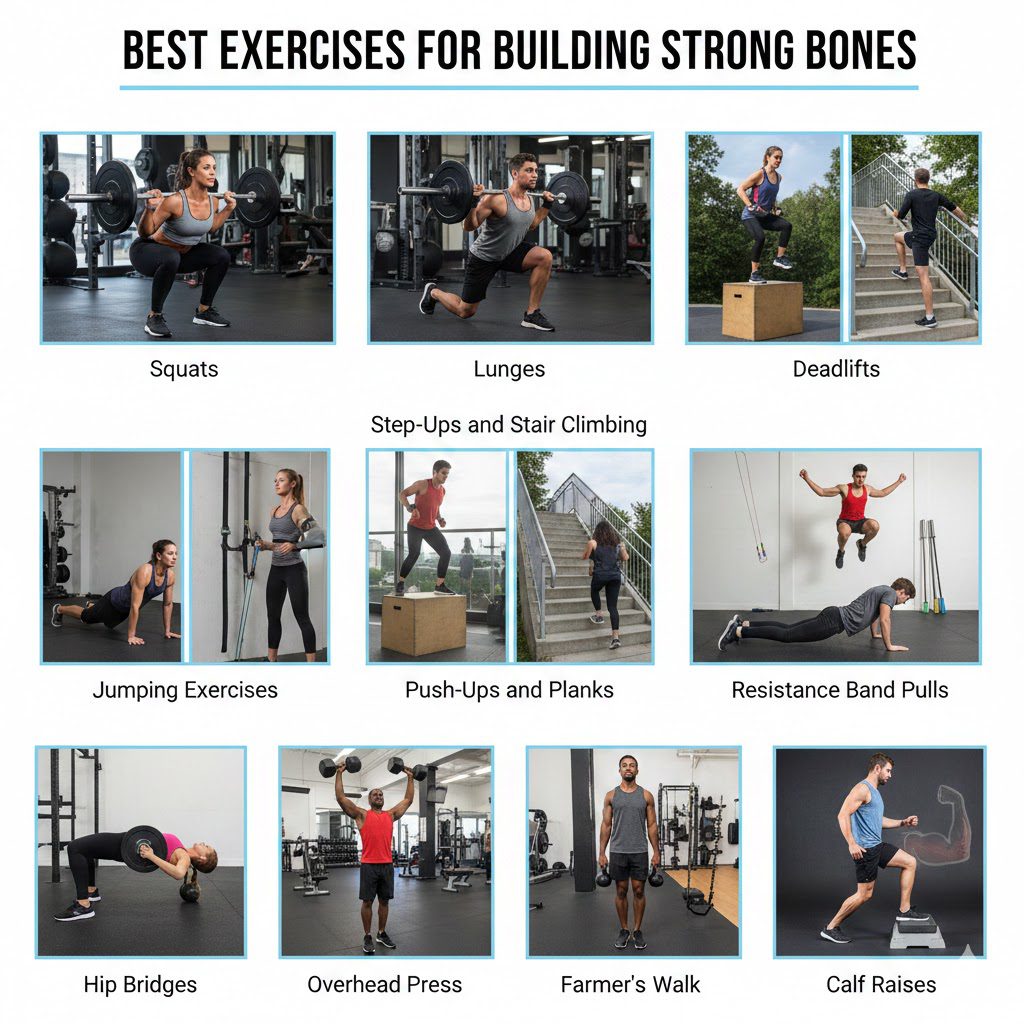
Building strong, resilient bones requires exercises that apply healthy stress through impact, resistance, and muscle contraction. These movements stimulate bone forming cells, increase mineral density, and strengthen the joints and connective tissues supporting the skeletal system. The following exercises are among the most effective for improving bone health at any age.
- Squats: Targets hips, spine, and legs key areas where bone loss commonly occurs.
- Lunge: Improves balance, bone strength, and muscle coordination while loading one leg at a time.
- Deadlifts: Strengthens the spine, hips, and core with controlled resistance and proper form.
- Step-Ups and Stair Climbing: Add safe impact and increase lower-body bone density excellent for daily conditioning.
- Push-Ups and Planks: Build upper body, shoulder, and wrist strength, supporting bones that often weaken with age.
- Jumping Exercises: (Jump rope, hopping, jump squats) deliver high impact stimulation for powerful bone growth.
- Resistance Band Pulls: Strengthen the shoulders, upper spine, and arms using controlled tension.
- Hip Bridges: Target the hips, glutes, and lower spine important regions for preventing age related bone loss.
- Overhead Press: Strengthens the shoulders, upper arms, and spine, all of which benefit from vertical loading.
- Farmer’s Walk: Carrying weights while walking increases spine and hip strength while challenging grip and posture.
- Calf Raises: Boost lower leg bone density and improve balance, reducing fall and fracture risk.
Nutrients That Support Strong Bones

Bone health depends not only on physical activity but also on proper nutrition. The body requires specific vitamins, minerals, and nutrients to build, maintain, and repair bone tissue throughout life. Ensuring a balanced diet rich in these nutrients helps strengthen the skeletal system, prevent bone loss, and support overall mobility. Below are the key nutrients your body relies on to keep bones strong and healthy:
- Calcium: The primary building block of bone tissue. Found in milk, yogurt, cheese, fortified foods, and leafy greens.
- Vitamin D: Improves calcium absorption and supports bone growth. Obtained through sunlight, fortified foods, egg yolks, and fatty fish.
- Magnesium: Plays a key role in bone mineralization and helps regulate calcium balance. Found in nuts, seeds, legumes, and whole grains.
- Vitamin K2: Directs calcium into bones and prevents it from depositing in arteries. Found in fermented foods, egg yolks, and certain cheeses.
- Protein: Supports bone structure, muscle strength, and tissue repair. Found in meat, fish, dairy, legumes, and plant-based proteins.
- Omega-3 Fatty Acids: Reduce inflammation that contributes to bone loss and support joint health. Found in salmon, flaxseeds, walnuts, and chia seeds.
Lifestyle Habits That Support Bone Health
Strong bones are built not only through exercise and nutrition but also through the everyday choices you make. Consistent lifestyle habits can significantly influence how well your bones maintain strength, recover from stress, and resist age related decline. Incorporating the practices below helps protect your skeletal system and supports long term bone health.
- Avoid smoking: Smoking reduces blood flow to the bones and damages bone forming cells, leading to weaker bone structure and slower healing.
- Limit alcohol: Drinking too much alcohol interferes with calcium absorption and hormone balance, both of which are essential for maintaining strong bones.
- Get enough sleep: During deep sleep, the body repairs and rebuilds bone tissue. Poor sleep disrupts this process and can gradually weaken bone health.
- Stay active daily: Regular movement improves circulation, stimulates bone cells, and reduces stiffness helping bones stay strong and responsive.
- Maintain a healthy weight: Being underweight increases the risk of bone thinning and fractures, while a healthy weight provides the right amount of mechanical stress to support bone density.
Common Myths About Weight-Bearing Exercise and Resistance Training
Many misunderstandings about weight-bearing and resistance training can stop people from using these powerful methods to support bone health. Debunking these myths helps individuals exercise safely, confidently, and effectively. Below are some of the most common myths and the facts that correct them:
Myth 1: Weight-bearing exercises must be high impact to work
Low and moderate impact exercises like walking and stair climbing can still stimulate significant bone growth.
Myth 2: Resistance training is only for young or athletic people
Strength training benefits all ages and is essential for preventing age-related muscle and bone loss.
Myth 3: Lifting weights makes bones “wear out” faster
Controlled strength training strengthens bones and joints, reducing the risk of fractures and degeneration.
Myth 4: Weight-bearing exercise alone is enough to build strong bones
A combination of weight-bearing movement and resistance training provides the best bone-strengthening effect.
Myth 5: Resistance training is dangerous, especially for beginners
When done with proper form and progression, resistance training is one of the safest ways to improve bone health.
Myth 6: Light weights don’t help bones at all
Even light resistance creates muscle tension that stimulates bones progressive overload simply enhances results.
Myth 7: Cardio is more important than strength training for bone health
Strength training is equally important because it directly stimulates bone remodeling and increases bone mass.
Myth 8: Weight-bearing exercises cause joint damage
Proper technique and gradual progression protect joints; many weight-bearing movements actually improve joint stability.
Conclusion
Understanding how the body maintains bone strength is important at every age, especially as bone density naturally declines over time. Many people know that exercise supports bone health, but few understand how weight-bearing and resistance training build strong healthy bones through the stress and stimulation they provide. Bones are living tissues that respond to pressure, movement, and muscle force by becoming stronger and denser. When you consistently include activities that load the bones and challenge the muscles, you promote long-term strength, stability, and mobility. This knowledge empowers you to make healthier choices that support lifelong skeletal health and overall well-being.
FAQs
How do weight-bearing exercises strengthen bones?
They strengthen bones by applying force through the skeleton, which activates osteoblasts (bone-forming cells). Over time, this increases bone density, thickness, and overall structural strength.
Can resistance training really improve bone density?
Yes. When muscles contract against resistance, they pull on the bone, creating stress that stimulates bone remodeling. This leads to stronger, denser bones, especially in the hips, spine, and wrists.
How often should I do bone-strengthening exercises?
Most adults benefit from weight-bearing exercises 3-5 times per week and resistance training 2-3 times weekly. This combination provides regular stimulation without overloading the joints.
Are high-impact exercises necessary to build strong bones?
No. High impact workouts can help, but low and moderate impact activities like brisk walking, light jogging, and dancing also improve bone density. They’re safer for people with joint pain or low fitness levels.
Is it safe for older adults to lift weights?
Yes. When supervised and performed with proper form, strength training is safe and highly beneficial for older adults. It improves balance, muscle mass, and bone strength, reducing fracture risk.
Can I build strong bones without going to the gym?
Absolutely. Activities like walking, stair climbing, squats, lunges, pushups, yoga, and resistance band exercises offer effective bone stimulation at home with no gym equipment required.
What nutrients support bone-building exercises?
Calcium and vitamin D help form and absorb bone minerals, while magnesium and vitamin K2 support bone structure. Adequate protein and omega-3 fats aid in muscle strength and bone repair.
Does walking count as a weight-bearing exercise?
Yes. Walking applies gentle impact through your legs and spine, helping maintain bone density, especially in the hips and lower body. It’s a simple, daily activity with significant benefits.
When do people start losing bone density?
Bone loss usually starts in the early 30s, when bone breakdown becomes slightly faster than bone formation. The process accelerates after age 40 and even more rapidly during menopause.
Can supplements replace weight-bearing or resistance training?
No. Supplements support bone nutrition, but only physical activity provides the mechanical stress needed to trigger new bone growth. Exercise and nutrition must work together for optimal bone health.
References
- The Benefits of Weight-Bearing Exercises for Bone Strength. (n.d.). Island Rheumatology & Osteoporosis, PC. Retrieved November 16, 2025, from https://islandrheumatology.com/the-benefits-of-weight-bearing-exercises-for-bone-strength/
- Bone Density and Weight-Bearing Exercise. (n.d.). The Orthopedic and Sports Medicine Institute. Retrieved November 16, 2025, from
https://www.osmifw.com/sports-medicine/bone-density-and-weight-bearing-exercise/ - Effects of Resistance Exercise on Bone Health. (n.d.). PubMed Central. Retrieved November 16, 2025, from
https://pmc.ncbi.nlm.nih.gov/articles/PMC6279907/ - How Does Resistance Training Build Bone Density and Which Exercises Are Best. (2025, October 15). PureGym. Retrieved November 16, 2025, from https://www.puregym.com/blog/resistance-training-bone-density/

Aubrey Carson is an RDN with 9 years across hospital, outpatient, and private practice settings. They earned an MS in Clinical Nutrition from Tufts University – Friedman School (2016) and completed a Dietetic Internship at Mayo Clinic. Aubrey specializes in micronutrient assessment, evidence-based supplementation, and patient education. Their work includes CE presentations for the Academy of Nutrition and Dietetics and collaborations with Mass General Brigham on nutrition education resources.