

Daily Habits to Boost Metabolism focus on simple lifestyle practices that help the body efficiently convert food into energy, maintain muscle, regulate hormones, and support overall health. Key habits like movement, balanced nutrition, hydration, sleep, and stress management directly enhance metabolic efficiency and long-term energy balance.
Key Takeaways
- Daily movement and resistance training increase calorie burn and preserve muscle, enhancing resting metabolic rate.
- Consuming protein, fiber, and healthy fats at every meal stabilizes blood sugar and supports hormone regulation.
- Hydration is essential for metabolic processes, digestion, nutrient absorption, and energy efficiency.
- Quality sleep and stress management regulate cortisol and insulin, maintaining energy balance and preventing fat storage.
- Whole-food and Mediterranean-style eating patterns promote steady energy, hormone balance, and long-term metabolic health.
- Avoiding habits like skipping meals, ultra-processed foods, chronic dieting, poor sleep, and excess alcohol prevents metabolic slowdown.
Understanding Metabolism and How It Works
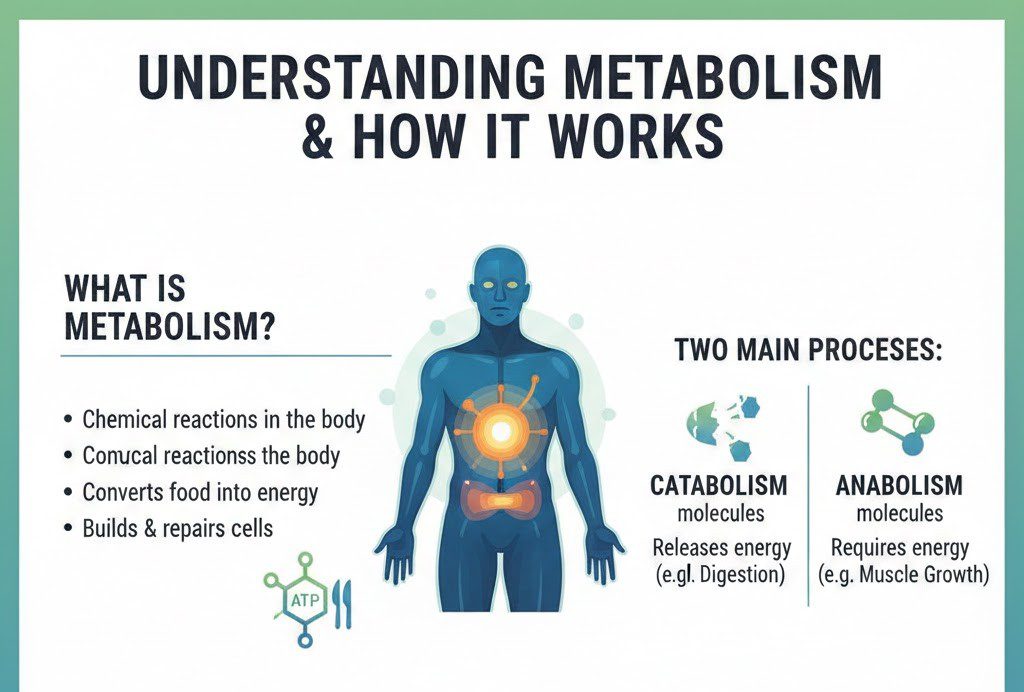
Metabolism is the process by which your body converts food into energy to support vital functions such as breathing, digestion, circulation, temperature regulation, and physical activity. A key component of metabolism is Basal Metabolic Rate (BMR), which represents the number of calories your body needs at rest to maintain essential functions like heartbeat, cell repair, and organ activity. Metabolic efficiency is influenced by muscle mass, activity level, nutrition, and hormonal balance.
Key mechanisms that regulate metabolism include:
- Insulin Regulation: Insulin controls how glucose is used and stored in the body. When insulin functions properly, cells efficiently absorb glucose for energy rather than storing excess sugar as fat. Stable insulin levels support steady energy, fat metabolism, and long-term weight balance.
- Thyroid Hormone Activity (T3 and T4): Thyroid hormones regulate how quickly the body burns calories. They directly affect BMR, energy production, and heat generation. Balanced thyroid function is essential for maintaining an active metabolism and overall energy levels.
- Cortisol and Stress Response: Cortisol helps manage energy during stress, but chronically high levels can slow metabolism and promote fat storage, especially around the abdomen. Managing stress through sleep, relaxation, and mindful habits helps maintain metabolic efficiency.
- Muscle and Energy Demand: Muscle tissue requires more energy than fat, even at rest. Higher muscle mass increases resting calorie burn and improves overall metabolic rate.
- Hormonal Feedback Systems: Metabolism is regulated through continuous feedback between hormones, energy availability, and physical activity. These systems help the body adapt calorie use based on lifestyle, nutrition, and stress levels.
How Daily Lifestyle Habits Influence Metabolism
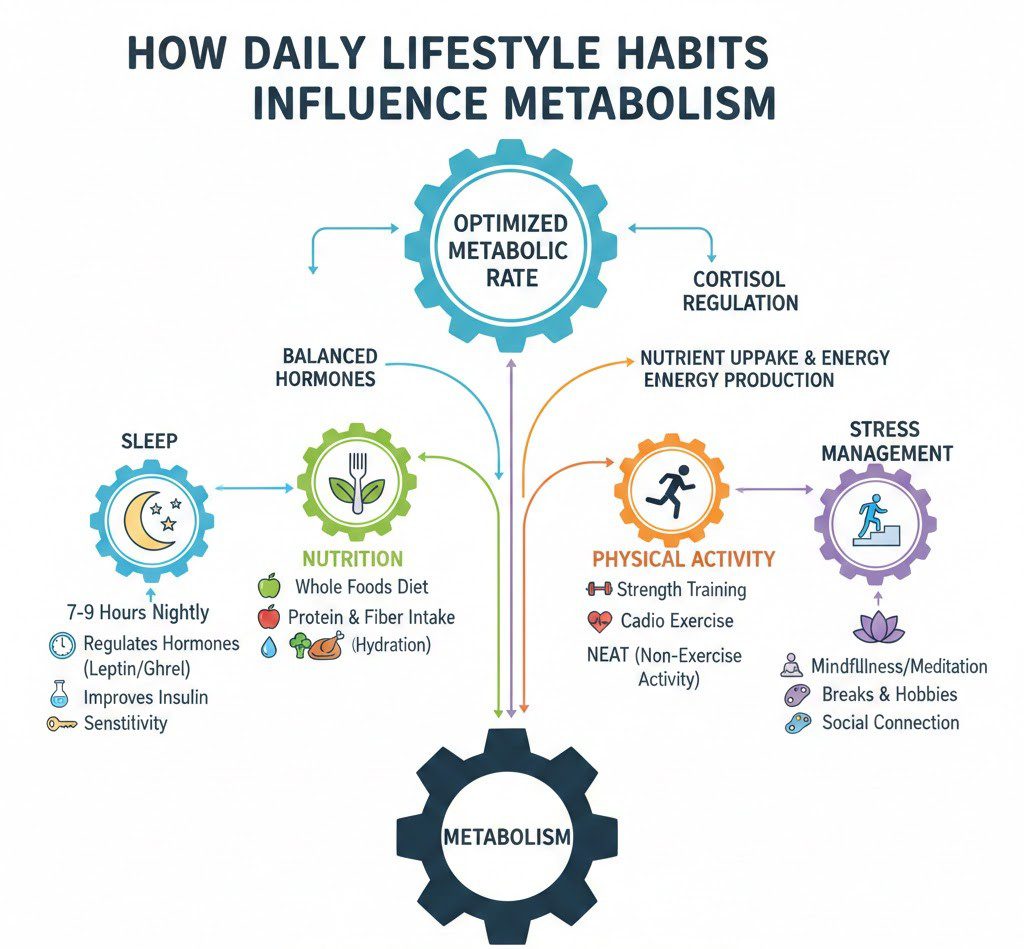
Daily lifestyle habits have a powerful impact on how efficiently your body produces and uses energy. Rather than relying on quick fixes, consistent routines help regulate hormones, preserve muscle, and support steady calorie burning throughout the day. Small choices made daily shape long-term metabolic health. Lifestyle habits that influence metabolism include:
- Regular Movement and Activity: Daily movement increases energy expenditure and supports circulation, oxygen delivery, and muscle engagement. Consistent activity helps prevent metabolic slowdown and improves overall energy efficiency.
- Muscle Maintenance and Strength: Maintaining muscle through resistance exercise raises resting metabolic rate, as muscle tissue burns more calories even when the body is at rest. This supports long-term energy balance and weight management.
- Balanced Nutrition Patterns: Eating regular, nutrient-dense meals helps stabilize blood sugar and insulin levels. Balanced intake of protein, fiber, and healthy fats prevents energy crashes and supports efficient calorie use.
- Sleep and Recovery: Quality sleep regulates key metabolic hormones, including insulin and cortisol. Poor sleep disrupts energy balance, increases fat storage, and slows metabolic function.
- Stress Management: Chronic stress elevates cortisol, which can reduce metabolic efficiency and promote fat storage. Relaxation practices help maintain hormonal balance and steady energy use.
- Consistency Over Quick Fixes: Extreme dieting or overtraining may offer short-term results but often slow metabolism over time. Sustainable daily habits create lasting improvements in metabolic health and energy levels.
5 Simple Daily Habits To Boost Metabolism
Before exploring specific habits, it’s important to understand that metabolism is not just about burning calories it’s a complex system that controls how your body converts food into energy, maintains muscle, regulates hormones, and supports daily functions. While genetics and age play a role, daily lifestyle choices have the biggest impact. By incorporating small, consistent habits, you can naturally boost metabolic efficiency, increase energy levels, and support long-term health.
Start Your Day With Light Movement

Beginning your day with gentle activity signals your body to “wake up” metabolically. It increases blood flow, raises core temperature, and activates calorie-burning pathways. This prepares your muscles and organs to use energy efficiently and helps set a positive tone for the rest of the day.
- Increases energy expenditure by activating muscles early in the day.
- Improves blood flow and oxygen delivery to the brain and muscles.
- Enhances mood and mental focus, supporting sustained daily energy.
- Helps prevent sluggishness caused by prolonged inactivity.
Eat Enough Protein at Every Meal

Protein is more than just a building block for muscles; it also has a high thermic effect, meaning your body burns more calories during its digestion compared to fats or carbs. Protein supports lean muscle mass, which is key for keeping metabolism elevated even when at rest. Including protein in every meal helps you feel full, reduces cravings, and stabilizes energy levels throughout the day.
- Increases calorie burn during digestion and nutrient processing.
- Preserves muscle mass, supporting a higher resting metabolic rate.
- Controls appetite by reducing cravings and preventing overeating.
- Maintains steady energy levels throughout the day.
Stay Hydrated Throughout the Day

Water is essential for nearly every metabolic process, including digestion, nutrient absorption, and energy production. Even mild dehydration can reduce calorie burning, increase fatigue, and impair focus. Staying hydrated helps your body operate efficiently, supports digestion, and can even improve exercise performance.
- Supports efficient calorie burning by aiding metabolic processes.
- Improves digestion and nutrient absorption.
- Prevents fatigue and brain fog linked to dehydration.
- Helps regulate body temperature and physical performance.
Build Muscle With Resistance Training

Muscle is metabolically active tissue, meaning it burns calories even at rest. Strength training builds muscle mass, which directly elevates resting metabolic rate. Resistance exercises also improve insulin sensitivity and support hormone balance, making your metabolism more efficient over time.
- Boosts resting calorie burn through muscle development.
- Improves hormone balance related to metabolism.
- Supports long-term weight management and strength.
- Enhances overall metabolic efficiency.
Eat Fiber-Rich Foods Daily
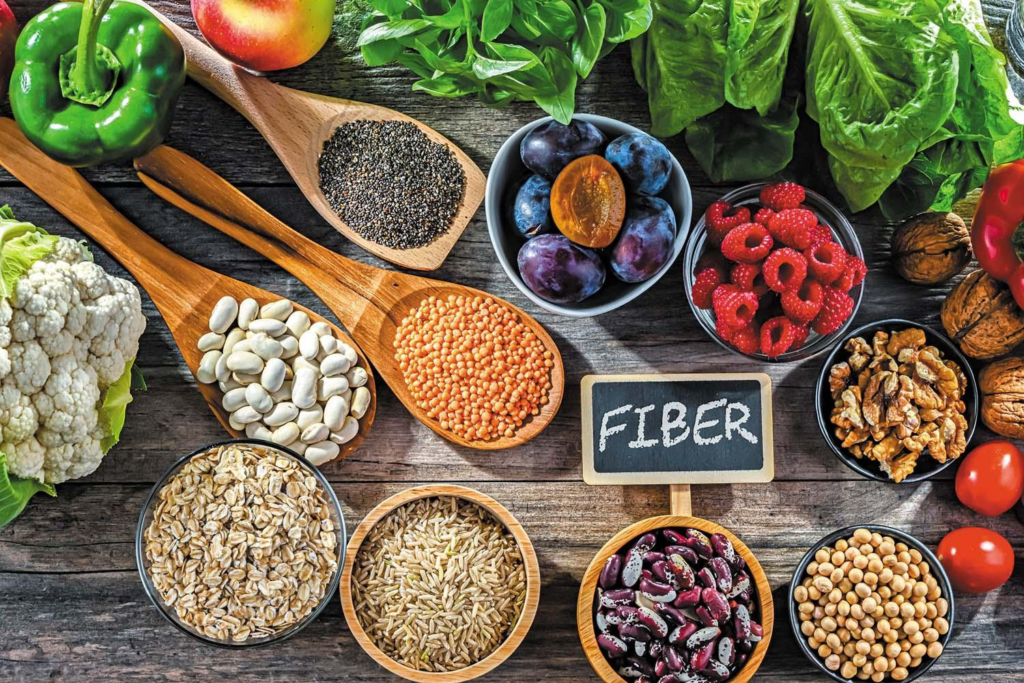
Fiber-rich foods support digestive health, regulate blood sugar, and help maintain a healthy gut microbiome—all of which are linked to better metabolic function. Fiber also slows digestion, keeps you fuller for longer, and prevents spikes in energy or cravings.
- Slows digestion, supporting steady energy release.
- Improves gut health and nutrient absorption.
- Prevents overeating by increasing fullness.
- Supports long-term metabolic and digestive health.
Get Quality Sleep and Manage Stress

Metabolic hormones like cortisol, insulin, and leptin are heavily influenced by sleep and stress. Poor sleep or chronic stress can slow your metabolism, increase fat storage, and reduce energy. Prioritizing rest and stress management ensures your metabolism functions efficiently, supports muscle recovery, and keeps energy levels steady.
- Regulates hormones that control appetite and energy use.
- Supports muscle recovery and metabolic repair.
- Prevents metabolic slowdown linked to high stress levels.
- Improves overall energy, focus, and calorie balance.
Foods That Naturally Support a Faster Metabolism
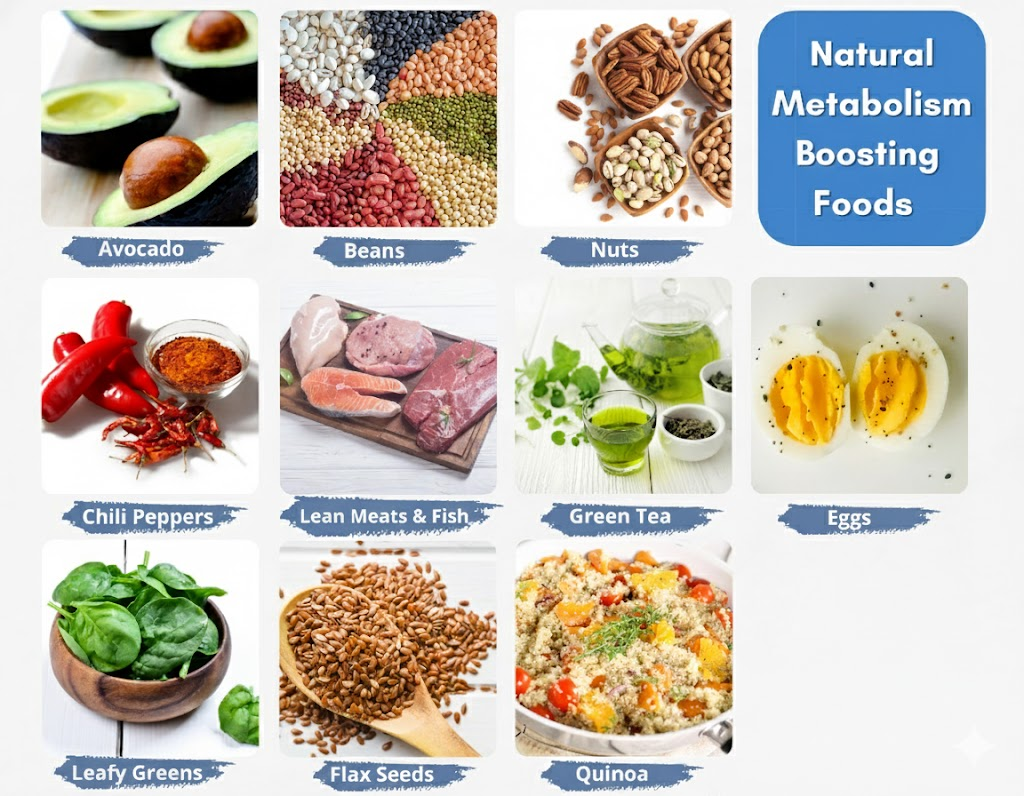
Certain foods can naturally enhance metabolism by increasing calorie burn, supporting muscle maintenance, and improving overall energy efficiency. Incorporating these nutrient-rich options into your daily diet helps your body use energy more effectively. The table below highlights key metabolism-boosting foods, their benefits, and practical tips for including them in your meals.
| Food | Benefits | Tips |
| Lean Proteins(eggs, fish, legumes) | Burns more calories during digestion, preserves muscle | Include protein at every meal |
| Whole Grains & Complex Carbs | Provide slow-releasing energy, reduce fat storage | Oats, quinoa, brown rice |
| Healthy fats(Olive oil, nuts, seeds) | Supports hormone balance and energy production | Use in salads, cooking, or snacks |
| Spices(chili, ginger, turmeric) | Slightly increase calorie burn, provide antioxidants | Add to meals or teas |
| Coffee & Green Tea | Stimulate metabolism and fat burning | 1-3 cups/day without excess sugar |
Best Eating Patterns for Metabolic Health
Choosing the right eating patterns is essential for supporting metabolism, maintaining energy levels, and promoting long-term health. The foods you eat and how you structure your meals influence hormone balance, muscle preservation, blood sugar stability, and calorie use. Adopting sustainable, nutrient-rich eating habits helps prevent metabolic slowdowns and ensures your body functions efficiently throughout the day. Two eating patterns stand out for their metabolic benefits:
- Balanced, Whole-Food Diet: Focus on whole, minimally processed foods that provide essential nutrients, fiber, and protein. Avoid extreme calorie restriction or fad diets, as they can slow metabolism, reduce muscle mass, and disrupt hormonal balance. Eating regular, well-balanced meals helps maintain stable blood sugar, supports energy levels, and enhances metabolic efficiency.
- Mediterranean-Style Eating: Emphasize vegetables, fruits, whole grains, legumes, nuts, olive oil, and fish. This diet is rich in antioxidants, healthy fats, and fiber, which help reduce inflammation, support hormone regulation, and improve insulin sensitivity. Following a Mediterranean-style pattern promotes sustainable weight management, long-term metabolic health, and overall vitality.
Habits That Slow Down Metabolism
Certain daily habits can either support or hinder your metabolism. Understanding which behaviors to limit helps you maintain energy balance, preserve muscle, and improve long-term metabolic efficiency. The table below highlights common habits that slow metabolism, their effects, and practical tips to counteract them.
| Habit | Effect on Metabolism | Tips |
| Skipping meals frequently | Lowers metabolic rate, promotes fat storage | Eat regular, balanced meals |
| Ultra-processed foods & sugary drinks | Spike blood sugar, reduce metabolic efficiency | Choose whole, minimally processed foods |
| Chronic dieting/very low calories | Slows metabolism, reduces muscle mass | Avoid extreme calorie restriction |
| Poor sleep & high stress | Raises cortisol, slows metabolism | Prioritize 7-9 hours sleep & stress management |
| Excess alcohol | Empty calories, hormone disruption | Limit or avoid alcohol for metabolic health |
Key Nutrients for a Healthy Metabolism
Certain key nutrients play a vital role in supporting metabolism, energy production, and overall health. Including these nutrients in your daily diet helps improve calorie burn, maintain muscle, balance hormones, and support efficient metabolic function. The table below summarizes the most important nutrients, their benefits, and common food sources.
| Nutrient | Benefits | Sources |
| Protein | Burns calories during digestion, preserves muscle | Eggs, fish, legumes |
| Fiber | Regulates blood sugar, supports gut health | Vegetables, fruits, whole grains |
| Iron & B vitamins | Energy production, metabolic enzyme function | Leafy greens, lean meats, whole grains |
| Magnesium | Supports muscle function and hormone balance | Nuts, seeds, legumes |
| Omega- 3 fatty Acids | Reduces inflammation, supports fat metabolism | Fatty fish, flaxseeds, walnuts |
Sample One-Day Metabolism-Friendly Routine
To help put metabolism-boosting habits into practice, here’s an example of a simple, one-day routine. This schedule combines movement, balanced meals, and healthy lifestyle practices to support calorie burn, muscle maintenance, hormone balance, and overall metabolic efficiency throughout the day.
| Time | Activity/Meal | Purpose |
| Morning | Hydration + Light movement | Kickstart metabolism |
| Breakfast | Protein-rich meal | Preserve muscle, start calorie burn |
| Midday | Walking + balanced lunch | Maintain energy and steady blood sugar |
| Evening | Resistance training | Build muscle and boost metabolism |
| Night | Light dinner + sleep routine | Support hormones and recovery |
Conclusion
Daily Habits to Boost Metabolism focus on simple lifestyle practices that help the body convert food into energy, maintain muscle, regulate hormones, and support overall health. Regular movement, resistance training, balanced meals with protein, fiber, and healthy fats, hydration, quality sleep, and stress management enhance metabolic efficiency, stabilize blood sugar, and prevent fat storage. Whole-food or Mediterranean-style eating supports long-term metabolic health, while avoiding skipping meals, ultra-processed foods, chronic dieting, poor sleep, and excess alcohol prevents slowdown. Including metabolism-boosting foods like lean proteins, whole grains, healthy fats, spices, and green tea further improves calorie burn, energy, and hormone balance. Consistency in these habits ensures sustained energy and overall well-being.
FAQs
How long does it take to boost metabolism naturally?
Noticeable improvements in energy, appetite, and metabolic function can appear within a few weeks. Long-term benefits like increased muscle mass, higher resting calorie burn, and better hormonal balance usually take several months of consistent habits.
Do metabolism-boosting drinks really work?
Drinks like green tea and coffee can slightly increase calorie burn and fat oxidation, but their effect is modest and works best when paired with healthy eating, exercise, and consistent lifestyle habits.
Can metabolism increase after age 30?
Yes. Building or maintaining muscle through resistance training, staying active, eating enough protein, and following healthy routines can improve metabolism at any age.
How much sleep is needed for healthy metabolism?
Adults need 7–9 hours per night. Proper sleep regulates metabolic hormones, supports muscle recovery, and helps the body burn calories efficiently.
What are common signs of slow metabolism?
Low energy, unexplained weight gain, difficulty losing fat, slow recovery, frequent cravings, and poor focus can indicate slower metabolism.
Can skipping meals affect metabolism?
Yes. Skipping meals can lower metabolic rate, cause energy dips, and increase fat storage. Regular balanced meals maintain steady energy and calorie use.
Which foods are best for boosting metabolism?
Lean proteins, whole grains, fiber-rich fruits and vegetables, healthy fats, and metabolism-supporting spices like chili, ginger, and turmeric.
How does stress impact metabolism?
Chronic stress raises cortisol, slowing metabolism and promoting fat storage. Managing stress with relaxation, meditation, or light activity helps maintain metabolic health.
Do quick fixes or supplements work for long-term metabolism?
No. Crash diets, extreme workouts, or supplements may give temporary results but can slow metabolism. Consistent daily habits are most effective.
How can I track if my metabolism is improving?
Focus on energy levels, strength, mood, appetite control, sleep quality, and overall well-being rather than just weight. These indicate true metabolic progress.
References
- Andrea Givens, MS, RD, CSSD & Sarah Koenck, MS, RD. (2024, December 9). How to boost your metabolism: 5 ways from our experts. Lingo (HelloLingo). Retrieved December 31, 2025, from https://www.hellolingo.com/blog/how-to-boost-metabolism
- Natalie Ng. (2025, June 16). 8 Metabolism Boosting Daily Habits That Make Weight Loss Easier and More Effective. New Beauty. Retrieved December 31, 2025, from https://new-beauty.com/blog/body-shape-concerns/metabolism-boosting-daily-habits/
- Palladino, A. (2024, May 15). 12 natural ways to increase your metabolism. Medical News Today. Retrieved December 31, 2025, from https://www.medicalnewstoday.com/articles/323328#eat-enough-calories
- Ria Bhagwat. (2025, August 28). 5 Habits That Supercharge Your Metabolism—Besides Exercise. Real Simple. Retrieved December 31, 2025, from https://www.realsimple.com/habits-for-healthy-metabolism-11799741
- Stovall, L. (2025, April 28). Simple Habits to Kickstart Your Metabolism. Contact Us. Retrieved December 31, 2025, from https://info.totalwellnesshealth.com/blog/boost-your-metabolism

Dr. Priya Mehta, MD, MPH, is an obesity medicine specialist with more than 10 years of experience in clinical nutrition, metabolic health, and lifestyle medicine. She earned her medical degree from Stanford University and an MPH in Nutrition Policy from Harvard T.H. Chan School of Public Health. Dr. Mehta’s practice emphasizes evidence-based weight management through behavioral science, medication therapy, and nutrition education. She has contributed to national obesity treatment guidelines and serves as a consultant for public health weight-loss initiatives.