
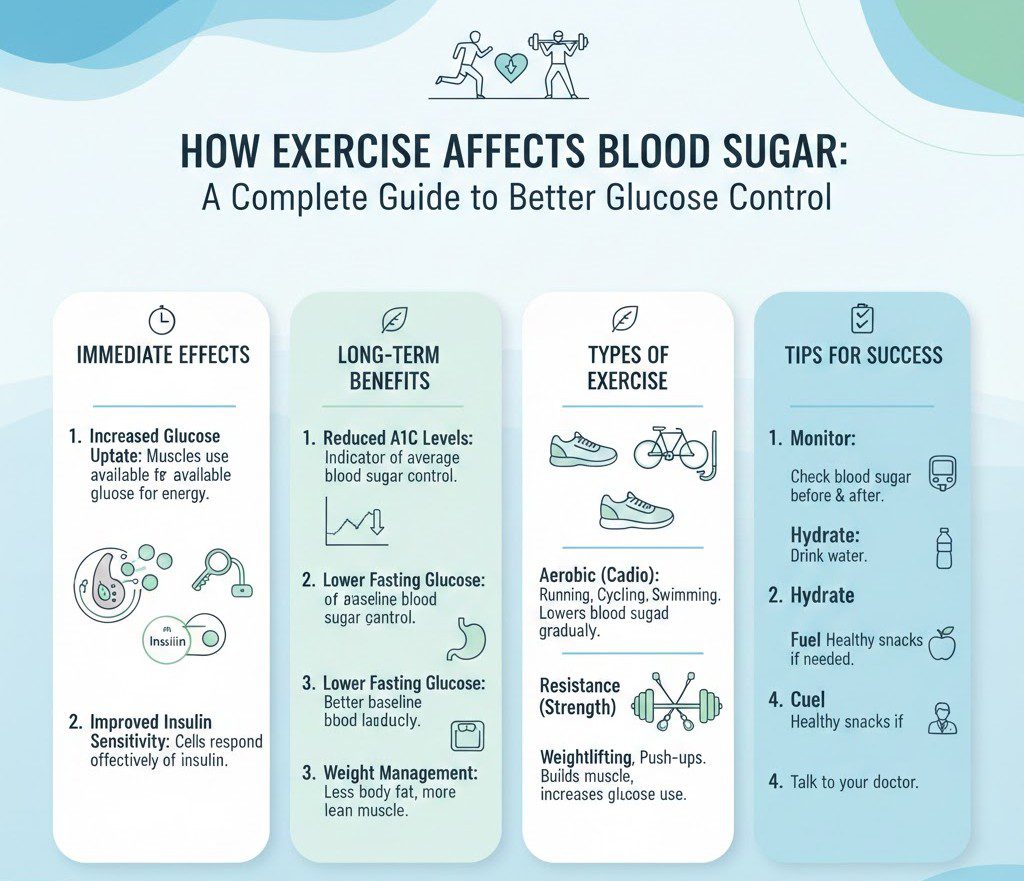
Understanding how exercise affects blood sugar is essential for maintaining overall health, especially for people with diabetes, prediabetes, or insulin resistance, because physical activity helps regulate blood glucose by improving insulin sensitivity, increasing glucose uptake by muscles, and supporting long-term metabolic health. Whether through walking, strength training, or aerobic exercise, regular movement helps the body manage blood sugar more efficiently, reduce glucose spikes, boost energy levels, and lower the risk of long-term complications when combined with healthy eating and consistent lifestyle habits.
Key Takeaways
- Understanding how exercise affects blood sugar helps improve daily glucose control and long-term metabolic health.
- Regular physical activity increases glucose uptake by muscles, lowering blood sugar levels naturally.
- Exercise improves insulin sensitivity, allowing the body to use insulin more efficiently.
- Different types of exercise aerobic, strength, and flexibility affect blood sugar in different but beneficial ways.
- Consistent exercise helps reduce blood sugar spikes, improve energy levels, and support overall wellness.
Importance of Exercise in Maintaining Healthy Blood Sugar Levels
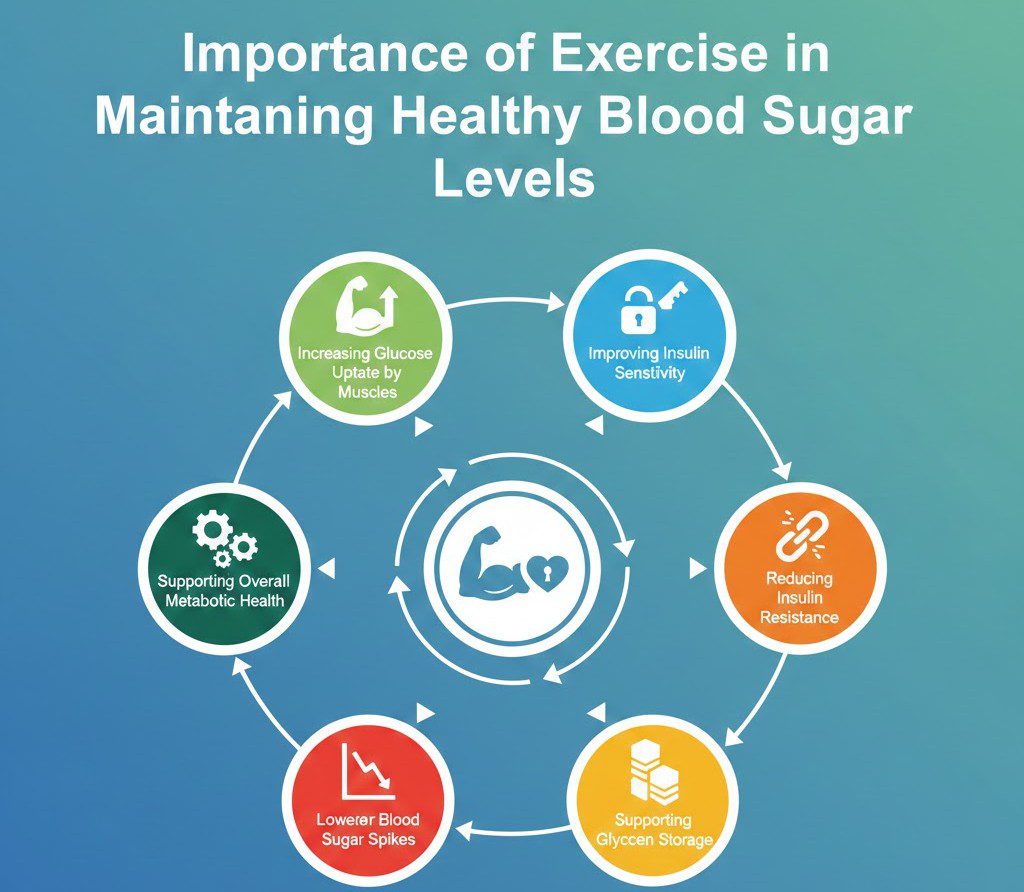
Exercise is important for blood sugar because it directly influences how the body uses glucose and responds to insulin. Physical activity activates metabolic processes that help lower blood sugar levels naturally and improve long-term glucose regulation. When exercise is done regularly, it supports stable blood sugar balance and reduces the risk of insulin resistance and related complications. Key ways why exercise is important for blood sugar include:
- Increasing Glucose Uptake by Muscles: During exercise, working muscles pull glucose from the bloodstream to use as energy. This process lowers blood sugar levels naturally and does not require large amounts of insulin.
- Improving Insulin Sensitivity: Exercise makes body cells more responsive to insulin, allowing glucose to enter cells more efficiently. Improved insulin sensitivity helps prevent excess sugar from remaining in the blood.
- Reducing Insulin Resistance: Regular physical activity helps reduce insulin resistance, which is a major factor in type 2 diabetes and blood sugar imbalance.
- Supporting Glycogen Storage: Exercise helps muscles store glucose as glycogen, preventing excess glucose from circulating in the bloodstream and causing spikes.
- Lowering Blood Sugar Spikes: Consistent exercise helps control post-meal blood sugar rises by improving how the body processes carbohydrates.
- Supporting Overall Metabolic Health: Exercise reduces inflammation, supports healthy weight management, and improves cardiovascular health, all of which contribute to better blood sugar control.
How Exercise Affects Blood Sugar
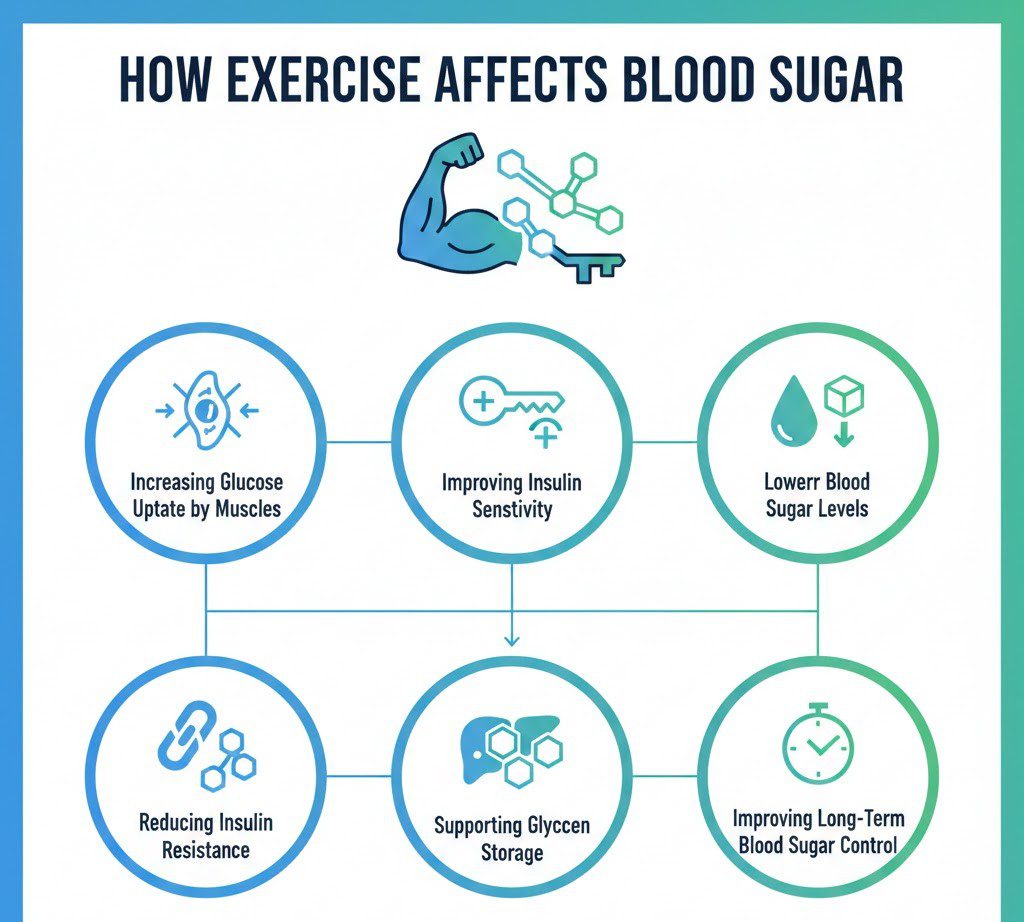
Exercise affects blood sugar by activating several metabolic and hormonal processes that help the body use glucose more efficiently. When you engage in physical activity, your muscles require additional energy, and glucose becomes one of the primary fuel sources. This increased demand helps lower blood sugar levels and improves the body’s ability to regulate glucose both during and after exercise. Regular and consistent exercise is one of the most effective ways to support healthy blood sugar control and long-term metabolic health.
- Increasing Glucose Uptake by Muscles: During exercise, muscle cells actively pull glucose from the bloodstream to meet energy needs. This process occurs with little or no insulin, making exercise especially beneficial for people with insulin resistance or high blood sugar levels.
- Improving Insulin Sensitivity: Exercise enhances how responsive body cells are to insulin. After physical activity, insulin works more efficiently for several hours, allowing glucose to enter cells more easily and reducing elevated blood sugar levels.
- Lowering Blood Sugar Levels: Physical activity helps lower both fasting and post-meal blood sugar levels by improving glucose utilization and preventing excess sugar from remaining in the bloodstream.
- Reducing Insulin Resistance: Regular exercise reduces insulin resistance by improving muscle mass, lowering inflammation, and enhancing metabolic function, all of which support better blood sugar regulation over time.
- Supporting Glycogen Storage: Exercise helps muscles store glucose as glycogen after activity. This storage process prevents glucose buildup in the blood and helps maintain balanced energy levels.
- Improving Long-Term Blood Sugar Control: Consistent exercise leads to better overall glucose regulation, fewer blood sugar spikes, improved energy levels, and a lower risk of long-term complications related to blood sugar imbalance.
How Exercise Helps Maintain Blood Sugar Balance
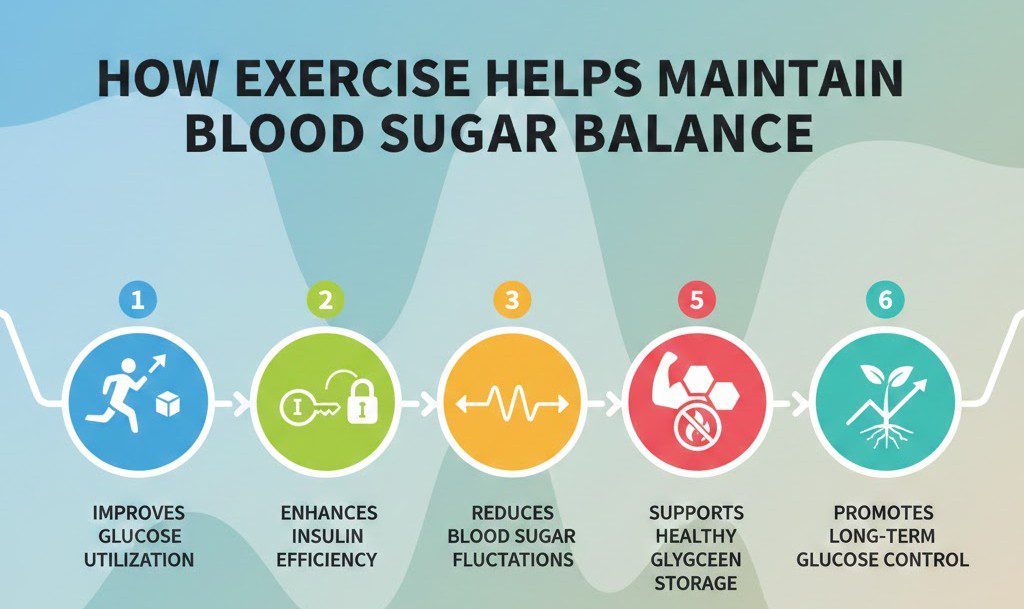
Exercise plays a vital role in maintaining blood sugar balance by improving the way the body uses glucose and responds to insulin. Regular physical activity helps regulate blood sugar levels throughout the day by supporting efficient glucose uptake, reducing insulin resistance, and preventing large fluctuations in blood sugar. Both short-term and long-term exercise habits contribute to steadier glucose control and improved metabolic health.
- Improves Glucose Utilization: During exercise, muscles use glucose as a primary energy source, which helps lower blood sugar levels and prevents excess glucose from remaining in the bloodstream.
- Enhances Insulin Efficiency: Exercise increases insulin sensitivity, allowing insulin to work more effectively and helping glucose enter cells more easily.
- Reduces Blood Sugar Fluctuations: Regular physical activity helps smooth out sudden rises and drops in blood sugar, leading to more stable glucose levels throughout the day.
- Supports Healthy Glycogen Storage: Exercise helps muscles store glucose as glycogen, reducing the likelihood of blood sugar spikes and improving energy balance.
- Lowers Inflammation: Physical activity reduces inflammation that can interfere with insulin signaling, further supporting balanced blood sugar regulation.
- Promotes Long-Term Glucose Control: Consistent exercise habits improve overall metabolic function and help maintain stable blood sugar levels over time, reducing the risk of insulin resistance and related complications.
Different Types of Exercise and Their Effects on Blood Sugar

Different types of exercise affect blood sugar in unique ways, and combining multiple forms of physical activity provides the greatest benefit for glucose control. Understanding how each type of exercise influences blood sugar helps create a balanced routine that supports both immediate and long-term blood sugar management.
- Aerobic Exercise: Activities such as walking, jogging, cycling, swimming, or dancing help lower blood sugar by increasing glucose use during movement. Aerobic exercise is especially effective at reducing post-meal blood sugar levels and improving overall glucose control.
- Strength Training (Resistance Exercise): Strength training exercises like weightlifting, resistance band workouts, or bodyweight exercises build muscle mass. More muscle increases the body’s ability to store and use glucose, improving insulin sensitivity and long-term blood sugar balance.
- High-Intensity Exercise: High-intensity interval training (HIIT) or short bursts of intense activity may temporarily raise blood sugar due to stress hormone release. However, over time, this type of exercise significantly improves insulin sensitivity and glucose regulation.
- Flexibility and Mind-Body Exercises: Exercises such as yoga, stretching, or Pilates help reduce stress and cortisol levels, which indirectly supports better blood sugar control and reduces stress-related glucose spikes.
- Daily Movement and Low-Intensity Activity: Light activities like household chores, standing, or short walks after meals help prevent prolonged blood sugar elevation and support steady glucose levels throughout the day.
Health Benefits of Exercise for Blood Sugar Control
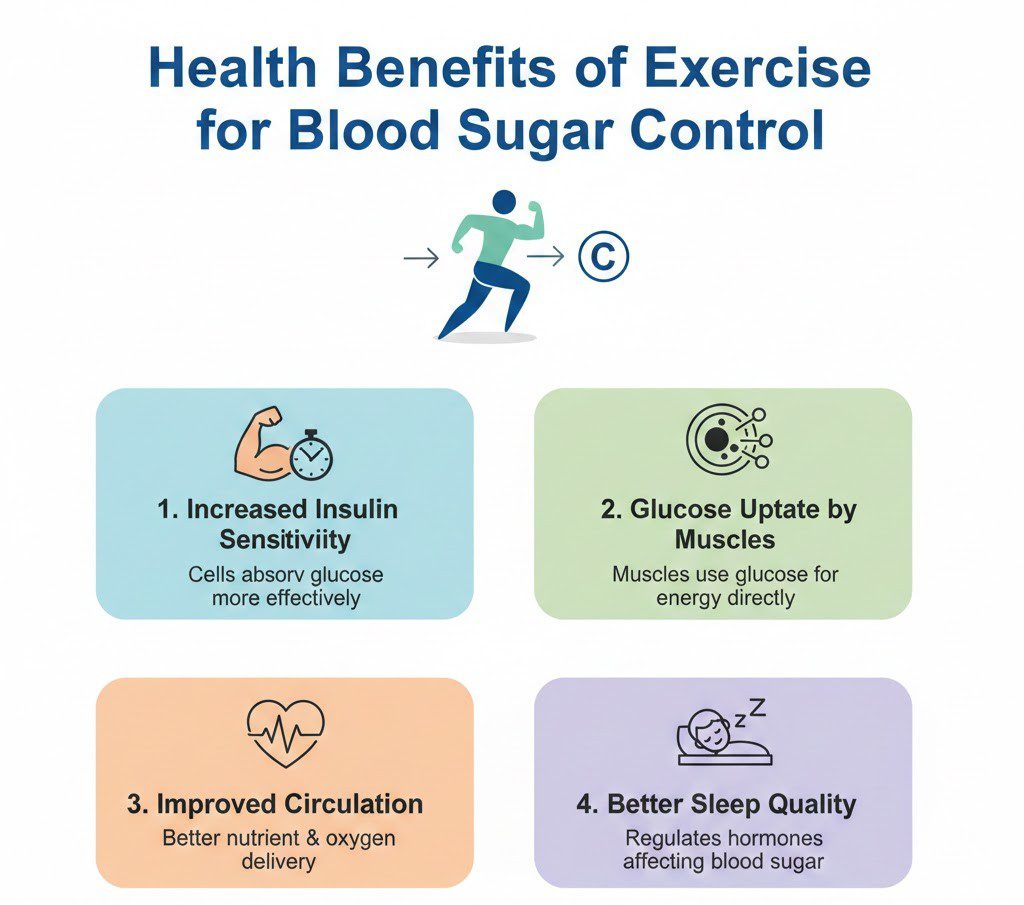
Exercise offers numerous health benefits for blood sugar control by improving how the body uses glucose and responds to insulin. Regular physical activity not only helps manage blood sugar levels but also supports overall metabolic and cardiovascular health.
- Improves Blood Sugar Regulation by helping lower both fasting and post-meal blood sugar levels.
- Enhances Insulin Sensitivity so glucose can enter cells more easily and efficiently.
- Reduces Risk of Type 2 Diabetes by supporting healthy glucose metabolism over time.
- Supports Weight Management through calorie burning, muscle building, and fat reduction.
- Lowers Inflammation that can interfere with insulin signaling and glucose control.
- Improves Heart Health by supporting healthy blood pressure and cholesterol levels.
- Boosts Energy Levels by promoting better glucose use and reducing fatigue.
- Supports Long-Term Metabolic Health by maintaining stable blood sugar and reducing complication risks.
Warning Signs to Monitor When Exercising
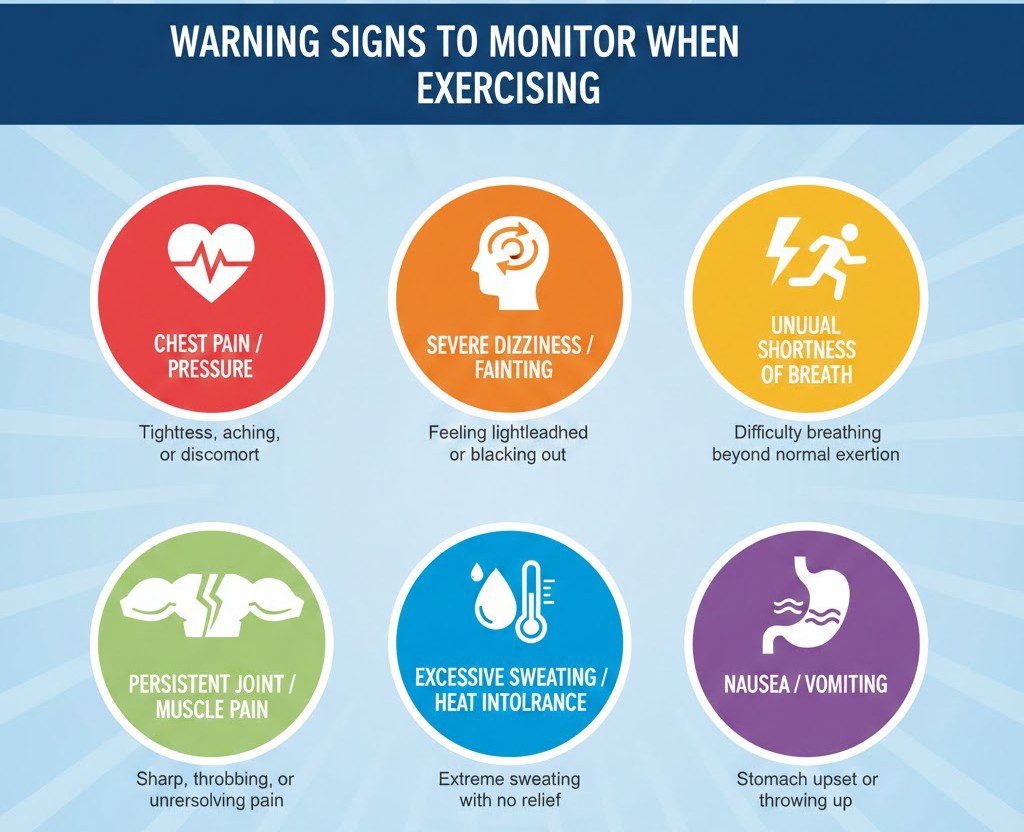
Exercise plays a key role in blood sugar management, but it can sometimes cause unexpected changes in glucose levels, especially for people with diabetes, prediabetes, or insulin resistance. Monitoring your body’s response during and after physical activity helps prevent complications and ensures safe, effective exercise. Paying attention to warning signs allows you to adjust intensity, timing, nutrition, or hydration as needed.
Common warning signs to watch for include:
- Low blood sugar symptoms such as dizziness, sweating, shakiness, confusion, or rapid heartbeat
- High blood sugar levels after intense or prolonged workouts
- Fatigue or unusual weakness during or after exercise
- Unexpected or sudden glucose fluctuations
- Headaches or blurred vision during activity
- Nausea or lightheadedness
- Difficulty concentrating or feeling disoriented
Ways to Maximize the Benefits of Exercise on Blood Sugar Levels
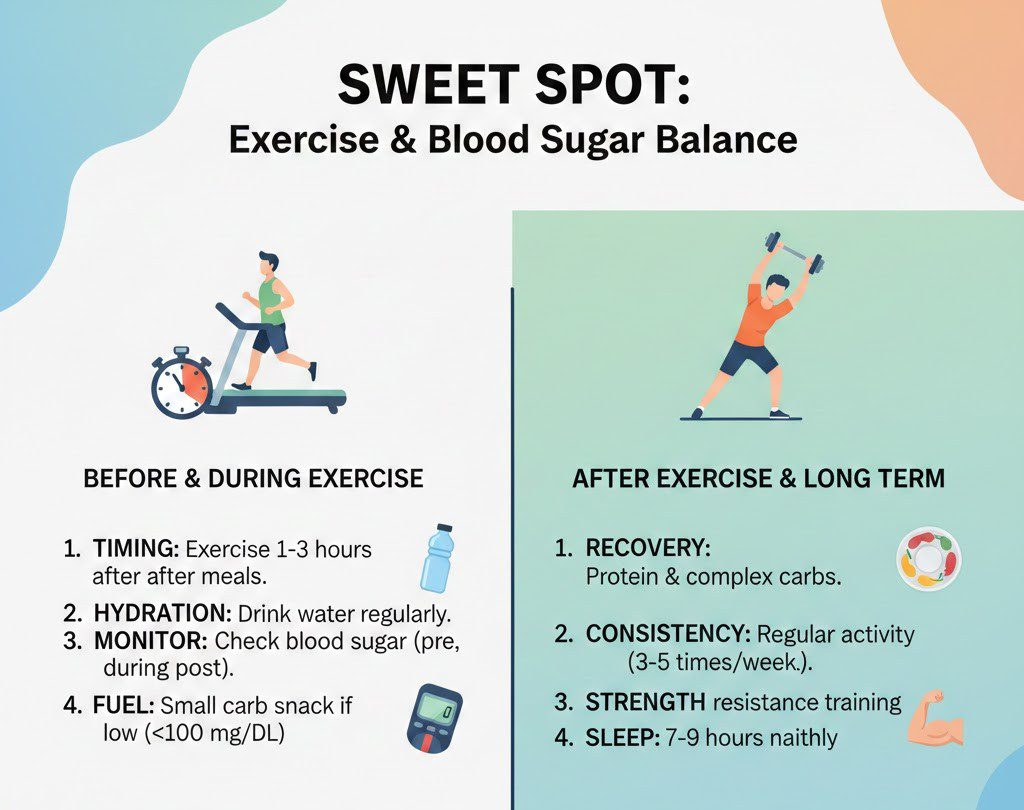
Exercise can be a powerful tool for blood sugar control when done correctly. Making small adjustments to how, when, and what type of exercise you do can help maximize its benefits while minimizing blood sugar fluctuations.
Helpful tips to optimize how exercise affects blood sugar include:
- Exercise regularly and aim for consistency rather than extreme intensity
- Combine aerobic exercise with strength training for better glucose control
- Monitor blood sugar before, during, and after workouts
- Stay well hydrated before and after physical activity
- Avoid skipping meals before exercise to prevent low blood sugar
- Choose the right timing for workouts based on your blood sugar patterns
- Warm up and cool down properly to support stable glucose levels
- Manage stress and prioritize adequate rest and recovery
Who Benefits Most from Exercise for Better Blood Sugar Management
Exercise plays an important role in regulating blood sugar and supporting overall metabolic health. While physical activity is beneficial for everyone, certain individuals may experience greater improvements in blood sugar control through regular exercise. Exercise is especially beneficial for:
- People with diabetes or prediabetes
- Individuals with insulin resistance or metabolic syndrome
- Those with sedentary or inactive lifestyles
- People aiming to prevent blood sugar–related disorders
- Individuals looking to improve glucose control and overall health
Conclusion
Exercise plays an important role in blood sugar control by helping the body use glucose more efficiently and improving insulin sensitivity, making it especially beneficial for people with diabetes, prediabetes, or insulin resistance. Understanding how exercise affects blood sugar shows that regular physical activity lowers glucose levels by increasing muscle glucose uptake, reducing insulin resistance, and supporting better glucose metabolism. Different types of exercise aerobic, strength, and mind-body activities—work together to stabilize blood sugar, reduce spikes, boost energy, and support long-term metabolic health. When combined with proper nutrition, hydration, stress management, and rest, consistent exercise helps maintain balanced blood sugar levels and reduces the risk of long-term complications.
FAQs
How does exercise affect blood sugar levels?
Exercise affects blood sugar by increasing glucose uptake by working muscles, which lowers the amount of sugar in the bloodstream. It also improves insulin sensitivity, helping the body use insulin more efficiently during and after physical activity.
Why is exercise important for blood sugar control?
Exercise is important because it helps regulate blood sugar naturally, reduces insulin resistance, and supports long-term glucose balance. Regular physical activity also lowers the risk of blood sugar spikes and metabolic complications.
Can exercise lower blood sugar without insulin?
Yes, during exercise muscles can absorb glucose directly from the blood with little or no insulin. This makes exercise especially beneficial for people with insulin resistance or type 2 diabetes.
What types of exercise are best for blood sugar control?
Aerobic exercise, strength training, and flexibility or mind-body activities all support blood sugar control. Combining different types of exercise provides both immediate and long-term glucose regulation benefits.
How often should I exercise to manage blood sugar?
Exercising regularly, ideally most days of the week, helps maintain stable blood sugar levels. Consistency is more important than intensity for long-term glucose control.
Can exercise cause low blood sugar?
Exercise can sometimes lead to low blood sugar, especially if meals are skipped or workouts are long or intense. Monitoring blood sugar and timing meals properly helps reduce this risk.
Does exercise improve insulin sensitivity?
Yes, exercise improves insulin sensitivity by making body cells more responsive to insulin. This allows glucose to enter cells more easily and helps prevent high blood sugar levels.
Can exercise help prevent type 2 diabetes?
Regular exercise helps prevent type 2 diabetes by improving glucose metabolism, reducing insulin resistance, supporting healthy weight management, and lowering inflammation.
Should blood sugar be checked before and after exercise?
Checking blood sugar before and after exercise helps you understand how your body responds to physical activity and allows you to exercise safely and effectively.
Who benefits most from exercise for blood sugar control?
People with diabetes, prediabetes, insulin resistance, sedentary lifestyles, or those at risk of metabolic disorders benefit the most from regular physical activity.
References
- Achauer, H. (2025, May 19). How to Manage Your Blood Sugar With Exercise. The New York Times. Retrieved December 17, 2025, from https://www.nytimes.com/2025/05/19/well/move/blood-sugar-exercise-diabetes.html
- 4 Exercises To Lower Blood Sugar. (2024, October 21). diaTribe.org. Retrieved December 17, 2025, from https://diatribe.org/exercise/4-exercises-lower-blood-sugar
- How exercise affects blood glucose levels & type 1 diabetes. (n.d.). Breakthrough T1D. Retrieved December 17, 2025, from https://breakthrought1d.org.au/resources/exercise-blood-glucose-levels-t1d/
- How Exercise Impacts Blood Sugar Levels. (2024, September 27). Continental Hospitals. Retrieved December 17, 2025, from https://continentalhospitals.com/blog/how-exercise-impacts-blood-sugar-levels/
- How You Can Use Exercise to Lower Blood Sugar. (2023, October 31). Beaufort Memorial Hospital. Retrieved December 17, 2025, from https://www.bmhsc.org/blog/how-you-can-use-exercise-to-lower-blood-sugar

Dr. Aaron Liu, MD, FACE, is an endocrinologist with 14 years of experience managing diabetes, insulin resistance, and metabolic disorders. He completed his medical training at Columbia University Vagelos College of Physicians and Surgeons and fellowship in Endocrinology at Mount Sinai Hospital. Dr. Liu’s expertise lies in integrating precision nutrition and advanced glucose monitoring for improved glycemic control. He has authored continuing education modules for the American Diabetes Association on lifestyle-based diabetes reversal.