
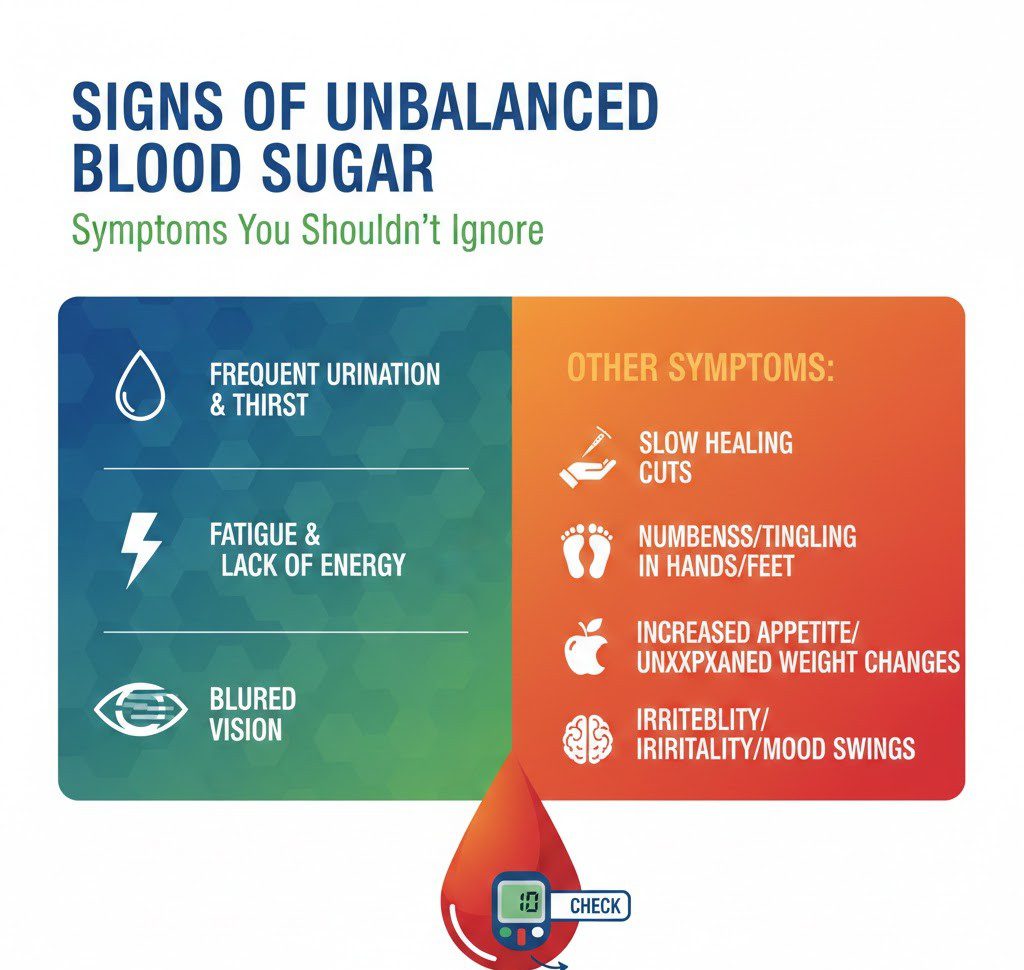
Understanding the signs of unbalanced blood sugar is essential for maintaining overall health and preventing long-term complications, as blood sugar levels that are too high or too low can affect energy, mood, metabolism, and vital organ function. Unbalanced blood sugar is common not only in people with diabetes, prediabetes, or insulin resistance, but also in individuals with irregular eating habits, poor sleep, or high stress levels. Recognizing the early signs of unbalanced blood sugar allows for timely lifestyle changes, improved nutrition, and better management strategies, while unmanaged blood sugar imbalance can increase the risk of persistent fatigue, weight gain, heart disease, nerve damage, and other metabolic disorders.
Key Takeaways
- The signs of unbalanced blood sugar can affect physical health, mental clarity, mood, and energy levels
- Both high and low blood sugar levels produce noticeable symptoms that should not be ignored
- Early signs of unbalanced blood sugar often appear before serious conditions like diabetes develop
- Frequent blood sugar fluctuations can disrupt metabolism and daily functioning
- Lifestyle factors such as diet, stress, sleep, and physical activity strongly influence blood sugar balance
- Identifying and addressing blood sugar imbalance early helps reduce the risk of long-term complications
What Is Unbalanced Blood Sugar?
Unbalanced blood sugar occurs when glucose levels in the bloodstream are consistently too high (hyperglycemia), too low (hypoglycemia), or fluctuate frequently throughout the day. Blood sugar balance depends on proper insulin function, regular meals, physical activity, and hormonal regulation. When this balance is disrupted, the body struggles to deliver energy efficiently to cells, leading to physical and mental symptoms.
Unbalanced blood sugar can affect people with diabetes or prediabetes, but it can also occur in individuals without these conditions due to poor diet, skipped meals, chronic stress, lack of sleep, or inactivity. Over time, ongoing blood sugar imbalance can increase the risk of insulin resistance, fatigue, weight gain, cardiovascular problems, and other metabolic complications.
Common Types of Blood Sugar Imbalance
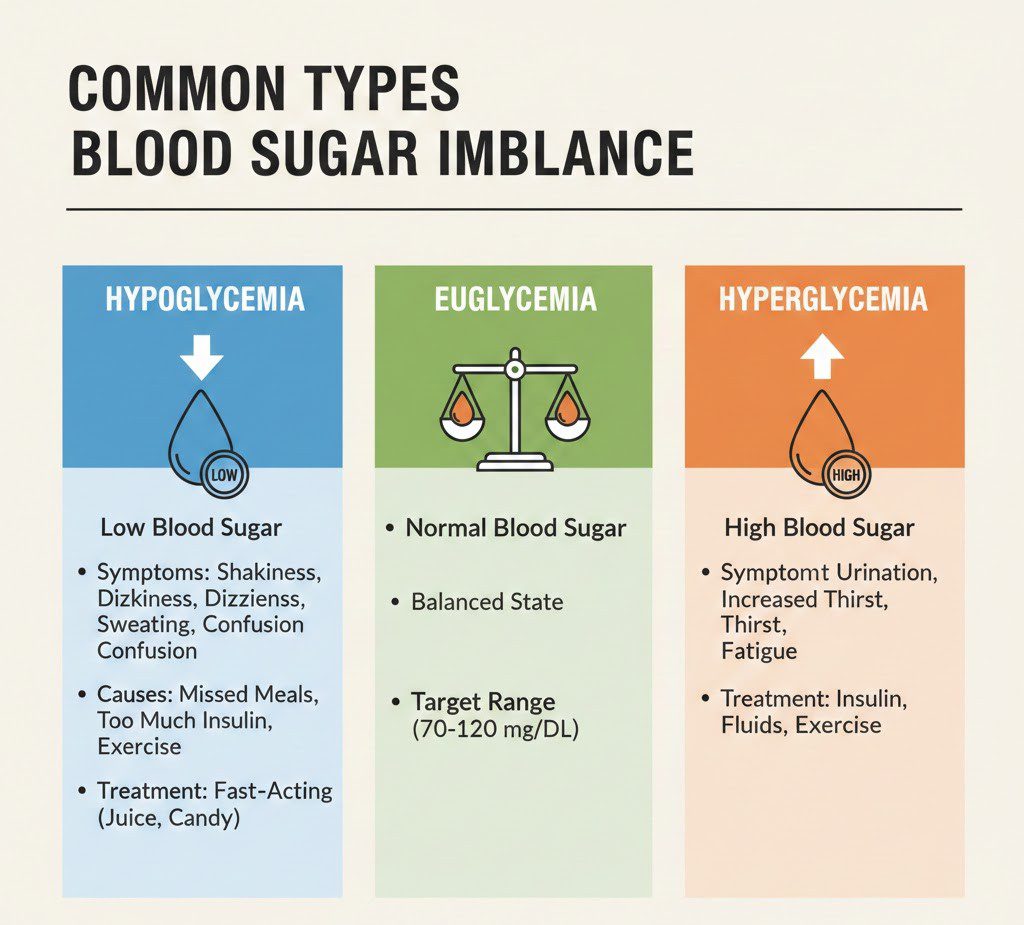
Unbalanced blood sugar can occur in different forms depending on whether glucose levels are too high, too low, or fluctuate frequently. Understanding these types helps identify symptoms early and choose the right management approach.
- High Blood Sugar (Hyperglycemia): This condition occurs when blood glucose levels stay elevated for long periods, often due to insulin resistance or insufficient insulin action. It is commonly associated with diabetes, high intake of refined carbohydrates or sugars, chronic stress, poor sleep, and lack of physical activity. Ongoing high blood sugar can lead to symptoms such as excessive thirst, frequent urination, fatigue, blurred vision, and long-term complications affecting the heart, nerves, and kidneys.
- Low Blood Sugar (Hypoglycemia): Low blood sugar occurs when glucose levels fall below the normal range, limiting the body’s ability to supply energy to the brain and muscles. It can result from skipping meals, eating too little, intense or prolonged exercise, certain medications, or delayed food intake. Common symptoms include dizziness, shakiness, sweating, confusion, rapid heartbeat, and sudden hunger, and severe cases may require immediate attention.
Signs of Unbalanced Blood Sugar
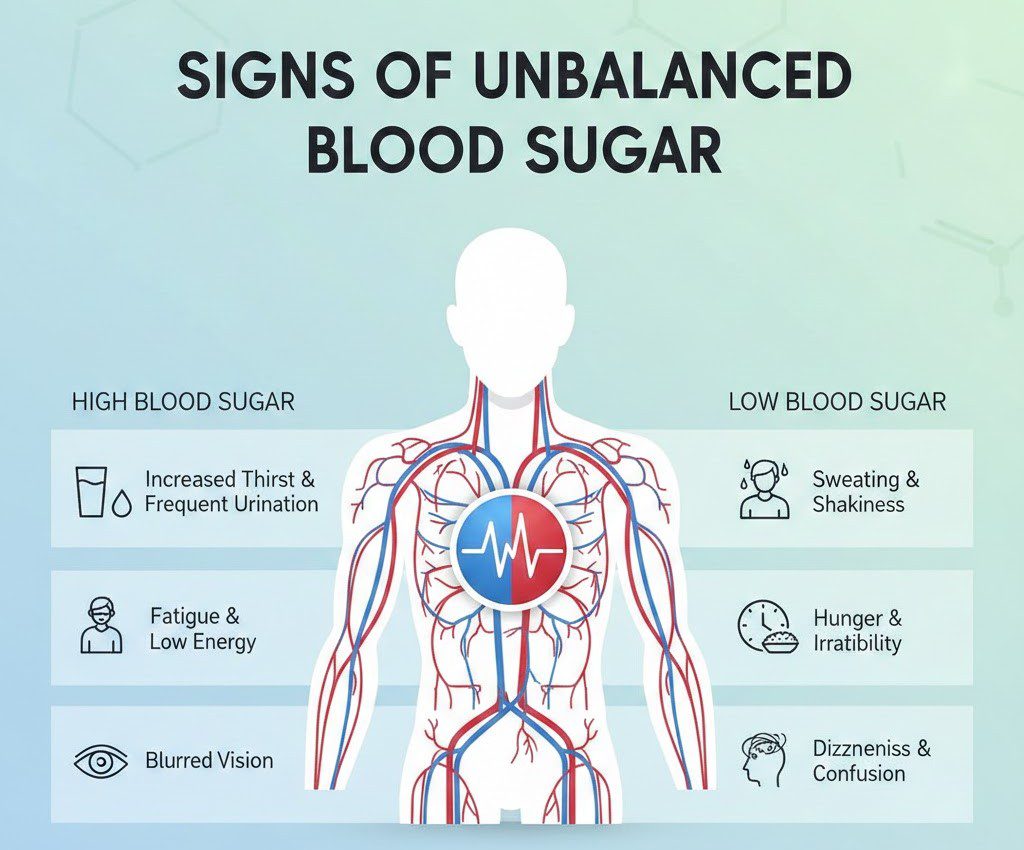
The signs of unbalanced blood sugar can appear in many ways and may affect your physical health, energy levels, mood, and mental clarity. These signs often vary depending on whether blood sugar levels are too high, too low, or fluctuating frequently throughout the day. Recognizing these symptoms early can help prevent long-term health complications and support better blood sugar management.
Common signs of unbalanced blood sugar include:
- Persistent fatigue or low energy levels
- Frequent hunger or sudden food cravings, especially for sugar or carbohydrates
- Dizziness, lightheadedness, or shakiness
- Mood swings, irritability, or anxiety
- Difficulty concentrating or brain fog
- Increased thirst and frequent urination
- Headaches or blurred vision
- Unexplained weight gain or difficulty losing weight
- Sleep disturbances or waking up feeling tired
- Rapid heartbeat or sweating, especially between meals
Warning Signs of Low or High Blood Sugar
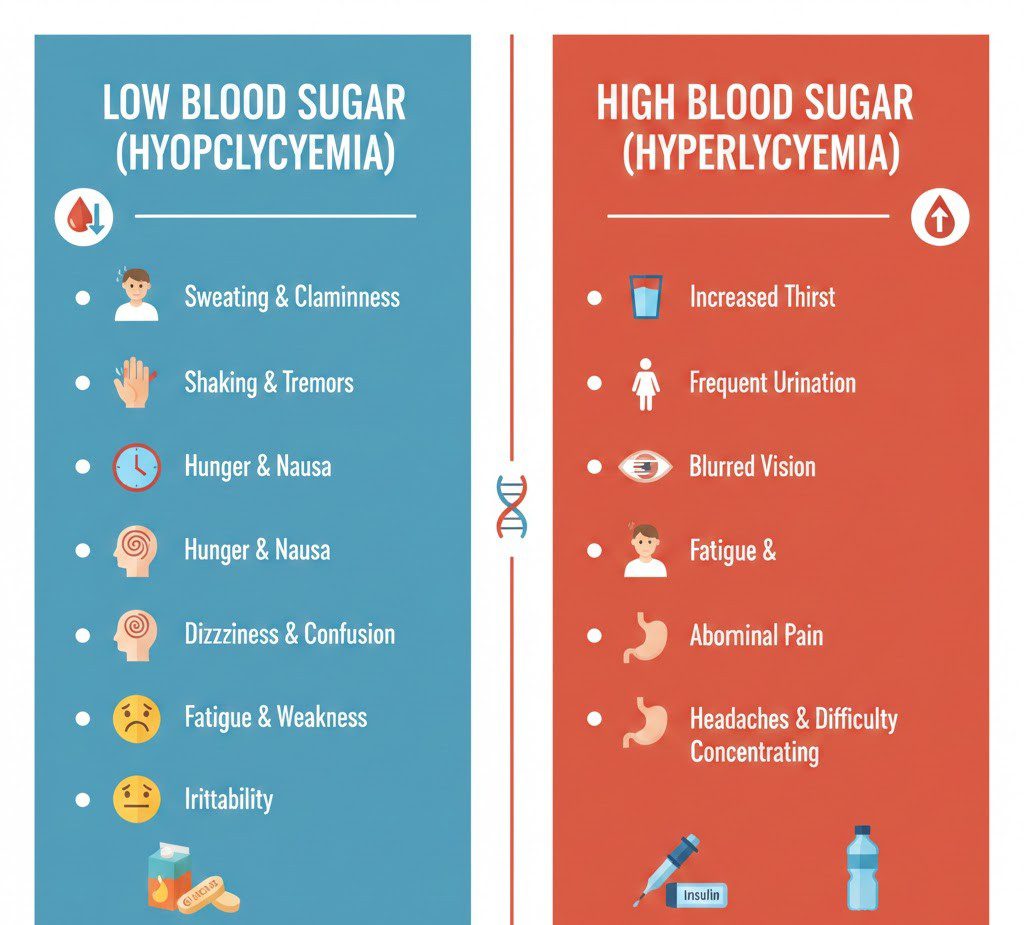
Recognizing the warning signs of low or high blood sugar is important for preventing complications and responding quickly when glucose levels become unbalanced. Symptoms can vary in intensity and may appear suddenly.
Warning Signs of Low Blood Sugar (Hypoglycemia)
Low blood sugar occurs when glucose levels drop below the normal range, limiting the body’s ability to supply energy to the brain and muscles. This can happen due to skipped meals, excessive exercise, certain medications, or delayed eating. Symptoms often develop quickly and should be addressed promptly.
- Shakiness or trembling
- Sweating or clammy skin
- Dizziness or lightheadedness
- Rapid heartbeat
- Sudden hunger
- Irritability, anxiety, or mood changes
- Difficulty concentrating or confusion
- Headache
- Fatigue or weakness
- Blurred vision (in more severe cases)
Warning Signs of High Blood Sugar (Hyperglycemia)
High blood sugar occurs when glucose levels remain elevated for extended periods, often due to insulin resistance, poor diet, stress, illness, or lack of physical activity. Symptoms may develop gradually and can worsen over time if blood sugar remains uncontrolled.
- Increased thirst and dry mouth
- Frequent urination
- Fatigue or low energy
- Blurred vision
- Headaches
- Difficulty concentrating
- Increased hunger
- Slow-healing cuts or frequent infections
- Nausea (in more severe cases)
- Unexplained weight loss (with ongoing high levels)
How to Know If Your Blood Sugar Is Off
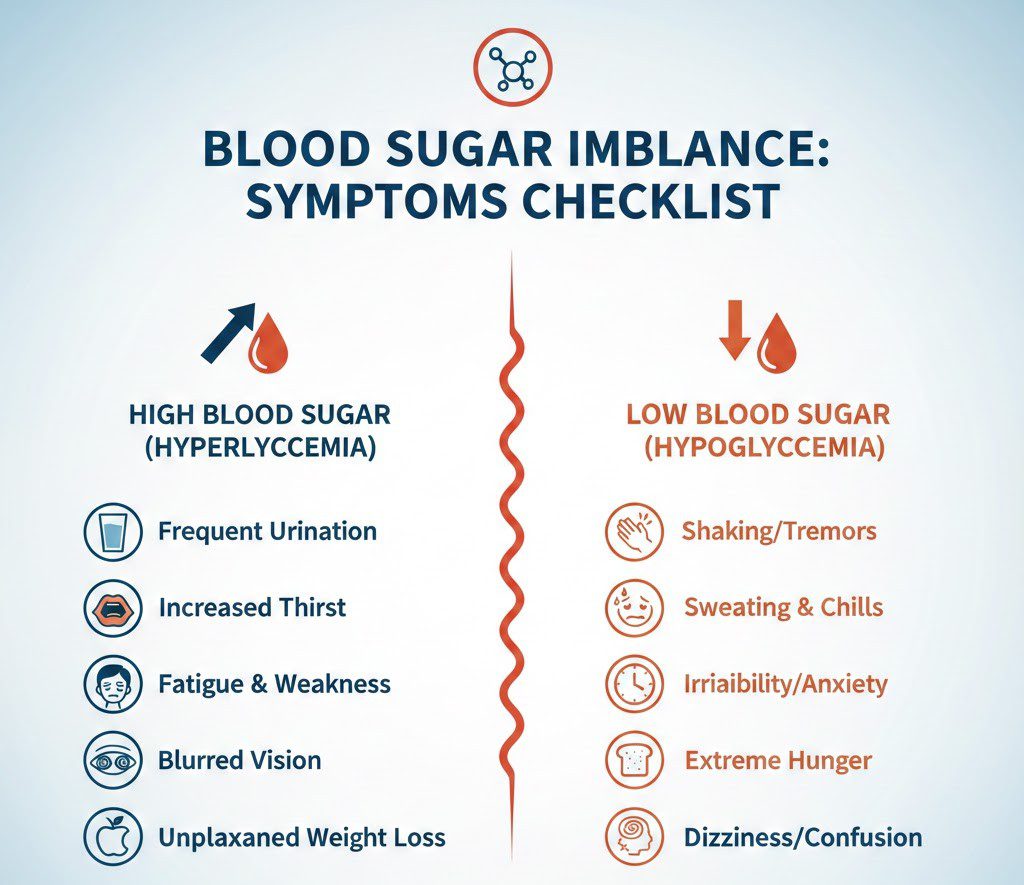
Knowing if your blood sugar is off involves noticing consistent changes in your body, energy levels, mood, and daily functioning. Blood sugar imbalances often develop gradually, and the signs may appear at specific times such as between meals, after eating, during physical activity, or under stress. Paying attention to recurring symptoms and patterns can help identify whether blood sugar levels are too high, too low, or fluctuating frequently. Monitoring blood sugar levels when recommended and noting how your body responds to food, exercise, and stress can provide valuable insight. If these signs persist, seeking medical advice is important for proper evaluation.
Common indicators that your blood sugar may be off include:
- Frequent fatigue or energy crashes
- Sudden hunger or strong cravings for sugar or carbohydrates
- Dizziness, shakiness, or lightheadedness
- Mood swings, irritability, or anxiety
- Difficulty concentrating or brain fog
- Increased thirst or frequent urination
- Headaches or blurred vision
- Feeling weak, shaky, or sweaty between meals
- Poor sleep or waking up feeling unrested
How Unbalanced Blood Sugar Affects the Body
Unbalanced blood sugar affects the body by disrupting normal metabolic and hormonal processes that control energy production, insulin function, and organ health. When blood sugar levels are consistently too high, too low, or fluctuate frequently, the body struggles to supply steady energy to cells, leading to widespread physical and mental effects. Over time, ongoing blood sugar imbalance can strain multiple systems and increase the risk of long-term health complications. Key ways how unbalanced blood sugar affects the body include:
- Disrupting Energy Production: When blood sugar is unstable, cells do not receive a consistent supply of glucose, the body’s main energy source. This can lead to persistent fatigue, weakness, and frequent energy crashes throughout the day.
- Impairing Brain Function: The brain relies heavily on glucose for proper function. Unbalanced blood sugar can cause difficulty concentrating, brain fog, headaches, mood swings, and irritability, especially during sudden drops or spikes in glucose levels.
- Reducing Insulin Effectiveness: Chronic blood sugar imbalance can reduce insulin sensitivity, making it harder for glucose to enter cells. This leads to more sugar remaining in the bloodstream and increases the risk of insulin resistance and type 2 diabetes.
- Increasing Inflammation: Fluctuating or high blood sugar levels promote inflammation in the body. Inflammation interferes with insulin signaling and contributes to metabolic issues, joint discomfort, and increased disease risk.
- Affecting Heart and Blood Vessel Health: Unbalanced blood sugar places stress on blood vessels and the cardiovascular system. Over time, this can increase the risk of high blood pressure, heart disease, and circulation problems.
- Disrupting Hormonal Balance: Blood sugar instability affects hormones involved in appetite, stress, and sleep. This can lead to increased hunger, sugar cravings, poor sleep quality, and difficulty managing weight.
Common Causes of Unbalanced Blood Sugar
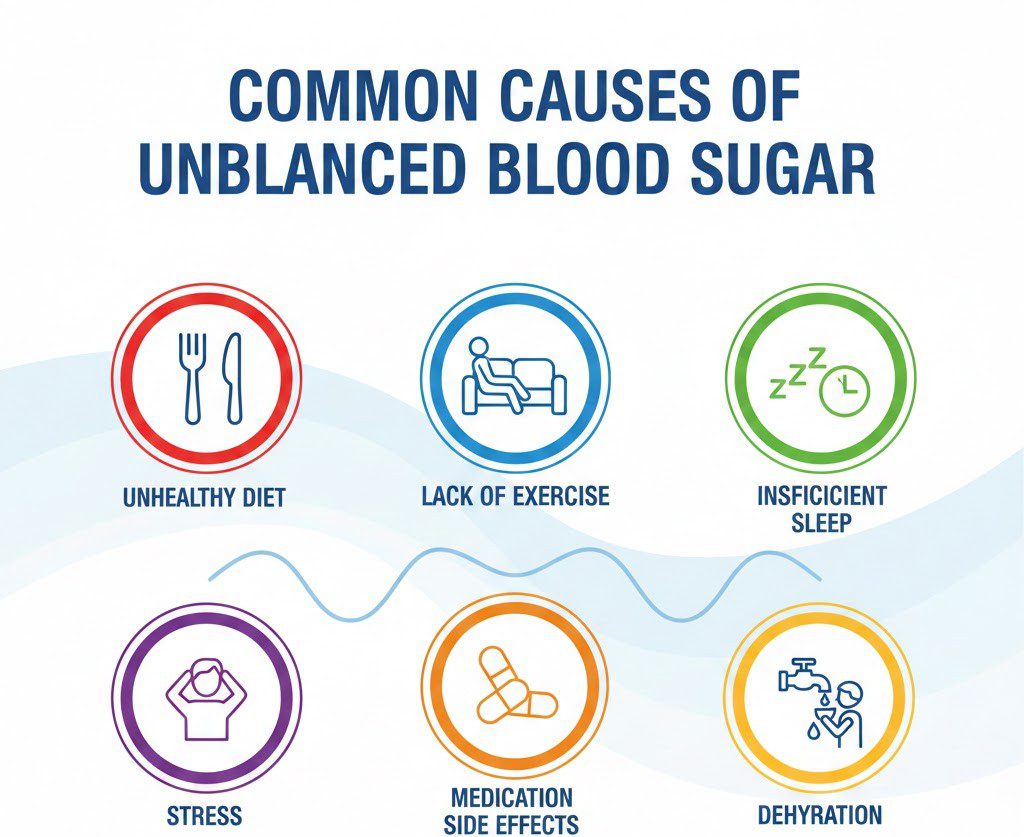
Unbalanced blood sugar often develops due to a combination of lifestyle, dietary, and health-related factors that interfere with normal glucose regulation. Understanding these common causes can help identify triggers and support better blood sugar management. Common causes of unbalanced blood sugar include:
- Irregular Eating Patterns: Skipping meals, eating late, or inconsistent meal timing can cause blood sugar levels to drop and spike frequently.
- High Intake of Refined Carbohydrates and Sugar: Diets high in sugary foods, sweetened beverages, and refined carbs lead to rapid glucose spikes followed by crashes.
- Insulin Resistance: When cells do not respond properly to insulin, glucose remains in the bloodstream, causing elevated blood sugar levels.
- Chronic Stress: Ongoing stress increases cortisol levels, which can raise blood sugar and disrupt insulin function.
- Lack of Physical Activity: Inactivity reduces glucose uptake by muscles and worsens insulin sensitivity.
- Poor Sleep Quality: Inadequate or irregular sleep disrupts hormones that regulate blood sugar and appetite.
- Hormonal Imbalances: Changes in hormones related to stress, thyroid function, or reproductive health can affect glucose regulation.
- Certain Medications: Some medications, including steroids or blood sugar–lowering drugs, can contribute to glucose imbalance.
When to Seek Medical Advice
It’s important to seek medical advice if signs of unbalanced blood sugar occur frequently, become severe, or do not improve with lifestyle changes. Persistent blood sugar imbalance may indicate underlying health conditions that require professional evaluation and treatment.
You should consult a healthcare provider if you experience:
- Ongoing fatigue or weakness
- Frequent dizziness, shakiness, or confusion
- Unexplained weight loss or weight gain
- Excessive thirst or frequent urination
- Repeated episodes of low or high blood sugar
- Difficulty concentrating or blurred vision
Practical Tips to Help Balance Blood Sugar Levels
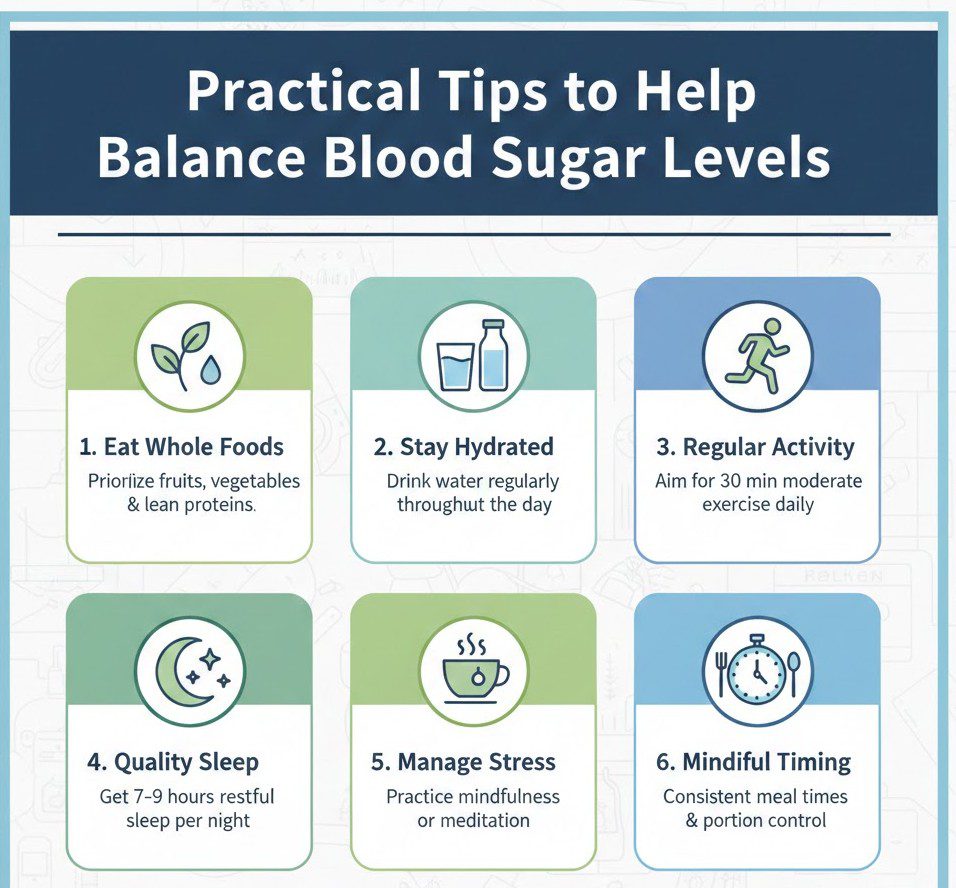
Maintaining balanced blood sugar levels requires consistent daily habits that support healthy glucose regulation. Small lifestyle changes can make a significant difference in preventing blood sugar spikes and crashes.
Helpful tips to balance blood sugar levels include:
- Eat balanced meals that include protein, fiber, and healthy fats
- Avoid skipping meals and maintain regular eating times
- Limit refined carbohydrates, sugary foods, and sweetened beverages
- Stay physically active with regular exercise or daily movement
- Manage stress through relaxation techniques such as meditation or deep breathing
- Prioritize quality sleep and maintain a consistent sleep schedule
- Stay well hydrated throughout the day
- Monitor blood sugar levels if recommended by a healthcare professional
Conclusion
Unbalanced blood sugar occurs when glucose levels are too high, too low, or fluctuate often, affecting energy, mood, metabolism, and overall health. It can impact people with or without diabetes, especially those with poor diet, high stress, inadequate sleep, or low physical activity. Common signs include fatigue, hunger, dizziness, mood changes, brain fog, and increased thirst, while symptoms vary for low and high blood sugar. If left unmanaged, blood sugar imbalance can impair insulin function, increase inflammation, and raise the risk of long-term health complications, making early recognition and healthy lifestyle habits essential.
FAQs
What are the most common signs of unbalanced blood sugar?
Common signs include persistent fatigue, frequent hunger, sugar cravings, dizziness, shakiness, mood swings, brain fog, increased thirst, frequent urination, headaches, and sleep disturbances.
Can you have unbalanced blood sugar without having diabetes?
Yes, unbalanced blood sugar can occur even without diabetes due to factors like irregular eating habits, high stress, poor sleep, lack of exercise, or diets high in refined carbohydrates and sugar.
What is the difference between high and low blood sugar symptoms?
High blood sugar often causes thirst, frequent urination, fatigue, and blurred vision, while low blood sugar typically leads to shakiness, sweating, dizziness, rapid heartbeat, hunger, and confusion.
How quickly can blood sugar become unbalanced?
Blood sugar can become unbalanced quickly due to skipped meals, stress, intense exercise, illness, or high-sugar meals. Some symptoms may appear suddenly, while others develop gradually.
Why do I feel tired even after eating?
Feeling tired after meals may be a sign of blood sugar spikes followed by crashes, often caused by meals high in refined carbohydrates or lacking protein and fiber.
How do I know if my blood sugar is too low or too high?
Pay attention to symptoms, timing, and patterns such as feeling shaky between meals or extremely thirsty after eating. Blood sugar monitoring, when recommended, can help confirm whether levels are high or low.
Can stress cause unbalanced blood sugar?
Yes, chronic stress raises cortisol levels, which can increase blood sugar and interfere with insulin function, leading to frequent glucose fluctuations.
What lifestyle habits help prevent blood sugar imbalance?
Regular meals, balanced nutrition with protein and fiber, physical activity, stress management, quality sleep, hydration, and avoiding excessive sugar intake all help maintain stable blood sugar levels.
When should I see a doctor for blood sugar symptoms?
You should seek medical advice if symptoms are frequent, severe, worsening, or interfere with daily life, or if you experience repeated episodes of low or high blood sugar.
Can early signs of unbalanced blood sugar be reversed?
In many cases, early blood sugar imbalance can be improved or reversed through lifestyle changes such as better nutrition, regular exercise, stress reduction, and proper sleep, especially when addressed early.
References
- Discovering Blood Sugar Imbalances: Effects on Energy and Sleep. (2022, January 3). Nutrisense Journal. Retrieved December 17, 2025, from https://www.nutrisense.io/blog/blood-sugar-imbalances?srsltid=AfmBOor756AZuss0cv8xVpFynSIr3rrwdajIebXrDaDUcs1chaahrsMQ
- Hypoglycemia (Low Blood Sugar): Symptoms & Treatment. (n.d.). Cleveland Clinic. Retrieved December 17, 2025, from https://my.clevelandclinic.org/health/diseases/11647-hypoglycemia-low-blood-sugar
- Sharma, T. (n.d.). Fluctuating Blood Sugar in Diabetes: Causes and Control Tips. PACE Hospitals. Retrieved December 17, 2025, from https://www.pacehospital.com/roller-coaster-effect-in-diabetes
- Signs, Symptoms, and Treatment for Hypoglycemia (Low Blood Glucose). (n.d.). American Diabetes Association. Retrieved December 17, 2025, from https://diabetes.org/living-with-diabetes/hypoglycemia-low-blood-glucose/symptoms-treatment
- 10 Signs Your Blood Sugar Is Out of Control. (2018, November 13). Upland Hills Health. Retrieved December 17, 2025, from https://www.uplandhillshealth.org/blog/10-signs-your-blood-sugar-is-out-of-control/

Dr. Aaron Liu, MD, FACE, is an endocrinologist with 14 years of experience managing diabetes, insulin resistance, and metabolic disorders. He completed his medical training at Columbia University Vagelos College of Physicians and Surgeons and fellowship in Endocrinology at Mount Sinai Hospital. Dr. Liu’s expertise lies in integrating precision nutrition and advanced glucose monitoring for improved glycemic control. He has authored continuing education modules for the American Diabetes Association on lifestyle-based diabetes reversal.