
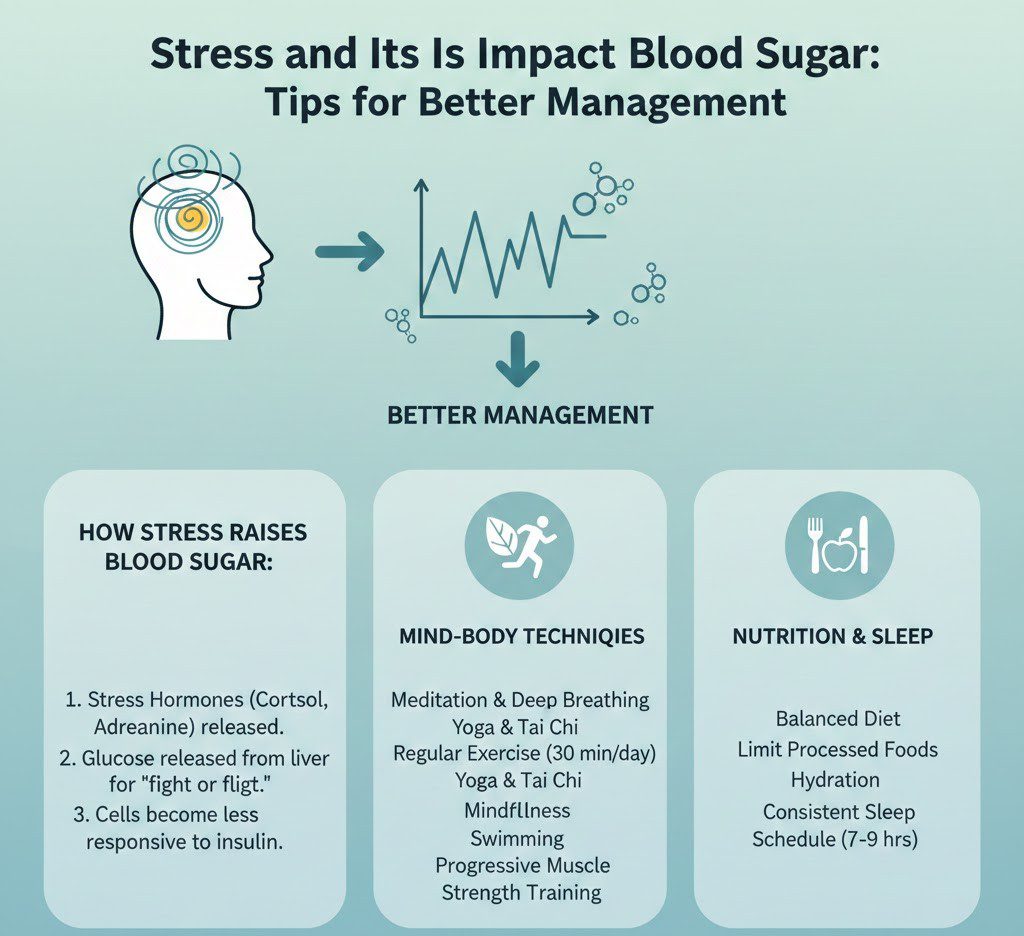
Understanding how stress impacts blood sugar is essential for overall health, especially for people with diabetes or those at risk. Stress directly affects glucose regulation by triggering hormones like cortisol and adrenaline, which can raise blood sugar levels. Both emotional and physical stress can cause unexpected spikes, and chronic stress may reduce insulin sensitivity over time. Learning how stress impacts blood sugar and managing stress effectively helps maintain stable glucose levels and long-term wellness.
Key Takeaways
- Stress can raise blood sugar levels by triggering cortisol and adrenaline release.
- Understanding how stress impacts blood sugar helps improve glucose control.
- Emotional and physical stress both influence stress and glucose balance.
- Chronic stress may reduce insulin sensitivity, increasing the risk of diabetes.
- Practicing stress management tips helps maintain stable blood sugar and overall health.
- Awareness of emotional stress and blood sugar changes is important for long-term wellness.
What Is Stress?
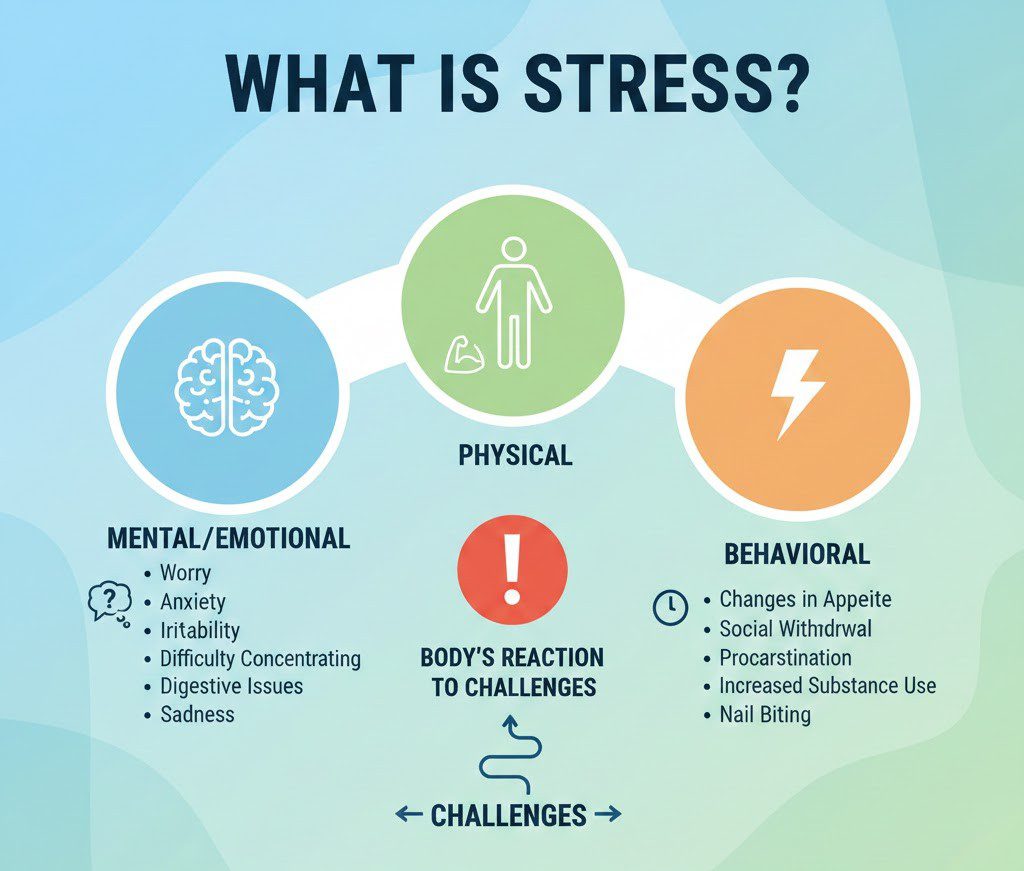
Stress is the body’s natural response to emotional, physical, or psychological pressure. When the brain perceives a threat or challenge, it activates the “fight-or-flight” response, triggering the release of stress hormones such as cortisol and adrenaline. These hormones prepare the body to respond by increasing heart rate, sharpening focus, and releasing energy in the form of glucose. While short-term stress can be helpful in certain situations, chronic or ongoing stress can have harmful effects on multiple body systems particularly glucose metabolism and insulin function.
Understanding how stress impacts blood sugar begins with recognizing that stress can come from many sources and affect the body even when no physical danger is present. Common sources of stress include:
- Emotional factors such as anxiety, worry, fear, or depression
- Physical stress like illness, injury, inflammation, lack of sleep, or intense exercise
- Mental stress related to work pressure, deadlines, academic demands, or financial concerns
- Lifestyle stress caused by poor sleep routines, unhealthy eating habits, or lack of relaxation
How Stress Impacts Blood Sugar
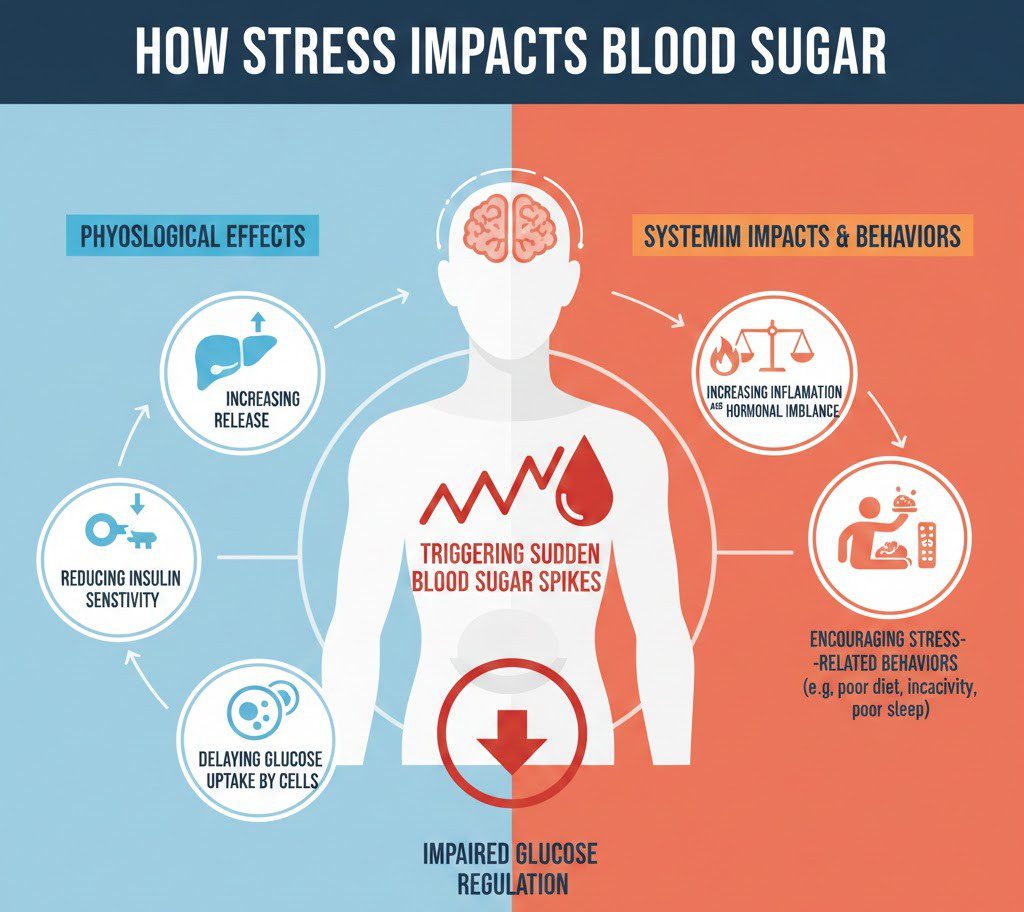
Stress impacts blood sugar by activating hormonal and metabolic responses that directly affect glucose production, insulin action, and energy balance in the body. When stress occurs, the body enters a survival mode designed to provide quick energy, but this response can disrupt normal blood sugar regulation especially when stress is frequent or ongoing. Key ways how stress impacts blood sugar include:
- Increasing Glucose Release: When stress hormones such as cortisol and adrenaline are released, they signal the liver to break down stored glycogen and release glucose into the bloodstream. This process ensures the body has immediate energy to respond to stress but often results in elevated blood sugar levels, even when no food has been consumed.
- Reducing Insulin Sensitivity: One of the most significant ways how stress impacts blood sugar is by reducing insulin sensitivity. Cortisol makes body cells less responsive to insulin, meaning glucose cannot enter the cells efficiently. As a result, glucose remains in the bloodstream, leading to higher blood sugar levels and increased insulin resistance over time.
- Delaying Glucose Uptake by Cells: During stress, the body prioritizes energy availability over storage. Muscle and fat cells slow down glucose uptake, allowing sugar to stay in circulation longer. This delay worsens blood sugar control, particularly in people with diabetes or prediabetes.
- Triggering Sudden Blood Sugar Spikes: Emotional stress, anxiety, fear, or physical stress such as illness can cause rapid blood sugar spikes. These sudden increases often occur without dietary changes, making glucose levels unpredictable and harder to manage.
- Increasing Inflammation and Hormonal Imbalance: Chronic stress increases inflammation and disrupts hormonal balance, further affecting how stress impacts blood sugar. Inflammation interferes with insulin signaling and worsens metabolic health, increasing the risk of long-term complications.
- Encouraging Stress-Related Behaviors: Stress often leads to behaviors such as overeating, craving sugary foods, skipping meals, or reduced physical activity. These lifestyle changes further amplify how stress impacts blood sugar and contribute to poor glucose control.
How Stress Affects Blood Sugar Balance
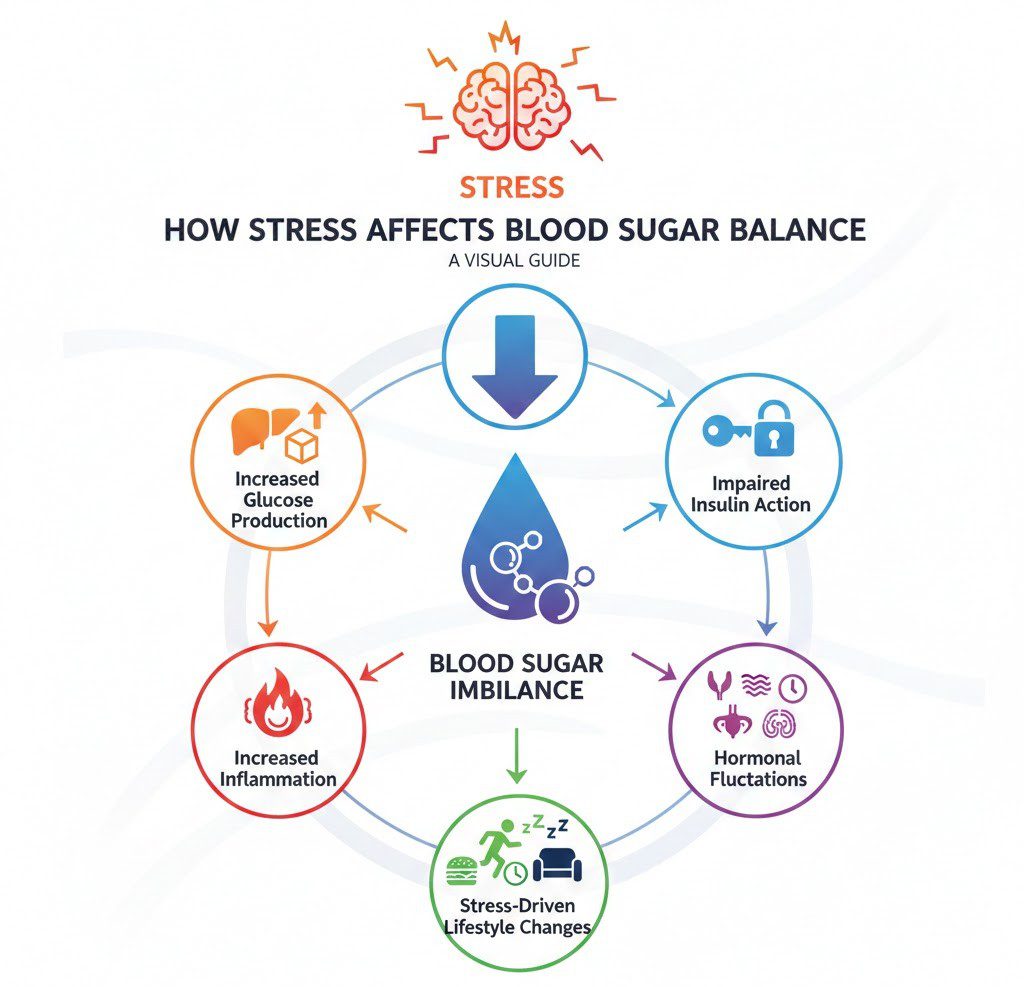
Stress impacts blood sugar balance by disrupting the body’s normal regulation of glucose and insulin. When stress becomes frequent or prolonged, the hormonal response designed for short-term survival starts to interfere with everyday metabolic processes. This imbalance makes it harder for the body to maintain stable blood sugar levels, even with healthy eating and regular activity. Key ways how stress impacts blood sugar balance include:
- Increased Glucose Production: Stress hormones such as cortisol and adrenaline signal the liver to release extra glucose into the bloodstream. While this provides quick energy during stressful situations, repeated activation leads to consistently elevated blood sugar levels and glucose imbalance.
- Impaired Insulin Action: One of the main ways how stress impacts blood sugar balance is by reducing insulin effectiveness. Elevated cortisol decreases insulin sensitivity, meaning glucose cannot move efficiently from the bloodstream into the cells, causing prolonged high blood sugar.
- Slower Glucose Utilization: During stress, the body prioritizes immediate energy availability. Muscle and fat cells reduce glucose uptake, leading to excess sugar remaining in the blood and further disrupting blood sugar balance.
- Hormonal Fluctuations: Chronic stress alters hormone levels beyond cortisol, affecting insulin, glucagon, and other metabolic hormones. These fluctuations make blood sugar levels more unpredictable and difficult to regulate.
- Increased Inflammation: Ongoing stress promotes low-grade inflammation, which interferes with insulin signaling and worsens glucose regulation. Inflammation plays a key role in long-term blood sugar imbalance and insulin resistance.
- Stress-Driven Lifestyle Changes: Stress often leads to unhealthy behaviors such as emotional eating, cravings for high-sugar foods, disrupted sleep, and reduced physical activity. These behaviors further intensify how stress impacts blood sugar balance.
Different Types of Stress and Their Effects on Blood Sugar
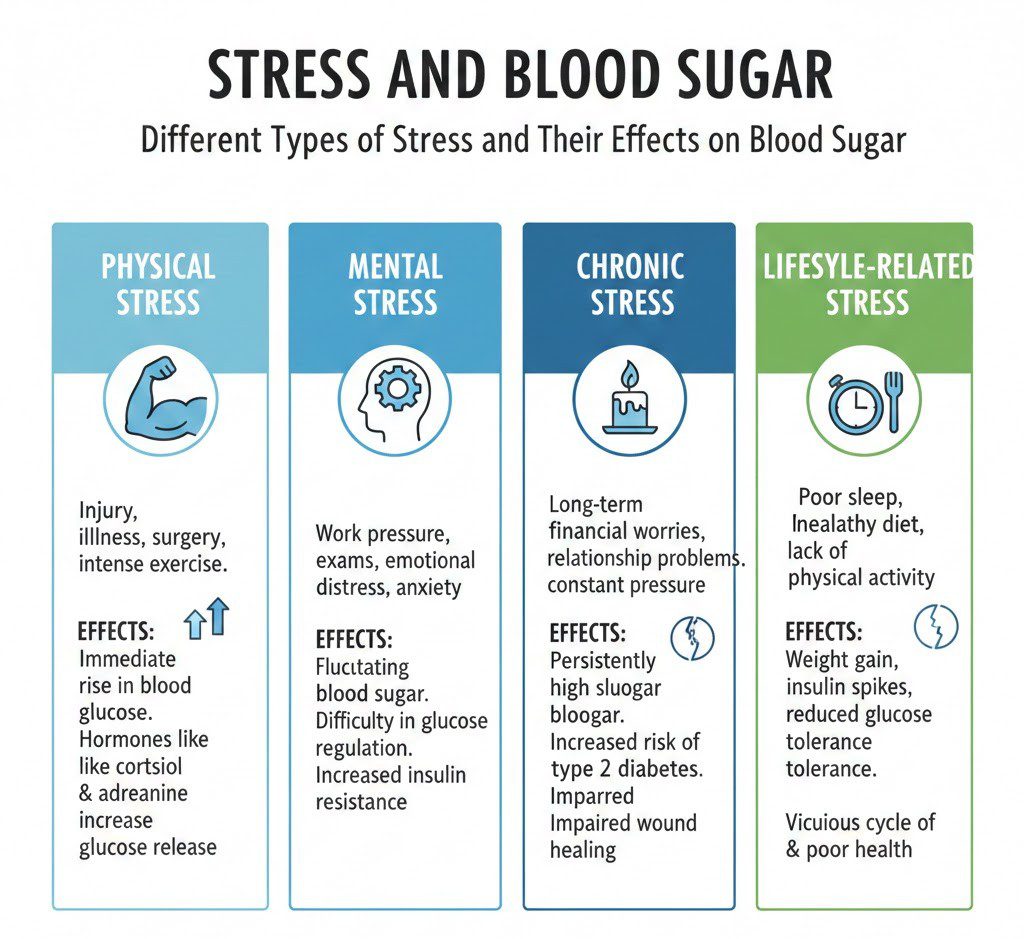
Stress is not a single experience; it occurs in different forms, and each type affects the body and blood sugar differently. Understanding the various types of stress and how they impact blood sugar helps identify triggers that may cause glucose fluctuations and long-term metabolic imbalance.
Common types of stress and how they impact blood sugar include:
- Emotional Stress: Emotional stress from anxiety, fear, anger, or depression increases the release of cortisol and adrenaline. These hormones raise blood sugar levels by signaling the liver to release glucose. Ongoing emotional stress can cause frequent blood sugar spikes and make glucose control more difficult, especially for people with diabetes.
- Physical Stress: Physical stress such as illness, injury, surgery, inflammation, lack of sleep, or intense exercise places extra demands on the body. This type of stress raises blood sugar as the body releases glucose to support healing and energy needs. Blood sugar levels may remain elevated until the physical stressor resolves.
- Mental Stress: Mental stress related to work pressure, deadlines, academic demands, or financial concerns keeps the brain in a constant state of alert. Prolonged mental stress increases cortisol levels, which reduces insulin sensitivity and contributes to unstable blood sugar levels over time.
- Chronic Stress: Chronic stress is the most harmful when considering how stress impacts blood sugar. Persistent stress keeps cortisol levels elevated for long periods, leading to insulin resistance, increased inflammation, and difficulty maintaining stable glucose levels. This significantly raises the risk of prediabetes and type 2 diabetes.
- Lifestyle-Related Stress: Poor sleep, irregular routines, unhealthy eating habits, and lack of physical activity create ongoing stress on the body. These factors disrupt hormonal balance and worsen how stress impacts blood sugar, often leading to unpredictable glucose fluctuations.
Health Risks of Stress on Blood Sugar
Chronic or unmanaged stress can significantly disrupt blood sugar regulation and increase the risk of metabolic and long-term health complications, especially for individuals with diabetes or those at risk. Key health risks of stress on blood sugar include:
- Persistent high blood sugar (hyperglycemia)
- Increased insulin resistance
- Difficulty managing diabetes
- Higher risk of heart disease
- Weight gain, especially abdominal fat
- Increased inflammation
- Fatigue and hormonal imbalance
Warning Signs That Stress Is Affecting Your Blood Sugar
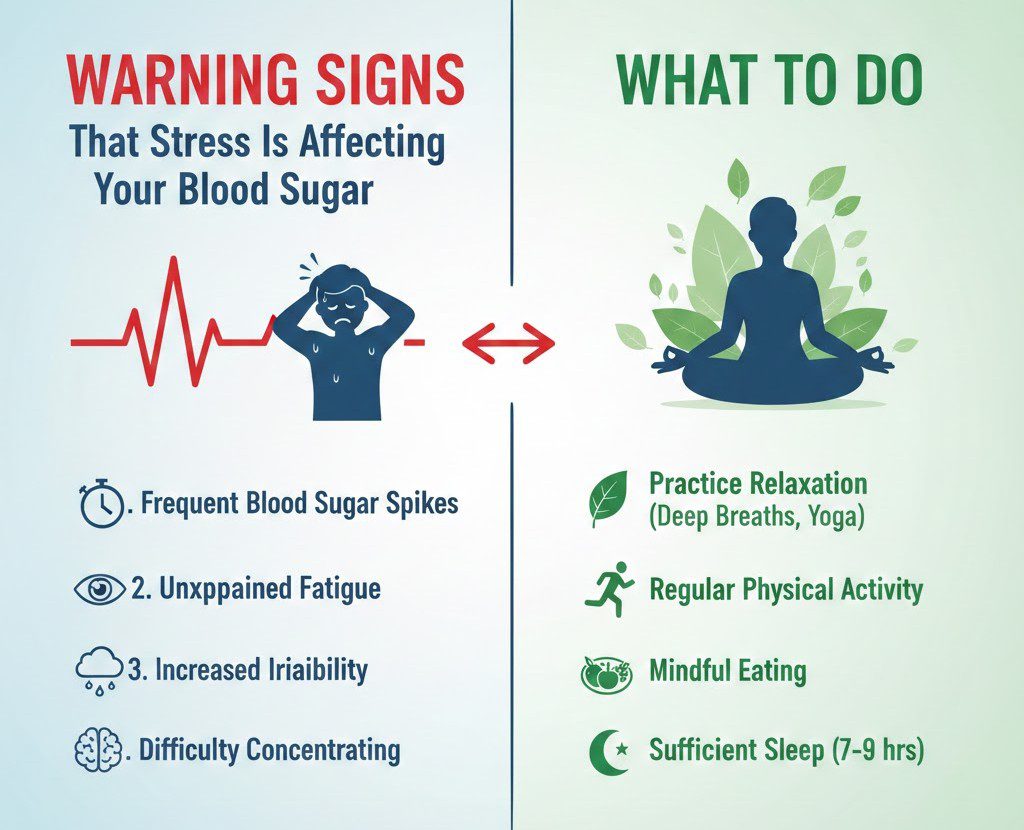
Stress-related changes in blood sugar can be subtle at first but may become more noticeable over time. Recognizing these signs early can help improve blood sugar management and prevent long-term complications. Common signs stress is impacting your blood sugar include:
- Unexplained or frequent blood sugar spikes
- Difficulty controlling blood sugar despite healthy habits
- Increased cravings for sugary or high-carbohydrate foods
- Fatigue or low energy levels
- Trouble sleeping or poor sleep quality
- Increased irritability, anxiety, or mood changes
- Headaches or difficulty concentrating
Stress Management Tips for Better Blood Sugar Control
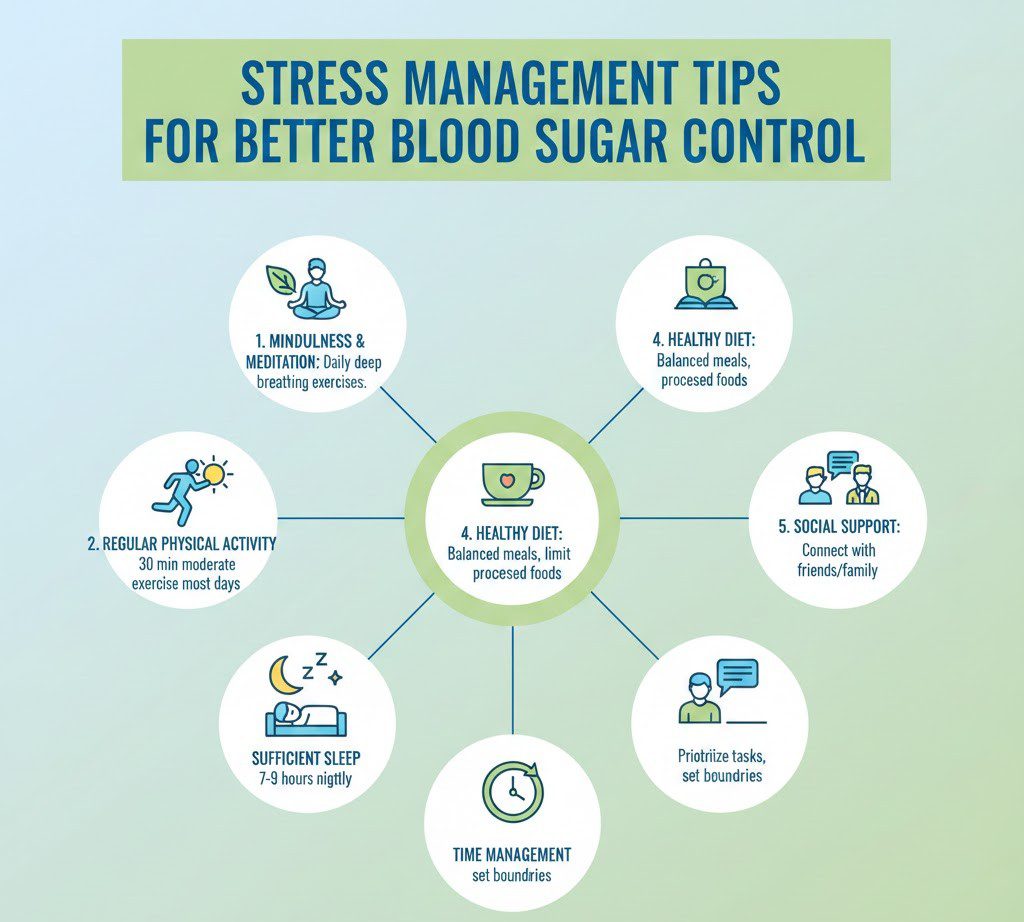
Managing stress effectively is essential for maintaining stable blood sugar levels and overall health. Simple lifestyle and behavioral changes can help reduce stress hormones, improve insulin sensitivity, and support better glucose control. Helpful tips for managing stress and blood sugar include:
- Practice relaxation techniques such as deep breathing, meditation, or mindfulness
- Engage in regular physical activity like walking, yoga, or stretching
- Prioritize quality sleep and maintain a consistent sleep schedule
- Eat balanced meals and avoid skipping meals during stressful periods
- Monitor blood sugar levels during times of stress
- Stay hydrated throughout the day
- Seek emotional support from friends, family, or professionals
- Manage time effectively to reduce mental and emotional overload
Myths and Facts About Stress and Blood Sugar Levels
Many people underestimate the role stress plays in blood sugar regulation. Misconceptions about stress can lead to poor glucose control and overlooked triggers. Understanding the facts behind these myths helps improve awareness, encourages better stress management, and supports long-term metabolic health.
Myth 1: Only diet affects blood sugar
Fact: While food choices strongly influence blood sugar, stress hormones such as cortisol and adrenaline can significantly raise blood sugar levels even without eating. These hormones stimulate the liver to release stored glucose, leading to unexpected spikes.
Myth 2: Stress affects everyone the same
Fact: The way stress impacts blood sugar varies from person to person based on genetics, stress tolerance, overall health, lifestyle habits, and existing conditions such as diabetes or insulin resistance.
Myth 3: Only emotional stress matters
Fact: Physical stress from illness, injury, lack of sleep, or intense exercise, as well as mental stress from work or financial pressure, can all disrupt glucose regulation and raise blood sugar levels.
Myth 4: Stress-related blood sugar spikes are harmless
Fact: Repeated stress-induced spikes can increase inflammation, worsen insulin resistance, and raise the risk of long-term complications such as diabetes, heart disease, and metabolic disorders.
Myth 5: Stress management isn’t necessary if medications are used
Fact: Medications help control blood sugar, but unmanaged stress can reduce their effectiveness. Stress management improves insulin sensitivity, stabilizes glucose levels, and supports better treatment outcomes.
Conclusion
Stress plays a major role in blood sugar regulation by triggering hormones like cortisol and adrenaline that raise glucose levels. Understanding how stress impacts blood sugar is important, especially for people with diabetes or those at risk, as emotional, physical, and chronic stress can cause unexpected spikes and reduce insulin sensitivity over time. Ongoing stress disrupts glucose balance, increases inflammation, and encourages unhealthy habits, raising the risk of complications such as insulin resistance, heart disease, and weight gain. Recognizing warning signs early and practicing stress management techniques such as relaxation, regular activity, proper sleep, and balanced nutrition helps maintain stable blood sugar levels and supports long-term health.
FAQs
How does stress impact blood sugar levels?
Stress impacts blood sugar by triggering the release of hormones such as cortisol and adrenaline. These hormones signal the liver to release stored glucose into the bloodstream, increasing blood sugar levels even when no food has been eaten. This response is part of the body’s survival mechanism but can disrupt glucose balance when stress is frequent.
Can stress raise blood sugar without food intake?
Yes, stress can raise blood sugar levels without any food intake. During emotional or physical stress, the body releases stress hormones that increase glucose production in the liver, leading to unexpected blood sugar spikes.
Does chronic stress affect insulin sensitivity?
Chronic stress reduces insulin sensitivity by keeping cortisol levels elevated for long periods. This makes body cells less responsive to insulin, causing glucose to remain in the bloodstream and increasing the risk of insulin resistance and type 2 diabetes.
How stress impacts blood sugar in people with diabetes?
In people with diabetes, stress can make blood sugar levels unpredictable and harder to control. Stress hormones interfere with insulin action and may reduce the effectiveness of medications, increasing the likelihood of frequent glucose fluctuations.
Can emotional stress cause blood sugar spikes?
Yes, emotional stress from anxiety, fear, anger, or depression can trigger rapid increases in blood sugar. These emotional responses stimulate cortisol and adrenaline release, which raises glucose levels and can complicate blood sugar management.
Does physical stress affect blood sugar levels?
Physical stress such as illness, injury, surgery, lack of sleep, or intense exercise can increase blood sugar levels. The body releases additional glucose to support healing and energy demands, which may keep blood sugar elevated until the stressor resolves.
What are common signs that stress is affecting blood sugar?
Common signs include unexplained blood sugar spikes, increased cravings for sugary foods, fatigue, poor sleep quality, mood changes, difficulty concentrating, and trouble maintaining stable glucose levels despite healthy habits.
Can managing stress help control blood sugar?
Yes, managing stress helps lower stress hormone levels, improves insulin sensitivity, and supports better blood sugar control. Techniques such as relaxation exercises, physical activity, proper sleep, and emotional support are especially effective.
Is stress management important even if I take diabetes medication?
Absolutely. While medications help control blood sugar, unmanaged stress can reduce their effectiveness. Stress management works alongside medication to stabilize glucose levels and improve overall treatment outcomes.
Who should be most concerned about how stress impacts blood sugar?
People with diabetes, prediabetes, insulin resistance, metabolic disorders, or high stress levels should be particularly mindful of how stress impacts blood sugar and take steps to manage stress proactively.
References
- Bouhairie, V. (2025, June 10). How Stress Affects Blood Sugars and Diabetes Management. Healthline. Retrieved December 16, 2025, from
https://www.healthline.com/health/diabetes-and-stress#types-of-stress - How Stress Affects Blood Sugar Levels. (n.d.). Glucerna. Retrieved December 16, 2025, from
https://www.glucerna.com/why-glucerna/how-stress-affects-blood-sugar-levels - How Stress Affects Blood Sugar | Visit Endocrinology Hospital Hyderabad. (n.d.). Citizens Specialty Hospital. Retrieved December 16, 2025, from
https://www.citizenshospitals.com/blogs/how-does-stress-affect-blood-sugar-levels - How Stress Affects Your Blood Sugar. (n.d.). Dexcom. Retrieved December 16, 2025, from
https://www.dexcom.com/en-CA/blog/how-stress-affects-blood-sugar - Pickrel, A. (2025, June 27). Can stress affect blood sugar? 7 ways to keep your blood sugar levels balanced. Baylor Scott & White Health. Retrieved December 16, 2025, from
https://www.bswhealth.com/blog/can-stress-affect-blood-sugar

Dr. Aaron Liu, MD, FACE, is an endocrinologist with 14 years of experience managing diabetes, insulin resistance, and metabolic disorders. He completed his medical training at Columbia University Vagelos College of Physicians and Surgeons and fellowship in Endocrinology at Mount Sinai Hospital. Dr. Liu’s expertise lies in integrating precision nutrition and advanced glucose monitoring for improved glycemic control. He has authored continuing education modules for the American Diabetes Association on lifestyle-based diabetes reversal.