
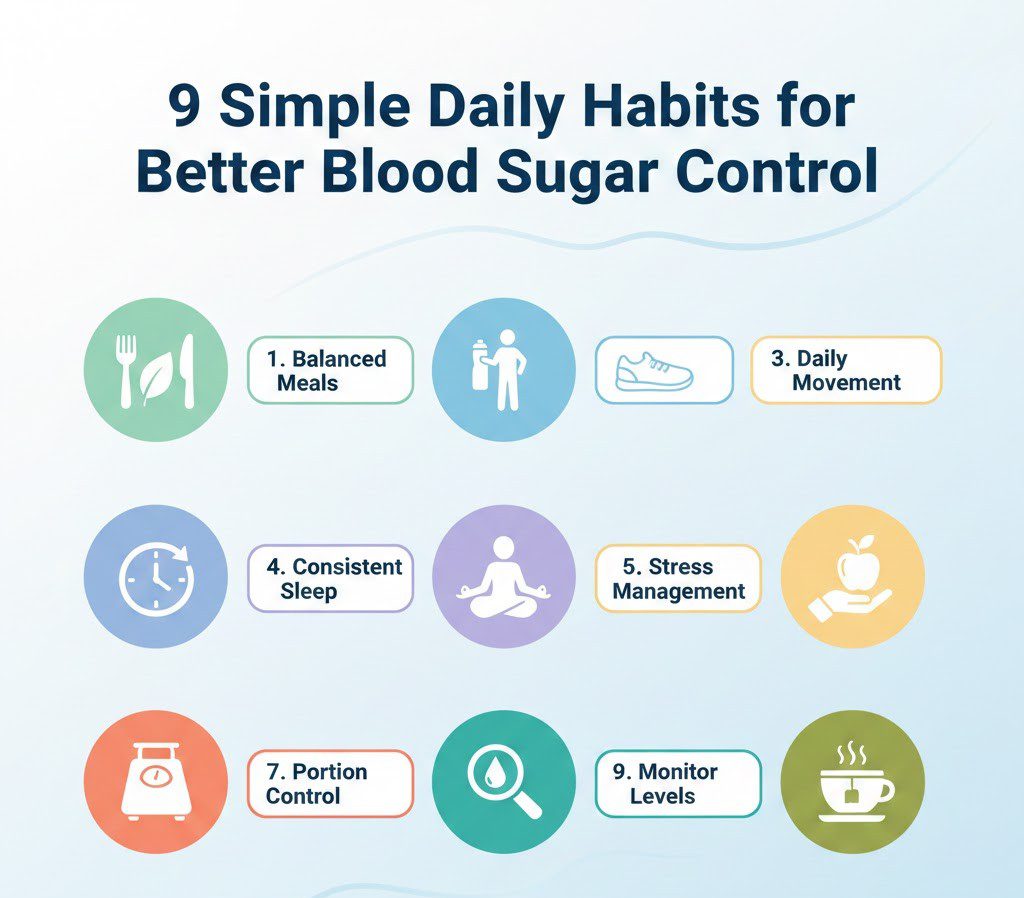
Maintaining stable blood sugar levels is essential for energy, metabolic health, and long-term disease prevention. Many people experience blood sugar fluctuations due to poor diet, stress, lack of physical activity, or irregular routines, even without diabetes. Adopting daily habits for better blood sugar control can help regulate glucose levels naturally, improve insulin sensitivity, reduce energy crashes, and lower the risk of complications such as insulin resistance and type 2 diabetes. Simple, consistent lifestyle practices play a powerful role in keeping blood sugar balanced throughout the day.
Key Takeaways
- Daily habits for better blood sugar control help stabilize glucose levels and prevent spikes and crashes
- Balanced meals, hydration, and regular physical activity improve insulin sensitivity
- Stress management and quality sleep are critical for healthy glucose regulation
- Consistent routines support long-term metabolic and cardiovascular health
- Early lifestyle changes can reduce the risk of diabetes and related complications
Why Daily Habits Matter for Blood Sugar Control
Blood sugar levels are influenced not just by what you eat, but by how you live each day. Daily habits affect insulin function, glucose absorption, hormone balance, and energy use. Poor routines such as skipping meals, sitting for long periods, or sleeping poorly can cause frequent blood sugar fluctuations. In contrast, healthy daily habits for better blood sugar control help the body use glucose efficiently, maintain steady energy, and protect long-term metabolic health.
Key reasons daily habits matter include:
- They support consistent glucose uptake by cells
- Healthy routines improve insulin sensitivity
- Stable habits reduce inflammation linked to insulin resistance
- Regular patterns prevent sudden blood sugar spikes and crashes
- Lifestyle consistency lowers the risk of long-term complications
9 Daily Habits for Better Blood Sugar Control
Building healthy blood sugar habits doesn’t require extreme diets or major lifestyle overhauls. Small, consistent actions practiced every day can significantly improve how your body regulates glucose. These daily habits for better blood sugar control work together to stabilize energy levels, improve insulin sensitivity, reduce glucose spikes, and support long-term metabolic health. When followed consistently, they help create predictable patterns that make blood sugar management easier and more sustainable.
1. Eat Balanced Meals Regularly

Eating balanced meals is one of the most effective ways to keep blood sugar stable throughout the day. When meals contain a combination of protein, fiber, and healthy fats, they slow down digestion and glucose absorption. This prevents sudden blood sugar spikes after eating and reduces crashes that lead to fatigue, cravings, and overeating. Consistent meal timing also helps regulate insulin release and supports predictable energy levels.
- Include lean protein such as eggs, fish, beans, or tofu to slow digestion, reduce hunger, and keep blood sugar steady for longer periods.
- Choose fiber-rich foods like vegetables, whole grains, and legumes to delay glucose absorption and minimize post-meal spikes.
- Avoid skipping meals, as long gaps between eating can cause low blood sugar followed by overeating and sharp glucose rises.
2. Stay Properly Hydrated

Proper hydration supports blood sugar control by helping dilute glucose in the bloodstream and assisting the kidneys in flushing out excess sugar through urine. Even mild dehydration can cause blood sugar levels to rise and may lead to headaches, fatigue, or difficulty concentrating. Staying well hydrated also supports digestion, circulation, and overall metabolic balance.
- Drink water consistently throughout the day rather than all at once to support steady glucose regulation.
- Reduce sugary beverages, which rapidly increase blood sugar and add unnecessary calories.
- Choose water or herbal teas, which hydrate the body without irritating blood sugar control or insulin function.
3. Limit Refined Sugar and Processed Carbohydrates
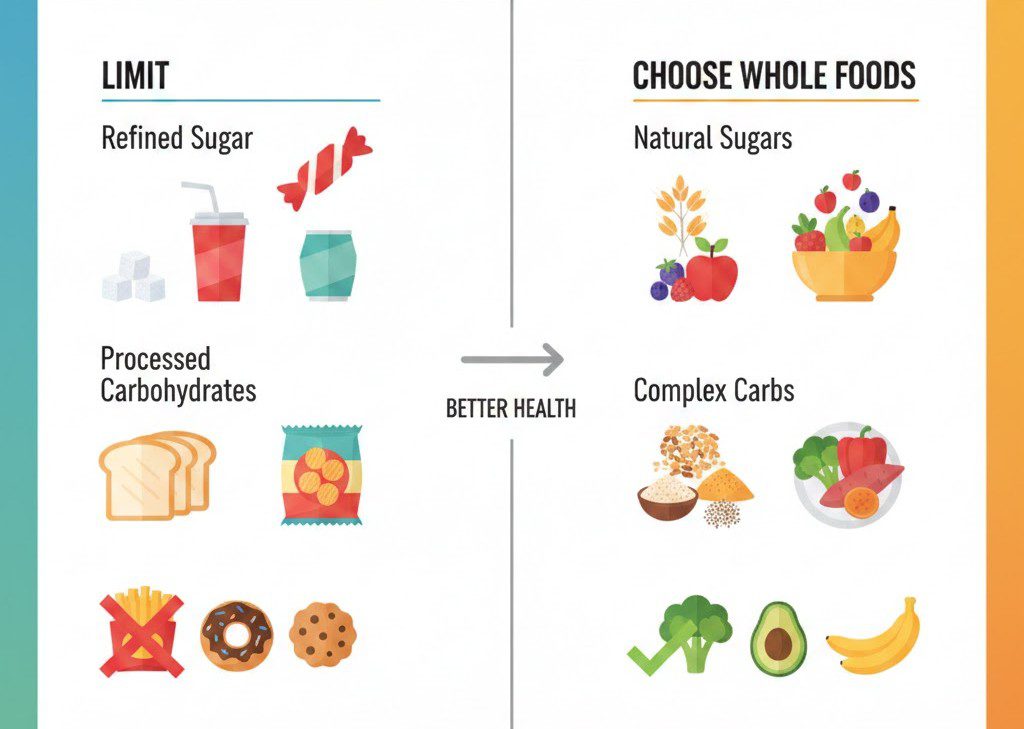
Refined sugars and processed carbohydrates are broken down very quickly in the body, causing rapid blood sugar spikes followed by sharp drops. Over time, this pattern places stress on insulin production and can worsen glucose control. Replacing these foods with whole, minimally processed options helps stabilize blood sugar and improve long-term metabolic health.
- Reduce sweets, pastries, and packaged snacks that cause quick glucose surges.
- Choose complex carbohydrates like whole grains, vegetables, and legumes that digest slowly and provide sustained energy.
- Read food labels carefully to identify hidden added sugars that may disrupt blood sugar balance.
4. Stay Physically Active Daily

Daily physical activity plays a crucial role in blood sugar control by helping muscles use glucose directly for energy, which lowers blood sugar levels without relying heavily on insulin. Exercise also improves insulin sensitivity, allowing insulin to work more efficiently even after the activity ends. Beyond workouts, frequent movement throughout the day helps prevent prolonged blood sugar elevation, especially after meals.
- Aim for daily movement such as walking, cycling, or light cardio to keep muscles regularly using glucose.
- Choose activities you enjoy, which increases motivation, consistency, and long-term adherence to an active lifestyle.
- Add resistance training like weights or bodyweight exercises, as increased muscle mass improves glucose storage and long-term blood sugar regulation.
5. Manage Stress Effectively
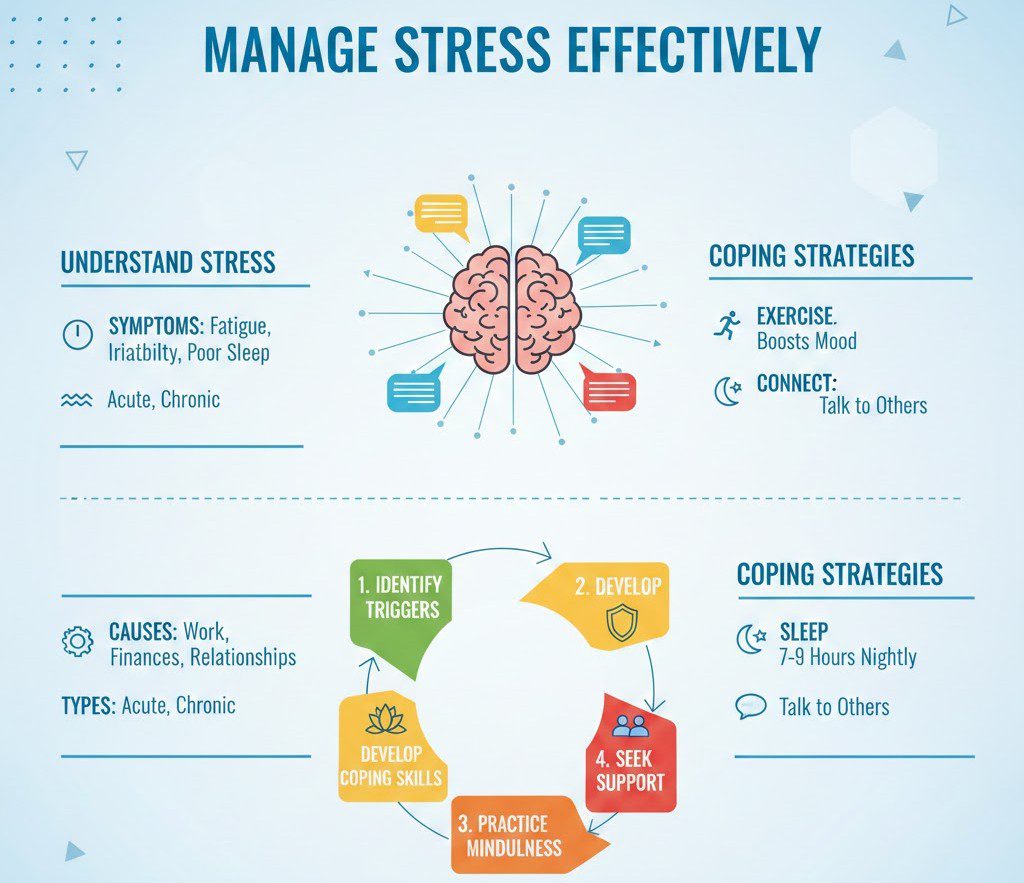
Stress has a direct impact on blood sugar because it triggers the release of cortisol and adrenaline, hormones that raise blood glucose levels to provide quick energy. When stress becomes chronic, these hormones remain elevated, making blood sugar harder to control even with proper diet and exercise. Managing stress supports hormonal balance and helps prevent unnecessary glucose spikes.
- Practice relaxation techniques such as deep breathing, meditation, or yoga to lower stress hormones and calm the nervous system.
- Take regular breaks during busy days to prevent prolonged stress responses that disrupt glucose regulation.
- Prioritize emotional well-being, recognizing that mental and emotional health strongly influence insulin sensitivity and blood sugar stability.
6. Prioritize Quality Sleep

Quality sleep is essential for maintaining balanced blood sugar because it regulates hormones involved in appetite, insulin sensitivity, and glucose metabolism. Poor or irregular sleep can increase insulin resistance and lead to higher blood sugar levels the following day. Consistent, restorative sleep allows the body to repair itself and maintain more stable glucose levels.
- Maintain consistent sleep and wake times to support healthy circadian rhythms and hormone regulation.
- Avoid habits that disrupt sleep, such as late-night screen use, caffeine, or heavy meals before bed.
- Create a calming bedtime routine that signals the body to wind down and promotes deeper, more restorative rest.
7. Avoid Long Periods of Sitting

Prolonged sitting limits muscle activity, reducing glucose uptake and allowing blood sugar levels to remain elevated for longer periods. Even if you exercise daily, extended sitting can still negatively affect blood sugar control. Regular movement throughout the day helps muscles stay active and improves glucose utilization.
- Break up sitting time with short standing, stretching, or walking breaks every 30–60 minutes.
- Incorporate light activity during work hours, such as desk stretches or brief walks, to keep glucose moving into muscles.
- Stay active outside structured workouts, understanding that small movements throughout the day contribute to better blood sugar balance.
8. Monitor Portion Sizes

Eating large portions can overload the body with more glucose than it can process efficiently at one time, leading to post-meal blood sugar spikes. Monitoring portion sizes helps regulate how much glucose enters the bloodstream and supports smoother digestion and energy levels without extreme food restriction.
- Use portion awareness to prevent excessive calorie and glucose intake during meals.
- Eat slowly and mindfully to recognize fullness cues and avoid overeating.
- Balance plate portions by including protein, fiber, and healthy fats to slow glucose absorption.
9. Maintain Consistent Daily Routines
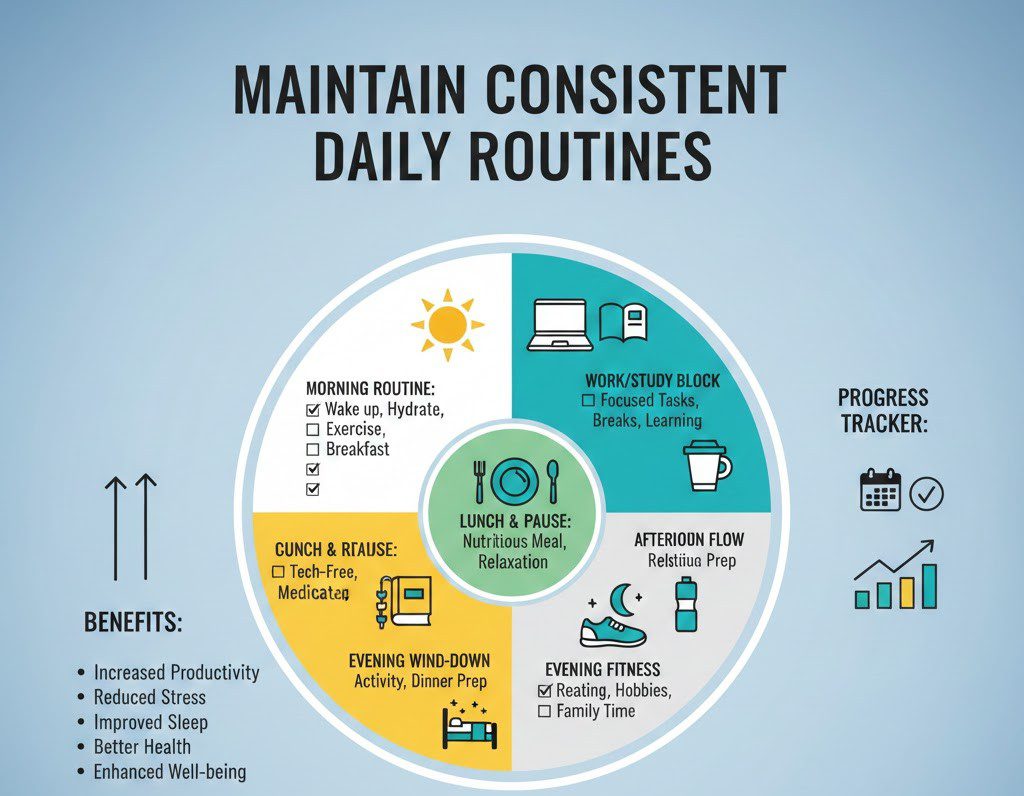
Consistency in daily habits helps regulate hormones that control blood sugar and metabolism. Predictable patterns for eating, sleeping, and activity allow the body to anticipate energy needs and respond more efficiently, reducing blood sugar fluctuations and improving long-term glucose control.
- Keep meal times regular to support stable insulin release and daily glucose rhythms.
- Maintain consistent sleep and activity schedules to reinforce hormonal balance.
- Plan meals and snacks ahead, reducing the likelihood of skipped meals or sudden blood sugar swings.
Foods That Support Healthy Blood Sugar Levels

Eating the right foods plays a major role in maintaining stable blood sugar levels and supporting overall metabolic health. Foods that are rich in fiber, protein, healthy fats, and essential nutrients help slow glucose absorption, improve insulin sensitivity, and prevent sharp blood sugar spikes and crashes. Including these foods regularly can support steady energy levels and long-term blood sugar balance.
Foods that support healthy blood sugar levels include:
- High-Fiber Vegetables: Leafy greens, broccoli, cauliflower, zucchini, and bell peppers slow digestion and reduce post-meal blood sugar spikes while providing essential vitamins and antioxidants.
- Whole Grains: Brown rice, quinoa, oats, and whole wheat contain fiber that helps regulate glucose absorption and improve insulin response compared to refined grains.
- Lean Proteins: Eggs, poultry, fish, tofu, beans, and lentils help stabilize blood sugar by slowing carbohydrate digestion and promoting satiety.
- Healthy Fats: Avocados, nuts, seeds, olive oil, and fatty fish support insulin sensitivity and help prevent rapid rises in blood sugar when paired with carbohydrates.
- Low-Glycemic Fruits: Berries, apples, pears, and citrus fruits provide natural sweetness along with fiber and antioxidants that help control glucose levels.
- Legumes: Chickpeas, lentils, black beans, and kidney beans are high in fiber and protein, making them excellent for maintaining steady blood sugar.
- Nuts and Seeds: Almonds, walnuts, chia seeds, and flaxseeds help reduce blood sugar spikes and support heart health.
- Probiotic-Rich Foods: Yogurt, kefir, and fermented foods improve gut health, which plays a role in insulin sensitivity and glucose regulation.
- Spices and Herbs: Cinnamon, turmeric, ginger, and garlic may help improve insulin function and reduce inflammation linked to blood sugar imbalance.
Lifestyle Factors That Affect Blood Sugar
Blood sugar levels are influenced not only by diet but also by daily lifestyle habits that affect insulin sensitivity, hormone balance, and glucose metabolism. Understanding these lifestyle factors helps identify areas for improvement and supports more consistent blood sugar control over time.
Key lifestyle factors that affect blood sugar include:
- Physical Activity: Regular movement improves insulin sensitivity and allows muscles to use glucose efficiently, helping lower blood sugar levels naturally.
- Stress Levels: Chronic stress increases cortisol, which can raise blood sugar and make glucose harder to regulate.
- Sleep Quality: Poor or irregular sleep disrupts hormones that control appetite and insulin response, often leading to higher blood sugar levels.
- Eating Patterns: Skipping meals, overeating, or inconsistent meal timing can cause frequent blood sugar spikes and crashes.
- Hydration: Dehydration can concentrate glucose in the bloodstream, leading to higher blood sugar readings.
- Weight Management: Excess body weight, especially around the abdomen, is linked to insulin resistance and blood sugar imbalance.
- Alcohol and Caffeine Intake: Excessive consumption can irritate blood sugar control and cause fluctuations.
- Sedentary Behavior: Prolonged sitting reduces glucose uptake by muscles and contributes to elevated blood sugar levels.
Common Mistakes That Worsen Blood Sugar
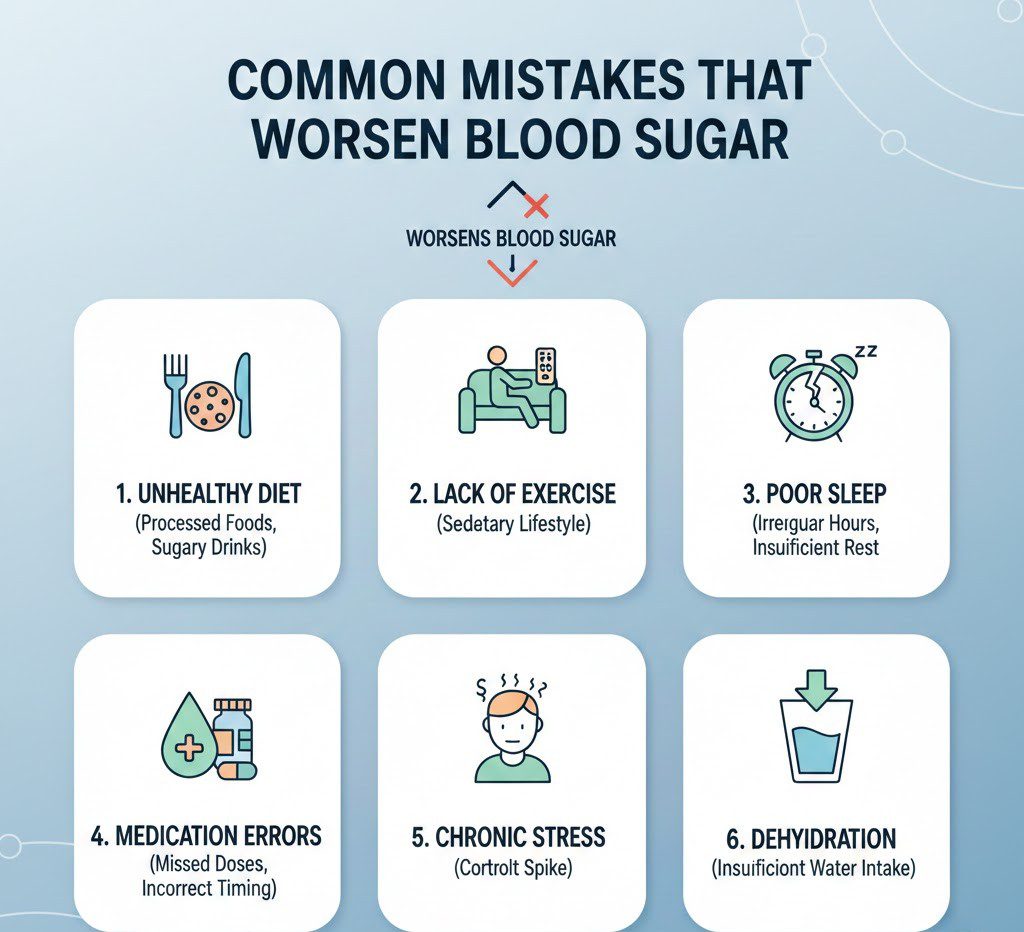
Even when following a generally healthy lifestyle, certain everyday habits can unknowingly disrupt blood sugar balance. These common mistakes often lead to frequent glucose spikes and crashes, reduced insulin sensitivity, and increased fatigue or cravings. Identifying and correcting these patterns is just as important as adopting positive daily habits for better blood sugar control.
- Skipping meals or eating at irregular times, which can cause blood sugar drops followed by sharp spikes
- Going too long without food, leading to overeating and poor insulin regulation
- Relying on refined carbohydrates such as white bread, pastries, and packaged snacks
- Choosing “low-fat” or processed foods that contain hidden added sugars
- Drinking sugary beverages, fruit juices, or sweetened coffee and tea drinks
- Overeating healthy foods without monitoring portion sizes
- Eating large meals that are high in carbohydrates without enough protein or fiber
- Sitting for long periods without movement, even if you exercise regularly
- Not breaking up sedentary time during work or screen use
- Experiencing chronic stress without proper stress-management practice
Quick Daily Checklist for Better Blood Sugar Control
Following a simple daily checklist can help reinforce healthy habits and make blood sugar management easier and more consistent.
- Drink water regularly throughout the day
- Eat balanced meals with protein, fiber, and healthy fats
- Avoid skipping meals and limit refined sugars
- Move your body daily with walking or exercise
- Take short breaks from sitting every 30–60 minutes
- Manage stress with relaxation or breathing techniques
- Aim for 7–9 hours of quality sleep
- Practice mindful portion control
- Monitor blood sugar if advised by a healthcare provider
When to Seek a Doctor for Blood Sugar Concerns
While daily habits play a major role in blood sugar control, some signs and symptoms require medical evaluation. Early consultation with a healthcare professional can help identify underlying issues, prevent complications, and ensure appropriate treatment if needed.
- Persistent fatigue, weakness, or low energy that does not improve with lifestyle changes
- Frequent thirst, excessive urination, or constant dry mouth
- Unexplained weight loss or weight gain
- Frequent hunger, strong sugar cravings, or shakiness between meals
- Blurred vision, frequent headaches, or dizziness
- Tingling, numbness, or burning sensations in the hands or feet
- Slow-healing wounds, frequent infections, or recurring skin issues
- Consistently high or low blood sugar readings, or a family history of diabetes with symptoms
Conclusion
Maintaining stable blood sugar is essential for energy, metabolic health, and disease prevention. Simple daily habits such as eating balanced meals, staying hydrated, limiting refined sugars, staying active, managing stress, prioritizing sleep, avoiding prolonged sitting, monitoring portions, and maintaining consistent routines help regulate glucose levels and improve insulin sensitivity. Choosing fiber-rich foods, lean proteins, healthy fats, and low-glycemic fruits further supports blood sugar balance. Lifestyle factors like poor sleep, chronic stress, inactivity, dehydration, and irregular eating can disrupt glucose control, while common mistakes such as skipping meals and relying on processed foods may worsen fluctuations. Consistent healthy habits reduce the risk of insulin resistance and type 2 diabetes, while persistent symptoms should be evaluated by a healthcare professional.
FAQs
Can blood sugar fluctuate even if I don’t have diabetes?
Yes, blood sugar fluctuations can occur in people without diabetes due to factors such as poor diet, stress, lack of physical activity, irregular meals, or poor sleep. Healthy daily habits help keep blood sugar stable and reduce long-term metabolic risks.
How long does it take for daily habits to improve blood sugar levels?
Some improvements, such as better energy levels and fewer crashes, may be noticed within days to weeks. More significant improvements in insulin sensitivity and glucose regulation usually take several weeks of consistent lifestyle changes.
Are balanced meals important for blood sugar control?
Yes, balanced meals that include protein, fiber, and healthy fats slow glucose absorption, prevent sudden spikes, and provide steady energy throughout the day.
Is exercise necessary for blood sugar control if I eat healthy?
Yes, physical activity helps muscles use glucose efficiently and improves insulin sensitivity. Even light daily movement and reducing long periods of sitting support better blood sugar balance.
Does stress really affect blood sugar levels?
Yes, stress triggers the release of hormones like cortisol and adrenaline, which raise blood sugar levels. Chronic stress can make blood sugar harder to control even with healthy eating.
How does sleep affect blood sugar regulation?
Poor or irregular sleep reduces insulin sensitivity and disrupts hormones involved in appetite and glucose metabolism, often leading to higher blood sugar the following day.
Are carbohydrates bad for blood sugar?
Not all carbohydrates are harmful. Whole, fiber-rich carbohydrates such as vegetables, legumes, whole grains, and low-glycemic fruits help maintain steady blood sugar when eaten in appropriate portions.
Can staying hydrated help manage blood sugar levels?
Yes, proper hydration helps dilute glucose in the bloodstream and supports kidney function, which helps remove excess sugar and maintain healthy blood sugar levels.
What daily habits commonly worsen blood sugar control?
Skipping meals, overeating, consuming sugary drinks, relying on processed foods, prolonged sitting, chronic stress, and poor sleep are common habits that disrupt blood sugar balance.
When should someone see a doctor for blood sugar concerns?
A healthcare provider should be consulted if symptoms such as persistent fatigue, frequent thirst or urination, unexplained weight changes, blurred vision, nerve sensations, slow-healing wounds, or consistently abnormal blood sugar readings occur.
References
- April D. Pickrel, RD. (2022, July 22). 5 Habits to Start Today for Better Blood Sugar Control. Baylor Scott & White Health. Retrieved December 18, 2025, from https://www.bswhealth.com/blog/5-habits-to-start-today-for-better-blood-sugar-control
- Diabetes management: How lifestyle, daily routine affect blood sugar. (2024, July 6). Mayo Clinic. Retrieved December 18, 2025, from https://www.mayoclinic.org/diseases-conditions/diabetes/in-depth/diabetes-management/art-20047963
- Gutch, M. (n.d.). 10 Habits to Control Diabetes & Lower Blood Sugar Fast. Medanta. Retrieved December 18, 2025, from https://www.medanta.org/patient-education-blog/10-habits-for-managing-diabetes-and-lowering-high-blood-sugar-seek-medical-advice
- Jones, J., & Sullivan, D. (n.d.). 14 Natural Strategies to Lower Blood Sugar Levels. Healthline. Retrieved December 18, 2025, from https://www.healthline.com/nutrition/14-ways-to-lower-blood-sugar#portion-management
- Simple Habits to Keep Your Blood Sugar in Check. (n.d.). Greater Good Health. Retrieved December 18, 2025, from https://greatergoodhealth.com/patients/daily-blood-sugar-habits/

Dr. Aaron Liu, MD, FACE, is an endocrinologist with 14 years of experience managing diabetes, insulin resistance, and metabolic disorders. He completed his medical training at Columbia University Vagelos College of Physicians and Surgeons and fellowship in Endocrinology at Mount Sinai Hospital. Dr. Liu’s expertise lies in integrating precision nutrition and advanced glucose monitoring for improved glycemic control. He has authored continuing education modules for the American Diabetes Association on lifestyle-based diabetes reversal.