
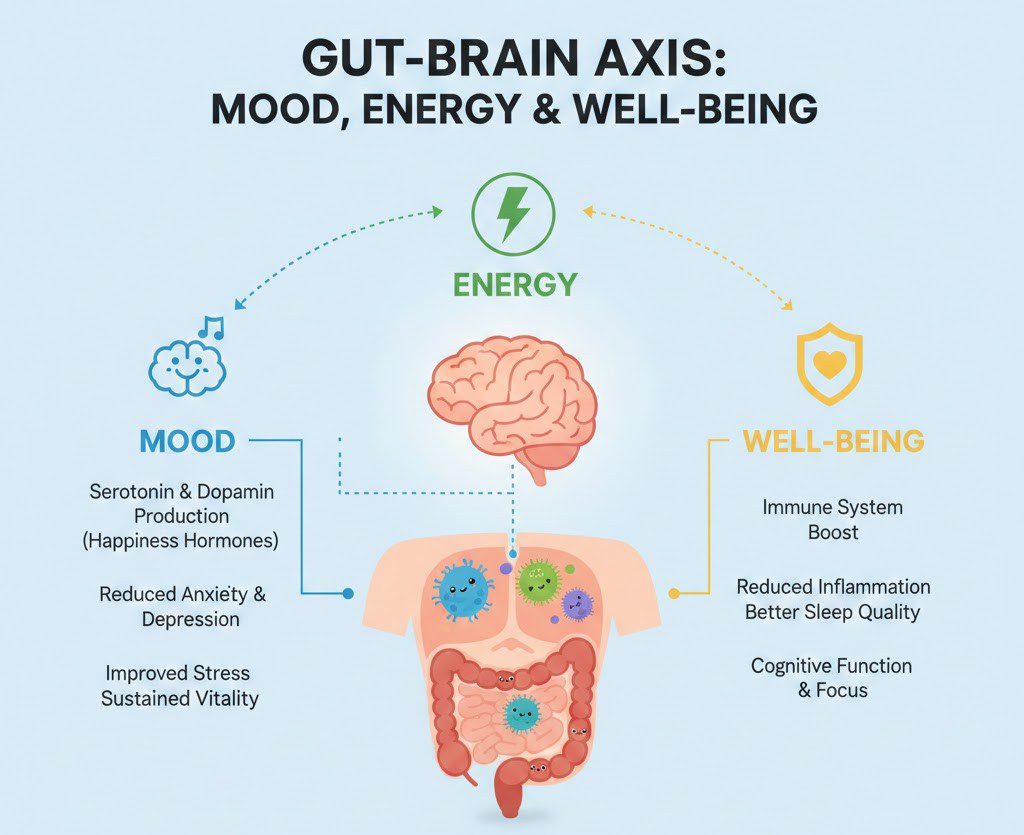
Your gut is not just responsible for digestion it plays a critical role in how your gut affects mood and energy levels. Through the complex communication system known as the gut-brain axis, your digestive system directly influences mental health, energy, and emotional well-being. Everyday habits such as diet, stress, sleep, and activity levels quietly shape this connection. Understanding the relationship between gut health and mood allows you to make targeted lifestyle choices that enhance both mental clarity and vitality.
Key Takeaways
- Gut health directly influences mood, energy, and emotional balance.
- Disruptions in digestion can affect serotonin production, inflammation, and mental clarity.
- Poor gut health can lead to fatigue and digestion-related energy dips, mood swings, and anxiety.
- Supporting gut health improves both energy levels and emotional well-being.
- Small, consistent lifestyle changes can have long-term benefits for both gut and brain health.
Understanding the Gut-Brain Connection
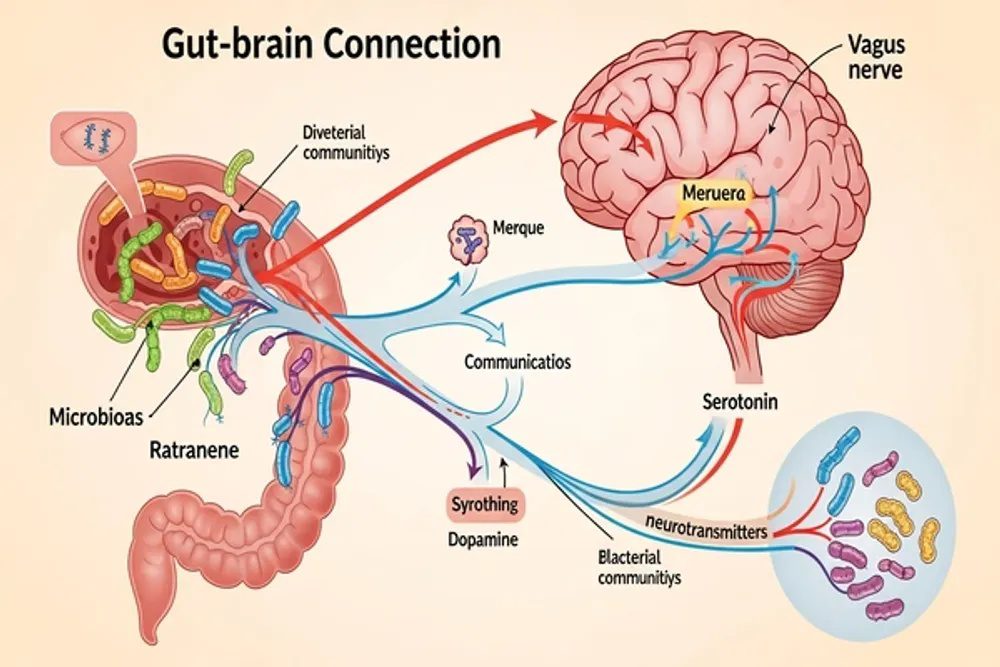
The gut-brain axis is a complex communication network linking the digestive system and the brain. This bidirectional system allows your gut to influence mood, energy, and cognitive function, while the brain can impact digestion and gut health. A healthy gut microbiome plays a critical role in serotonin production, which affects mood regulation and emotional well-being. Disruptions in the gut, caused by poor diet, stress, or lack of sleep, can lead to inflammation, digestive issues, and fatigue, demonstrating how gut health influences mood and energy. Key functions of the gut-brain connection include:
- Supporting digestion: Efficiently breaks down food and absorbs nutrients.
- Strengthening immunity: Protects against harmful bacteria and infections.
- Regulating inflammation: Helps control gut and systemic inflammation.
- Promoting mental health: Communicates with the brain to influence mood, stress, and cognitive function.
- Maintaining metabolic balance: Supports energy regulation, fat storage, and nutrient metabolism.
How Your Gut Affects Mood and Energy Levels
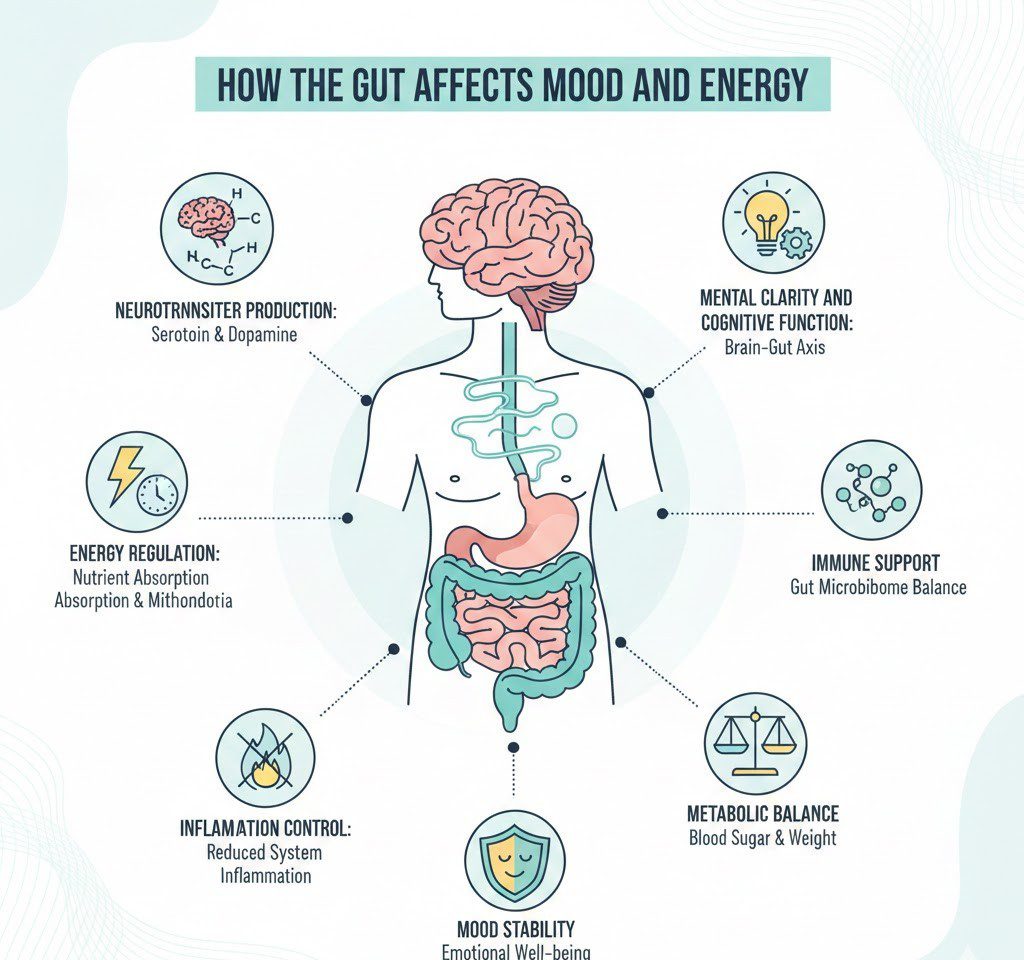
The gut significantly influences mood, energy, and overall well-being through the gut-brain axis, which is a two-way communication network connecting the digestive system and the brain. A balanced gut microbiome supports serotonin production, regulates inflammation, and improves nutrient absorption, all of which directly impact mental clarity, energy levels, and emotional stability. When gut health is disrupted, imbalances can lead to fatigue, digestive issues, anxiety, depression, and cognitive difficulties.
Key ways the gut affects mood and energy include:
- Neurotransmitter Production: Gut bacteria produce serotonin, dopamine, and other neurotransmitters that regulate mood, sleep patterns, and appetite, directly influencing emotional well-being.
- Energy Regulation: Proper digestion and nutrient absorption ensure a steady supply of energy, whereas poor gut health can lead to fatigue, lethargy, and reduced vitality.
- Inflammation Control: A healthy gut reduces systemic inflammation, which supports stable mood, reduces irritability, and protects against mood disorders.
- Stress Response: Balanced gut bacteria influence cortisol levels, helping the body manage stress and anxiety more effectively.
- Mental Clarity and Cognitive Function: A diverse microbiome supports focus, memory, and problem-solving abilities, reducing brain fog and enhancing productivity.
- Immune Support: A well-functioning gut strengthens immunity, which indirectly supports energy and mood by reducing illness-related fatigue and malaise.
- Metabolic Balance: Gut bacteria aid in regulating metabolism, fat storage, and blood sugar levels, which help maintain consistent energy throughout the day.
- Mood Stability: By supporting the production of mood-regulating neurotransmitters and reducing inflammation, a healthy gut helps prevent mood swings and emotional instability.
Everyday Habits That Disrupt Gut Health and Mood
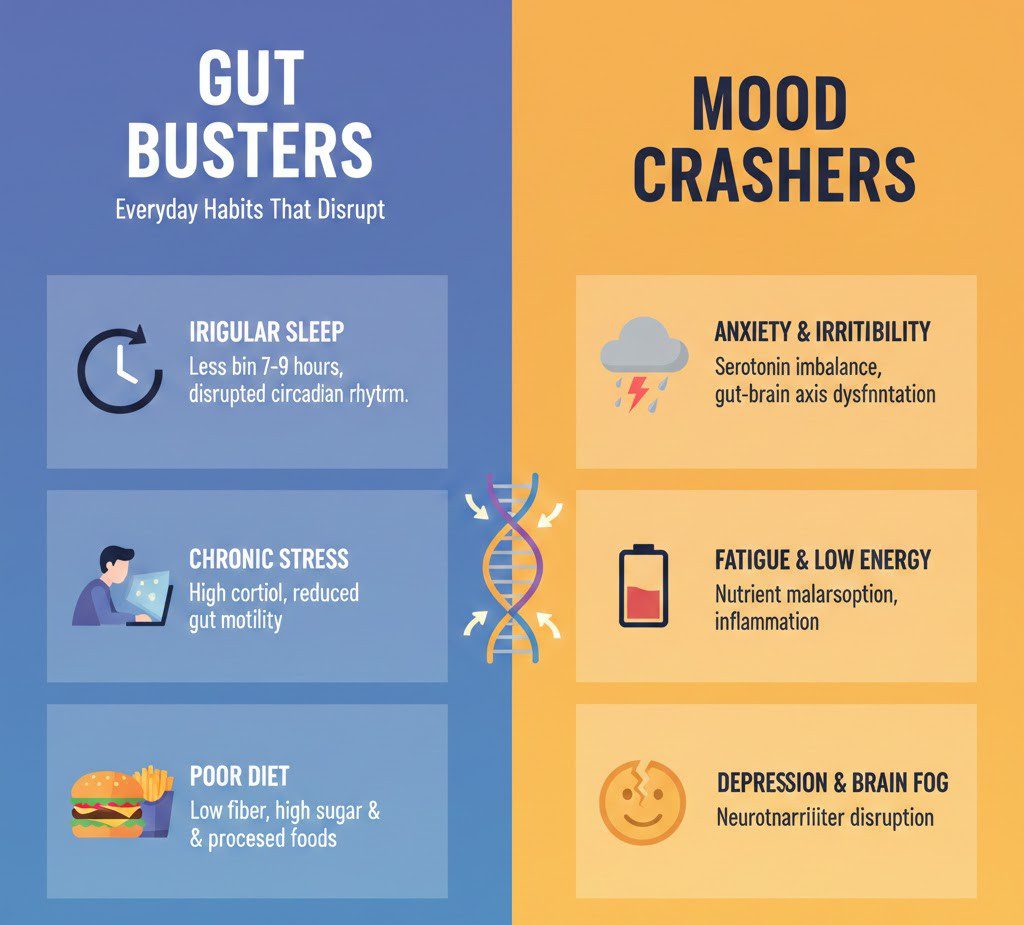
Everyday habits strongly affect gut health and emotional well-being through the gut-brain axis, the communication network between the digestive system and the brain. The gut microbiome influences serotonin production, immunity, inflammation, and nutrient absorption. Disrupting this balance can impact digestion, mood, energy, stress tolerance, and mental clarity, leading over time to fatigue, anxiety, depression, brain fog, and irritability. Understanding how your gut impacts your mood and energy levels is key to overall well-being. The habits that negatively affect gut health and mood include:
- Irregular Eating Patterns: Skipping meals, prolonged unbalanced fasting, or eating at inconsistent times disrupts the natural digestive rhythm and gut bacterial activity. This leads to unstable blood sugar levels and inefficient digestion, which can trigger stress hormone release. These fluctuations often result in irritability, anxiety, low energy, and difficulty concentrating.
- Excess Processed Food Intake: Highly processed foods contain refined sugars, artificial additives, and low fiber, which reduce beneficial bacteria while feeding harmful microbes. This imbalance increases gut permeability and inflammation, impairing neurotransmitter production and contributing to low mood, brain fog, emotional instability, and increased stress sensitivity.
- Chronic Stress: Persistent stress alters gut motility, reduces digestive enzyme secretion, and changes the composition of gut bacteria. Elevated cortisol levels increase inflammation and weaken the gut lining, allowing toxins to enter circulation. This process worsens anxiety, sleep disturbances, mood swings, and emotional burnout, highlighting the critical role of how gut health influences mood and energy.
- Poor Sleep Habits: Insufficient or irregular sleep disrupts the circadian rhythm of gut bacteria and interferes with serotonin production. Since a large portion of serotonin is produced in the gut, poor sleep can directly lead to depressed mood, low motivation, reduced energy, and impaired emotional regulation.
- Sedentary Lifestyle: Lack of physical activity slows intestinal movement and reduces microbial diversity. Regular movement stimulates beneficial bacteria and promotes the release of mood-enhancing neurotransmitters. Without it, individuals may experience digestive sluggishness, fatigue, increased inflammation, and low emotional resilience.
- Overuse of Antibiotics and Medications: Antibiotics eliminate both harmful and beneficial bacteria, often leading to long-term microbiome imbalances. Other medications such as NSAIDs and acid reducers can damage the gut lining and alter bacterial populations. These changes may reduce the body’s ability to regulate stress and mood, leading to cognitive difficulties, emotional instability, and decreased energy levels.
- Low Fiber Intake: Dietary fiber is essential for feeding beneficial gut bacteria. Without enough fiber, these bacteria cannot produce short-chain fatty acids that protect the gut lining and support brain health. Fiber deficiency is linked to higher inflammation, poor mood regulation, fatigue, and increased anxiety.
- Dehydration: Water is vital for digestion, nutrient transport, and waste elimination. Dehydration slows digestion and increases toxin buildup, which can affect brain function. Even mild dehydration can lead to irritability, headaches, poor focus, and reduced energy levels.
- Eating Too Quickly: Rapid eating limits proper chewing and enzyme release, reducing nutrient absorption and increasing digestive discomfort. Poor digestion places additional stress on the gut-brain axis, often resulting in post-meal fatigue, bloating, and decreased mental clarity.
- Excess Caffeine or Alcohol Consumption: Excessive caffeine overstimulates the nervous system and increases cortisol levels, while alcohol damages the gut lining and disrupts microbial balance. Both substances increase inflammation and interfere with serotonin production, contributing to anxiety, mood swings, sleep disturbances, and energy crashes.
Gut-Friendly Habits for Mental Health and Vitality
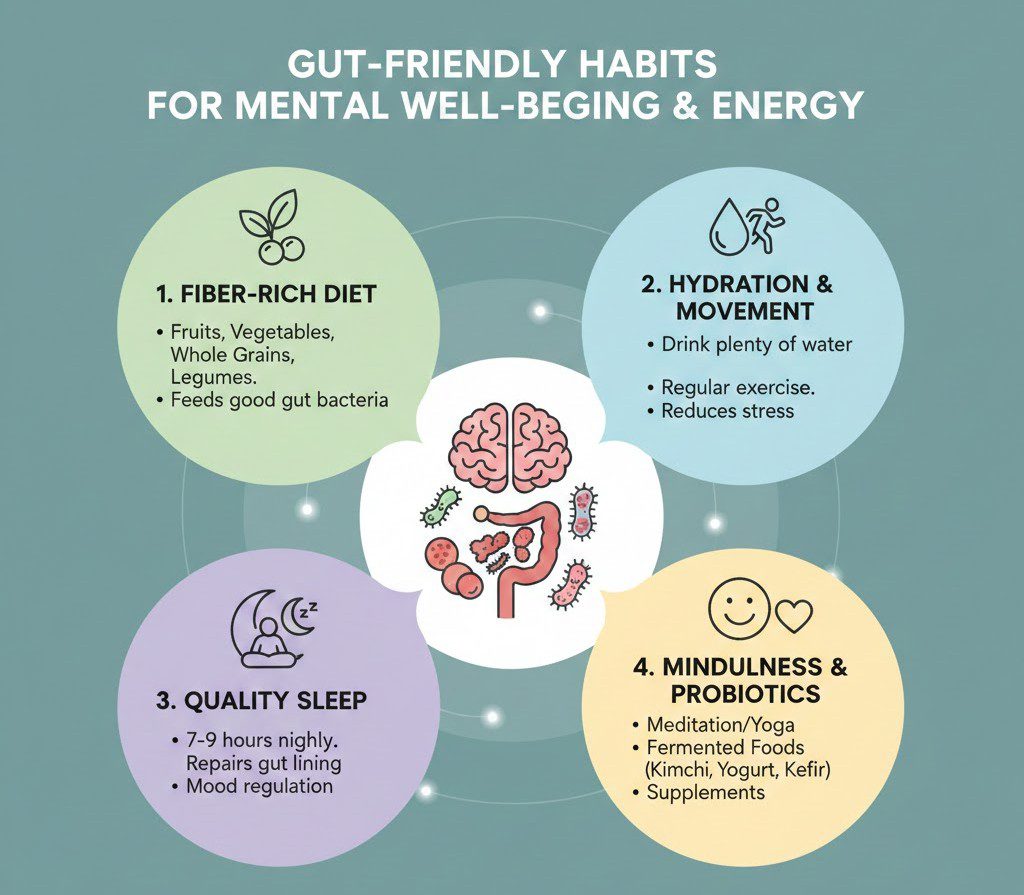
Maintaining gut health is essential not only for digestion but also for mood, energy, and overall vitality. The gut microbiome influences the gut-brain axis, affecting serotonin production, inflammation, and nutrient absorption, which in turn impact mental clarity and emotional well-being. Adopting gut-friendly habits can strengthen this connection, support a stable mood, boost energy levels, and enhance cognitive function.
Key gut-friendly habits include:
- Eat a balanced diet: Include fiber-rich fruits, vegetables, whole grains, and legumes to feed beneficial gut bacteria.
- Include probiotics and fermented foods: Yogurt, kefir, kimchi, sauerkraut, and miso help maintain microbial diversity and support serotonin production.
- Stay hydrated: Water supports digestion, nutrient absorption, and brain function, improving mental clarity and energy.
- Exercise regularly: Physical activity stimulates gut motility, boosts beneficial bacteria, and promotes mood enhancing neurotransmitters.
- Manage stress: Meditation, yoga, and deep breathing reduce cortisol levels and protect gut balance.
- Prioritize sleep: Consistent restorative sleep regulates gut bacteria, supports serotonin synthesis, and enhances emotional resilience.
- Practice mindful eating: Eating slowly and listening to hunger cues improves digestion and nutrient absorption, positively influencing energy and mental focus.
Signs Your Gut May Be Affecting Mood or Energy
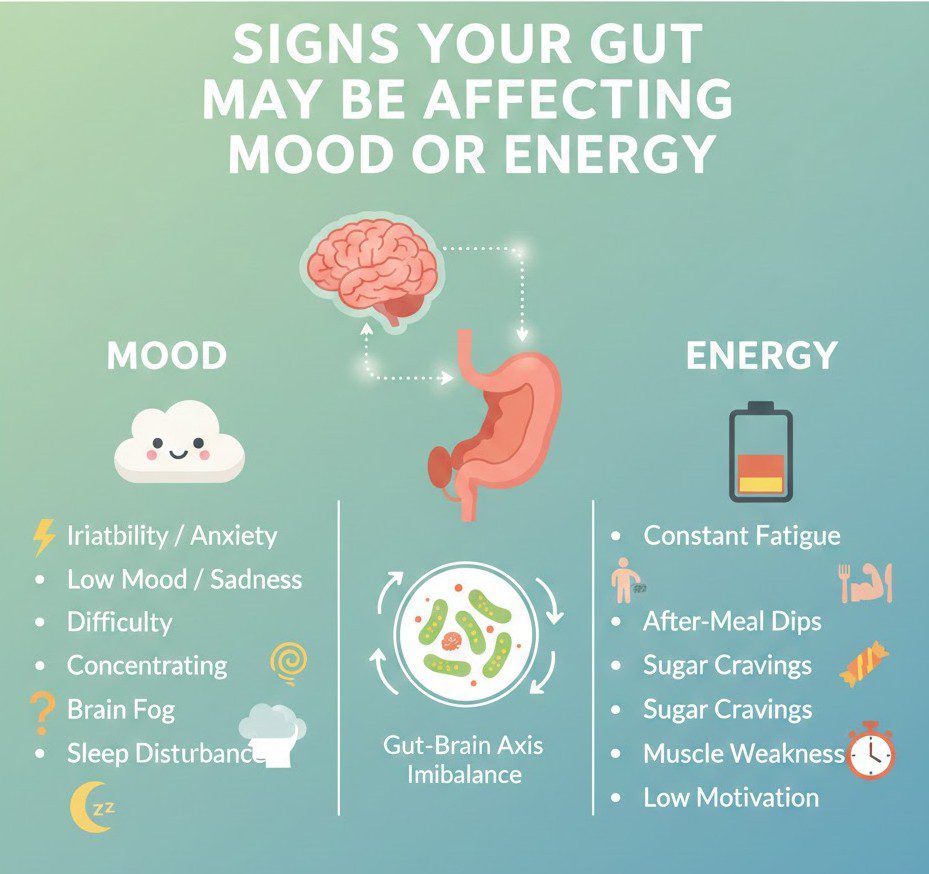
Your gut plays a crucial role in regulating mood, energy, and mental clarity through the gut–brain axis. When the gut microbiome is imbalanced or digestive function is impaired, it can directly impact serotonin production, inflammation levels, and nutrient absorption, leading to noticeable changes in emotional well-being and vitality. Recognizing the signs early can help you take action to support both gut and mental health.
- Frequent bloating, gas, or abdominal pain
- Ongoing constipation or diarrhea
- Unexplained fatigue
- Brain fog or poor concentration
- Increased anxiety or low mood
- Sleep disturbances
- Food sensitivities or intolerances
- Cravings for sugary or processed foods
- Poor stress tolerance
- Unexplained weight changes
- Reduced motivation or energy levels
Ways to Support Your Gut and Your Mood
Supporting your gut health can have a direct positive impact on your mood, energy, and overall well-being. By adopting gut-friendly habits, you strengthen the gut-brain axis, enhance serotonin production, reduce inflammation, and improve nutrient absorption all of which help regulate emotions, mental clarity, and vitality.
- Eat a balanced diet rich in fiber, vegetables, fruits, and whole grains
- Include probiotics and fermented foods like yogurt, kefir, kimchi, and sauerkraut
- Stay hydrated by drinking plenty of water and herbal teas
- Engage in regular physical activity such as walking, yoga, or resistance exercises
- Manage stress with meditation, deep breathing, or mindfulness practices
- Prioritize consistent, restorative sleep
- Practice mindful eating, chewing thoroughly, and paying attention to hunger cues
- Limit alcohol, processed foods, and added sugars
- Introduce prebiotic foods like garlic, onions, leeks, bananas, and oats
- Monitor food sensitivities and avoid triggers that disrupt gut balance
When to Talk to a Doctor About Your Gut
While occasional digestive discomfort is normal, persistent or severe symptoms may indicate an underlying gut issue affecting your mood, energy, or overall health. Consulting a healthcare professional can help identify the cause, prevent complications, and guide personalized treatment or lifestyle changes.
- Frequent bloating, gas, or abdominal pain
- Persistent constipation or diarrhea
- Unexplained fatigue or low energy
- Brain fog, poor concentration, or memory issues
- Recurrent mood swings, anxiety, or low mood
- Food sensitivities or intolerances causing repeated digestive issues
- Unexplained weight changes or severe digestive symptoms
Conclusion
Your gut plays a crucial role in mood, energy, and overall well-being through the gut-brain axis, influencing serotonin production, inflammation, nutrient absorption, and emotional regulation. Everyday habits like diet, stress, sleep, hydration, and exercise shape this connection, with poor gut health potentially causing fatigue, brain fog, mood swings, anxiety, and low energy. Supporting gut health with balanced nutrition, probiotics, fiber, regular activity, stress management, sleep, and mindful eating enhances energy, stabilizes mood, strengthens immunity, and improves mental clarity. Persistent digestive or mood issues may require consultation with a healthcare professional for personalized guidance.
FAQs
How does the gut affect mood and energy?
The gut impacts mood and energy through the gut-brain axis, regulating serotonin, inflammation, and nutrient absorption. A healthy gut supports mental clarity, emotional balance, and overall vitality.
What is the gut-brain axis?
The gut-brain axis is a two-way communication system between the gut and the brain that influences mood, stress response, digestion, and cognitive function. Proper gut-brain signaling supports both emotional and physical well-being.
Which habits negatively impact gut health?
Poor diet, irregular meals, chronic stress, lack of sleep, sedentary lifestyle, excess alcohol or caffeine, and low fiber intake can harm gut health. These habits may lead to fatigue, brain fog, mood swings, and digestive issues.
What are signs that my gut may be affecting mood or energy?
Frequent bloating, gas, constipation, or diarrhea, unexplained fatigue, brain fog, low mood, sleep disturbances, food sensitivities, cravings, poor stress tolerance, and unexplained weight changes are all signs that gut health may be affecting mood and energy.
How can I support gut health to improve mood and energy?
Supporting gut health involves eating fiber-rich foods, vegetables, fruits, whole grains, including probiotics, staying hydrated, exercising regularly, managing stress, sleeping well, and practicing mindful eating to improve nutrient absorption, energy, and mental clarity.
Can poor gut health cause anxiety or depression?
Yes, an imbalanced gut can disrupt serotonin production and increase inflammation, triggering anxiety, depression, and emotional instability. Maintaining gut health helps improve mood, stress resilience, and overall emotional well-being.
Why is fiber important for gut health?
Fiber nourishes beneficial gut bacteria and protects the gut lining, supporting the production of short-chain fatty acids that aid brain health. Adequate fiber intake helps reduce inflammation, fatigue, and supports mood regulation.
How do probiotics help mood and energy?
Probiotics maintain a balanced, diverse gut microbiome, which supports serotonin production and reduces gut inflammation. This positively affects energy levels, mental clarity, and emotional well-being.
When should I talk to a doctor about gut-related issues?
Consult a healthcare professional if you experience persistent bloating, constipation, diarrhea, fatigue, brain fog, mood swings, food sensitivities, or unexplained weight changes. A doctor can help identify underlying causes and guide treatment or lifestyle adjustments.
Can lifestyle changes really improve gut health and mood?
Yes, consistent lifestyle changes in diet, hydration, stress management, sleep, exercise, and mindful eating strengthen the gut-brain axis. These habits improve gut health, mood, energy, and overall well-being over time.
References
- Gut-Brain Axis: How Your Gut Shapes Your Mood and Well-Being. (2025, March 19). BIOGENA ONE. Retrieved December 22, 2025, from https://biogena-one.com/en-gb/blogs/magazine/gut-brain-axis-mood-and-well-being-influence
- The Gut‑Brain Connection: How Your Digestion Impacts Your Mood. (2025, October 16). Hopkins MD. Retrieved December 22, 2025, from https://www.hopkinsmd.com/blog/the-gut-brain-connection-how-your-digestion-impacts-your-mood
- Gut Health and Mental Wellness: Discover the Powerful Connection. (n.d.). Felix Hospital. Retrieved December 22, 2025, from https://www.felixhospital.com/blogs/gut-health-and-mental-wellness
- Gut Is Responsible For Your Mood | 6 Guide For Happier Gut. (n.d.). Globus Gastroenterology Hospital. Retrieved December 22, 2025, from https://globushospital.in/gut-is-responsible-for-your-mood.php
- Naidoo, U. (2018, December 7). Gut feelings: How food affects your mood. Harvard Health. Retrieved December 22, 2025, from https://www.health.harvard.edu/blog/gut-feelings-how-food-affects-your-mood-2018120715548

Dr. Emily Zhang, MD, is a gastroenterologist and integrative medicine specialist with 10 years of clinical experience in digestive health and microbiome science. She completed her medical degree at University of Chicago Pritzker School of Medicine and fellowship at Massachusetts General Hospital. Dr. Zhang specializes in gut-brain interactions, microbiota diversity, and nutrition-driven gut repair. She has contributed to NIH-funded studies on probiotics and authored patient education resources on functional gut disorders.