
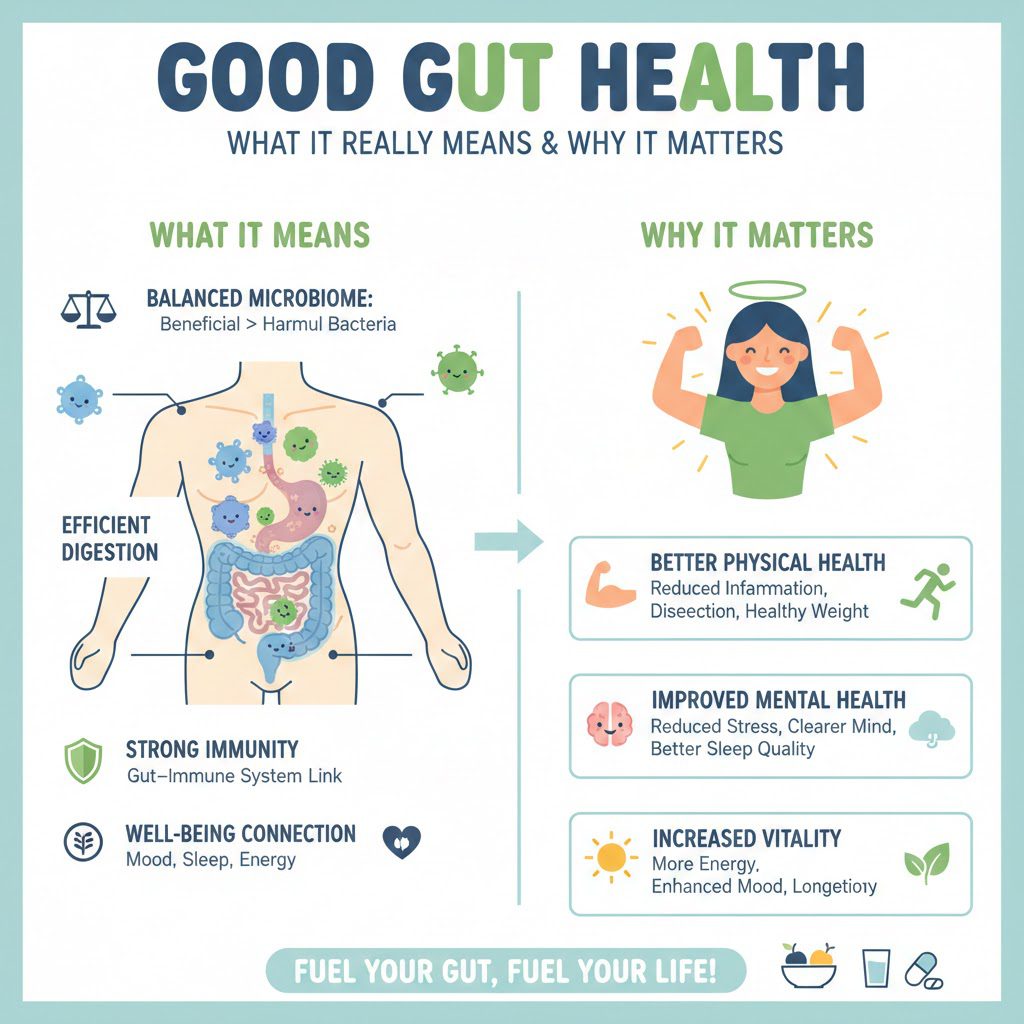
Gut health is a critical component of overall well-being, yet it is often overlooked until digestive issues arise. Understanding what does good gut health really mean involves recognizing the importance of a balanced gut microbiome, proper digestive function, and efficient nutrient absorption. A healthy gut does far more than support digestion it plays a vital role in immune strength, mental well-being, metabolic balance, and even skin health. By learning what defines a healthy gut and how to support it through nutrient-rich foods, probiotics, and healthy lifestyle habits, individuals can reduce digestive discomfort, strengthen overall health, and promote long-term wellness.
Key Takeaways
- Understanding what good gut health really mean helps support digestion, immunity, mental well-being, and overall wellness.
- A balanced gut microbiome is essential for proper nutrient absorption, reduced inflammation, and protection against harmful bacteria.
- Signs of optimal digestive health include regular bowel movements, minimal bloating, strong immunity, stable weight, and balanced mood.
- Consuming probiotics, fiber-rich foods, and prebiotics supports gut flora, digestive balance, and overall gut function.
- Healthy lifestyle habits such as staying hydrated, managing stress, exercising, and avoiding unnecessary antibiotics help maintain proper gut function.
- Monitoring digestive health and introducing probiotics gradually can minimize side effects while maximizing benefits.
- Maintaining consistent care and awareness of your gut’s needs ensures long-term digestive balance and overall wellness.
What Does Good Gut Health Really Mean?
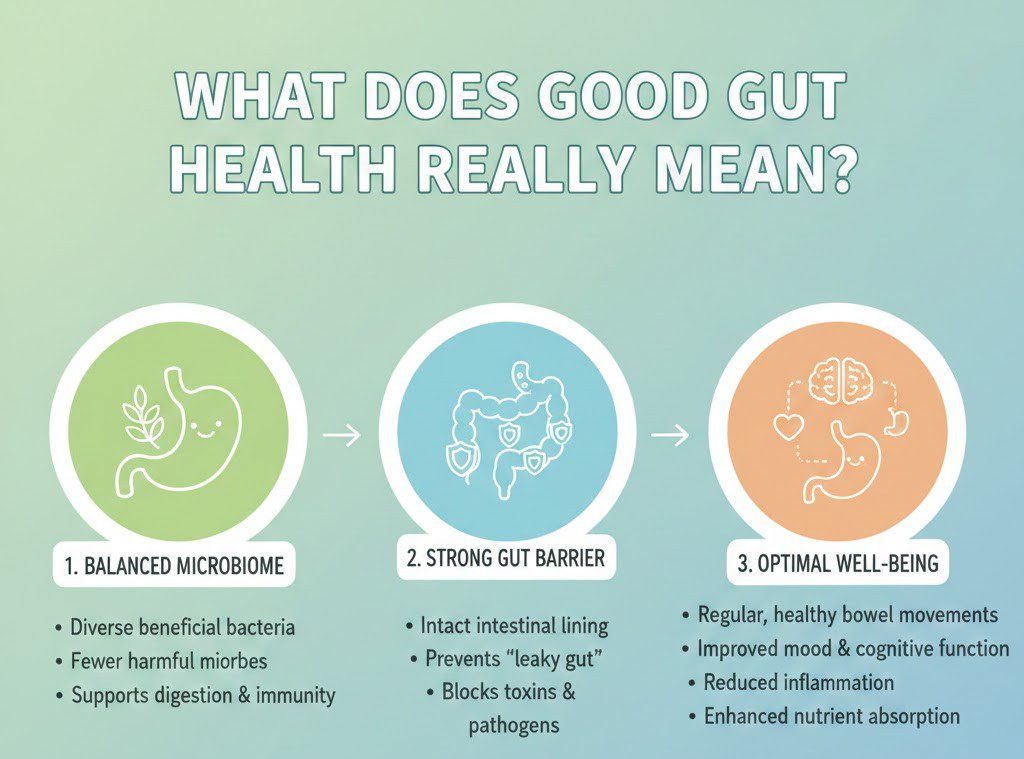
Good gut health refers to the optimal functioning of the digestive system supported by a balanced and diverse gut microbiome. It means beneficial gut bacteria work together to break down food efficiently, absorb essential nutrients, and maintain digestive balance by preventing harmful microorganisms from overgrowing. When gut flora is healthy, digestion is smooth, inflammation is minimal, and common issues such as bloating, constipation, or irregular bowel movements are reduced.
Understanding what good gut health really means also includes recognizing the gut’s influence beyond digestion. A healthy gut supports immune function, regulates inflammation, and communicates with the brain through the gut brain axis, affecting mood, stress levels, and overall well-being. Proper gut function helps maintain energy levels, metabolic balance, and long-term health when supported by probiotics, fiber-rich foods, hydration, and healthy lifestyle habits.
Why Gut Health Matters for Overall Health
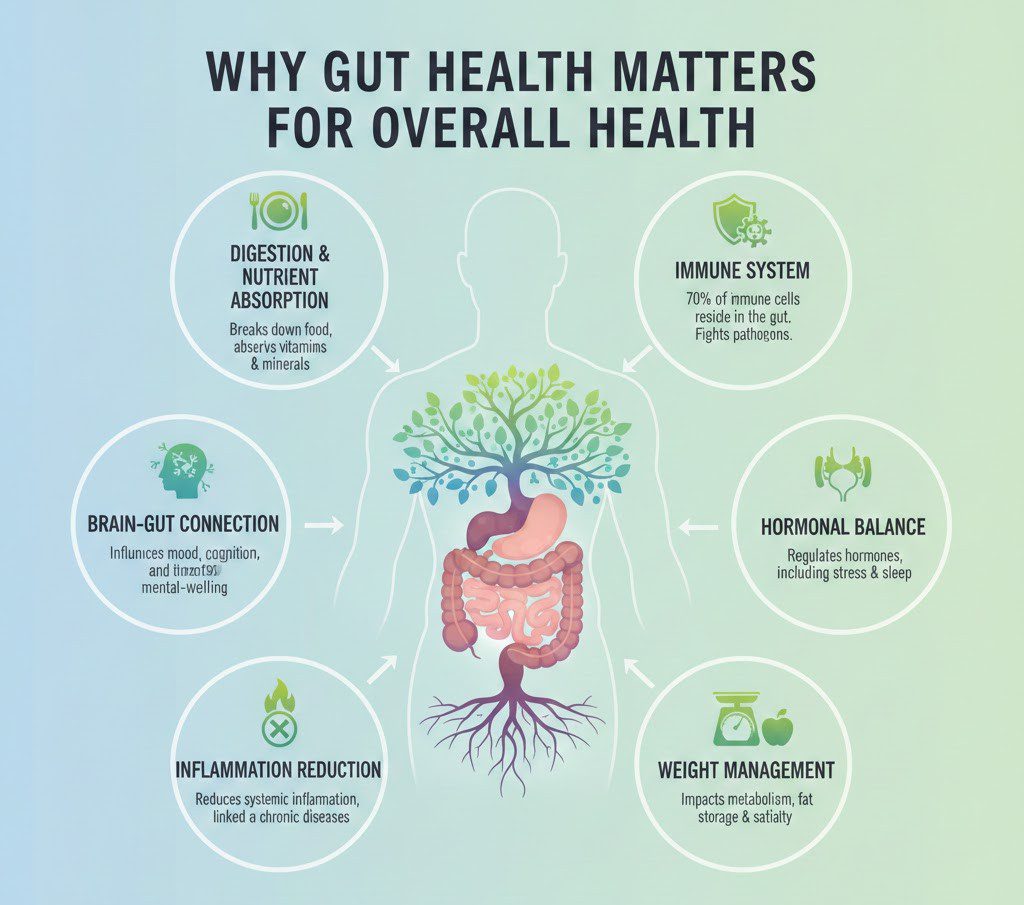
Gut health plays a crucial role in maintaining overall physical and mental well-being. A healthy digestive system supported by a balanced gut microbiome helps the body digest food efficiently, absorb essential nutrients, and protect against harmful bacteria. When gut health is well maintained, the body functions more effectively, inflammation is controlled, and the risk of many digestive and systemic health problems is reduced.
Key reasons gut health matters include:
- Supports Digestive Balance: A healthy gut ensures proper breakdown of food, smooth bowel movements, and reduced issues such as bloating, gas, constipation, or diarrhea. Balanced gut flora helps keep digestion comfortable and efficient.
- Strengthens Immune Function: Nearly 70% of the immune system is connected to the gut. A healthy gut microbiome helps immune cells recognize and fight harmful pathogens while reducing the risk of frequent infections.
- Improves Nutrient Absorption: Proper gut function allows the body to absorb essential vitamins, minerals, and nutrients more effectively, supporting energy levels, bone health, and overall bodily functions.
- Regulates Inflammation: Balanced gut bacteria help control inflammation in the digestive tract and throughout the body, lowering the risk of chronic conditions linked to long-term inflammation.
- Supports Mental Well-Being: The gut communicates with the brain through the gut brain axis. Good gut health supports mood stability, reduces stress, and may help manage anxiety or depression.
- Maintains Metabolic Health: A healthy gut plays a role in regulating blood sugar levels, fat storage, and energy metabolism, supporting healthy weight management and metabolic balance.
- Protects the Gut Barrier: Strong gut health helps maintain the integrity of the gut lining, preventing harmful substances and toxins from entering the bloodstream and triggering immune reactions.
- Promotes Long-Term Wellness: Consistent digestive balance supports overall vitality, reduces the risk of digestive disorders, and contributes to better health outcomes as the body ages.
Common Causes of Poor Gut Health
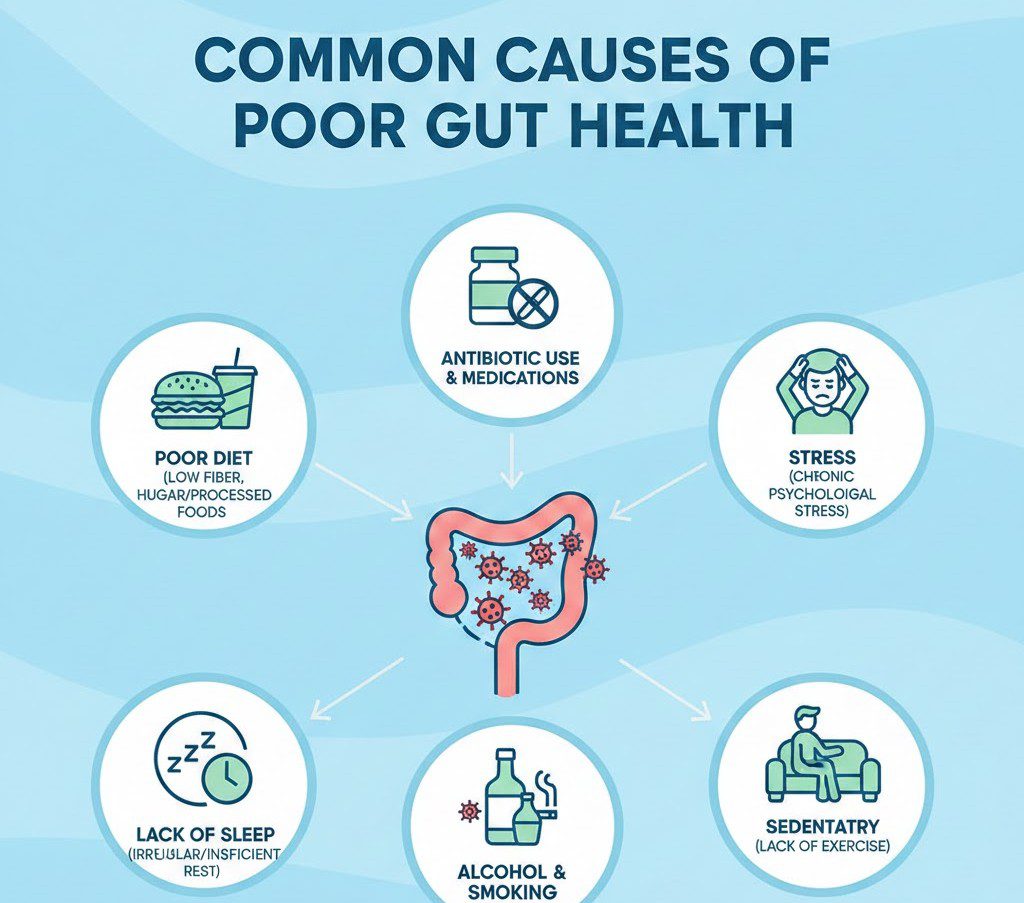
Poor gut health often develops gradually due to daily habits, diet choices, and lifestyle factors that disrupt digestive balance and the gut microbiome. When beneficial gut bacteria are reduced and harmful bacteria increase, digestive discomfort, weakened immunity, and inflammation can occur. Common causes of poor gut health include:
- Poor Diet High in Processed Foods: Diets rich in sugar, refined carbohydrates, and ultra-processed foods can feed harmful bacteria while reducing beneficial gut flora, leading to digestive imbalance and inflammation.
- Low Fiber Intake: Fiber is essential for feeding beneficial gut bacteria. A lack of fiber can slow digestion, cause constipation, and negatively impact gut microbiome diversity.
- Chronic Stress: Ongoing stress affects gut function by disrupting digestion, altering gut bacteria, and increasing inflammation through the gut brain axis.
- Overuse of Antibiotics: While sometimes necessary, antibiotics can kill both harmful and beneficial bacteria, leading to long-term disruptions in gut microbiota balance.
- Poor Sleep Habits: Inadequate or irregular sleep can negatively impact gut bacteria diversity and digestive function, contributing to inflammation and weakened immunity.
- Dehydration: Insufficient water intake slows digestion, increases the risk of constipation, and affects nutrient absorption.
- Sedentary Lifestyle: Lack of physical activity can reduce gut motility and negatively influence gut microbiome composition.
- Excess Alcohol Consumption: Alcohol can irritate the gut lining, disrupt gut flora, and increase intestinal permeability.
- Smoking: Smoking negatively affects gut bacteria balance and increases the risk of digestive disorders and inflammation.
Risks of Poor Gut Health
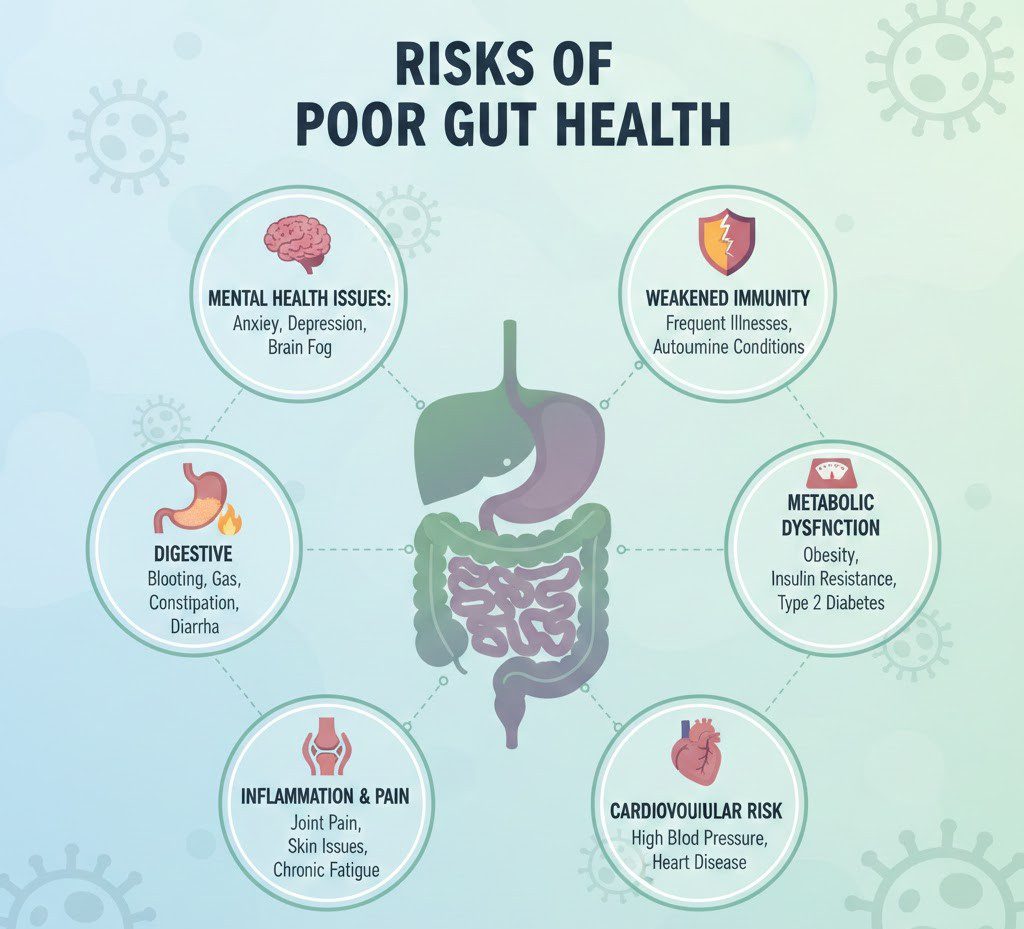
Poor gut health can have far-reaching effects on both digestive function and overall well-being. When the gut microbiome is imbalanced and beneficial bacteria are reduced, the body becomes more susceptible to a range of health issues. Understanding these risks highlights the importance of maintaining a balanced gut through diet, lifestyle, and probiotics. Key risks of poor gut health include:
- Digestive Disorders: Imbalance in gut bacteria can lead to bloating, constipation, diarrhea, irritable bowel syndrome (IBS), and other chronic digestive problems.
- Weakened Immunity: Since a large portion of the immune system resides in the gut, poor gut health can increase susceptibility to infections and slow recovery from illness.
- Inflammation and Chronic Disease: An unhealthy gut can trigger systemic inflammation, increasing the risk of metabolic disorders, obesity, type 2 diabetes, and heart disease.
- Nutrient Deficiencies: Poor gut function can reduce the absorption of essential vitamins and minerals, affecting energy levels, bone health, and overall nutrition.
- Mental Health Issues: Disruption of the gut brain axis may contribute to anxiety, depression, mood swings, and cognitive difficulties.
- Weight Management Challenges: Gut imbalances can affect metabolism, fat storage, and appetite regulation, making weight management more difficult.
- Skin Problems: Inflammation and gut imbalance are linked to skin conditions such as acne, eczema, and psoriasis.
- Gut Barrier Dysfunction: Poor gut health can compromise the intestinal lining, allowing toxins and harmful bacteria to enter the bloodstream, potentially triggering autoimmune reactions.
What Does a Healthy Gut Health Look Like?
A healthy gut is reflected in how efficiently the digestive system functions and how well the body maintains overall balance. When gut health is optimal, digestion is comfortable, nutrient absorption is efficient, and the gut microbiome remains diverse and balanced. This balance supports not only digestion but also immunity, metabolism, and mental well-being. Key signs of a healthy gut include:
- Regular and Comfortable Bowel Movements: Consistent bowel habits without constipation, diarrhea, or straining indicate proper digestive function.
- Minimal Digestive Discomfort: Little to no bloating, gas, cramps, or stomach pain suggests good digestive balance.
- Strong Immune Function: Fewer infections and faster recovery times often reflect a well-supported gut microbiome.
- Healthy Energy Levels: Efficient digestion and nutrient absorption help maintain steady energy throughout the day.
- Balanced Mood and Mental Clarity: A healthy gut supports the gut brain connection, contributing to stable mood, reduced stress, and better focus.
- Good Nutrient Absorption: Healthy gut flora helps the body absorb essential vitamins and minerals needed for overall health.
- Stable Weight and Metabolism: Proper gut function supports metabolic balance and healthy weight management.
- Healthy Skin: Clearer skin and reduced inflammation may indicate a well-functioning digestive system.
- Strong Gut Barrier: A healthy gut lining helps prevent toxins and harmful bacteria from entering the bloodstream.
How to Improve Gut Health
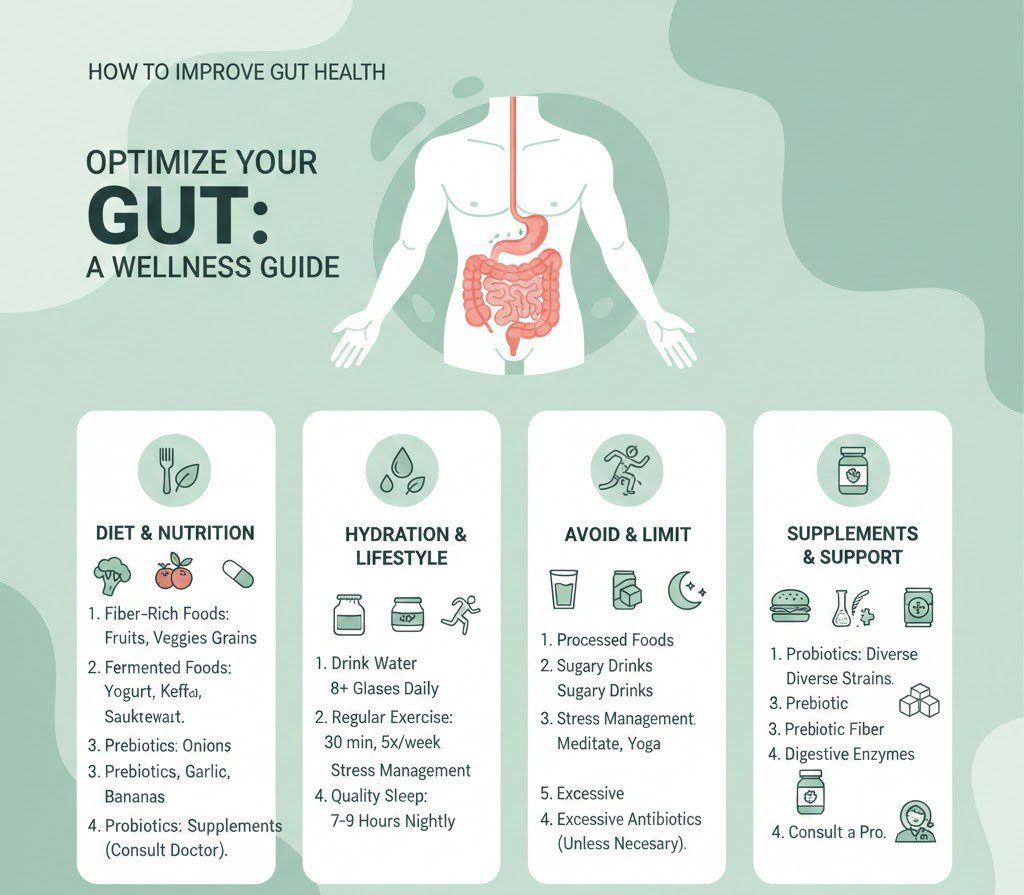
Improving gut health involves combining a nutrient-rich diet, lifestyle changes, and supportive habits that nurture the gut microbiome and digestive function. Small, consistent steps can have a significant impact on digestion, immunity, and overall well-being. Practical ways to improve gut health include:
- Eat Probiotic-Rich Foods: Incorporate yogurt, kefir, sauerkraut, kimchi, miso, and tempeh to introduce beneficial bacteria into the gut.
- Include Prebiotic Foods: Garlic, onions, leeks, bananas, asparagus, and oats provide fiber that feeds healthy gut bacteria and promotes microbial diversity.
- Consume Fiber-Rich Foods: Fruits, vegetables, legumes, and whole grains support regular bowel movements, nutrient absorption, and digestive balance.
- Stay Hydrated: Drinking enough water helps maintain proper digestion, supports nutrient absorption, and prevents constipation.
- Manage Stress: Practices like meditation, deep breathing, yoga, or mindfulness help reduce stress-related gut disturbances.
- Exercise Regularly: Physical activity improves gut motility, reduces inflammation, and positively influences gut microbiome composition.
- Prioritize Sleep: Aim for 7-9 hours of quality sleep per night to support gut microbial balance and digestive function.
- Avoid Excess Antibiotics and Harmful Substances: Use antibiotics only when necessary, limit alcohol, and avoid smoking to protect gut bacteria.
- Introduce Changes Gradually: When adding probiotics, prebiotics, or high-fiber foods, start slowly to minimize digestive discomfort such as bloating or gas.
- Monitor Your Gut: Pay attention to digestive changes, energy levels, and overall wellness to adjust habits and diet for optimal gut health.
Conclusion
Gut health is vital for overall wellness, supporting digestion, immunity, mental well-being, metabolism, and skin health. Poor gut health can cause bloating, nutrient deficiencies, inflammation, mood changes, and weakened immunity. Common causes include processed foods, low fiber, stress, poor sleep, dehydration, inactivity, alcohol, and smoking. A healthy gut shows regular bowel movements, minimal discomfort, strong immunity, steady energy, balanced mood, and healthy skin. To improve gut health, eat probiotic and prebiotic foods, stay hydrated, exercise, manage stress, get quality sleep, limit harmful substances, and monitor digestive changes. Consistent care helps maintain long-term digestive balance and overall well-being.
FAQs
What does good gut health mean?
Good gut health means having a balanced and diverse gut microbiome, where beneficial bacteria thrive and harmful bacteria are controlled. It supports efficient digestion, proper nutrient absorption, strong immunity, and overall physical and mental well-being.
Why is gut health important for overall health?
A healthy gut affects more than digestion. It aids nutrient absorption, strengthens the immune system, regulates inflammation, maintains metabolic balance, supports mental clarity and mood, and may even improve skin health.
What are the signs of a healthy gut?
Signs include regular and comfortable bowel movements, minimal bloating or gas, strong immunity, steady energy levels, balanced mood, clear skin, effective nutrient absorption, and proper metabolic function.
What causes poor gut health?
Poor gut health can develop due to diet and lifestyle factors, including high intake of processed foods and sugar, chronic stress, poor sleep, overuse of antibiotics, dehydration, inactivity, excessive alcohol, and smoking.
What are the risks of poor gut health?
An imbalanced gut may cause digestive issues like bloating, constipation, diarrhea, or IBS. It can weaken immunity, increase inflammation, reduce nutrient absorption, affect mood, contribute to weight problems, and increase the risk of skin and metabolic disorders.
How can probiotics help improve gut health?
Probiotics introduce beneficial bacteria into the gut, helping restore balance and diversity. They improve digestion, nutrient absorption, immunity, reduce inflammation, and may also support mental health via the gut brain axis.
What foods support gut health?
Probiotic-rich foods include yogurt, kefir, kimchi, sauerkraut, miso, and tempeh. Prebiotic foods like garlic, onions, leeks, bananas, asparagus, and oats feed beneficial bacteria. Fiber-rich fruits, vegetables, legumes, and whole grains promote digestion and microbial diversity.
How does lifestyle affect gut health?
Lifestyle habits such as regular exercise, stress management, staying hydrated, quality sleep, and avoiding excessive alcohol or smoking protect gut bacteria, improve digestion, and support overall gut function.
How can I monitor my gut health?
Observe bowel habits, digestive comfort, energy levels, mood, mental clarity, and skin health. Changes in these areas can indicate gut imbalances and guide dietary or lifestyle adjustments.
Can improving gut health benefit mental well-being?
Yes, a balanced gut communicates with the brain via the gut brain axis. Healthy gut bacteria can improve mood, reduce stress and anxiety, enhance focus, and support mental health by regulating neurotransmitters and reducing inflammation.
References
- Gut health. (2023, March 23). Better Health Channel. Retrieved December 21, 2025, from https://www.betterhealth.vic.gov.au/health/healthyliving/gut-health
- Gut Health | Health Matters. (n.d.). Circle Health Group. Retrieved December 21, 2025, from https://www.circlehealthgroup.co.uk/health-matters/your-body/why-is-gut-health-important
- Gut Health: What It Means & Why It Matters | ABMH Pune. (2024, September 18). Aditya Birla Memorial Hospital. Retrieved December 21, 2025, from https://adityabirlahospital.com/blogs/gut-health-what-does-it-really-mean
- Improve Your Gut Health: A Guide to a Healthier Digestive System | Food Unfolded. (2025, July 3). FoodUnfolded. Retrieved December 21, 2025, from https://www.foodunfolded.com/article/gut-health-101-why-it-matters-and-how-to-improve-it
- McCallum, K. (2025, April 8). Gut Health: Tips for Keeping a Healthy Gut. Houston Methodist. Retrieved December 21, 2025, from https://www.houstonmethodist.org/blog/articles/2025/apr/gut-health-signs-of-an-unhealthy-gut-how-to-improve-it/
- Why Gut Health Matters For Mind & Body. (2025, October 20). Franciscan Health. Retrieved December 21, 2025, from https://www.franciscanhealth.org/community/blog/gut-health-why-is-it-important

Dr. Emily Zhang, MD, is a gastroenterologist and integrative medicine specialist with 10 years of clinical experience in digestive health and microbiome science. She completed her medical degree at University of Chicago Pritzker School of Medicine and fellowship at Massachusetts General Hospital. Dr. Zhang specializes in gut-brain interactions, microbiota diversity, and nutrition-driven gut repair. She has contributed to NIH-funded studies on probiotics and authored patient education resources on functional gut disorders.