
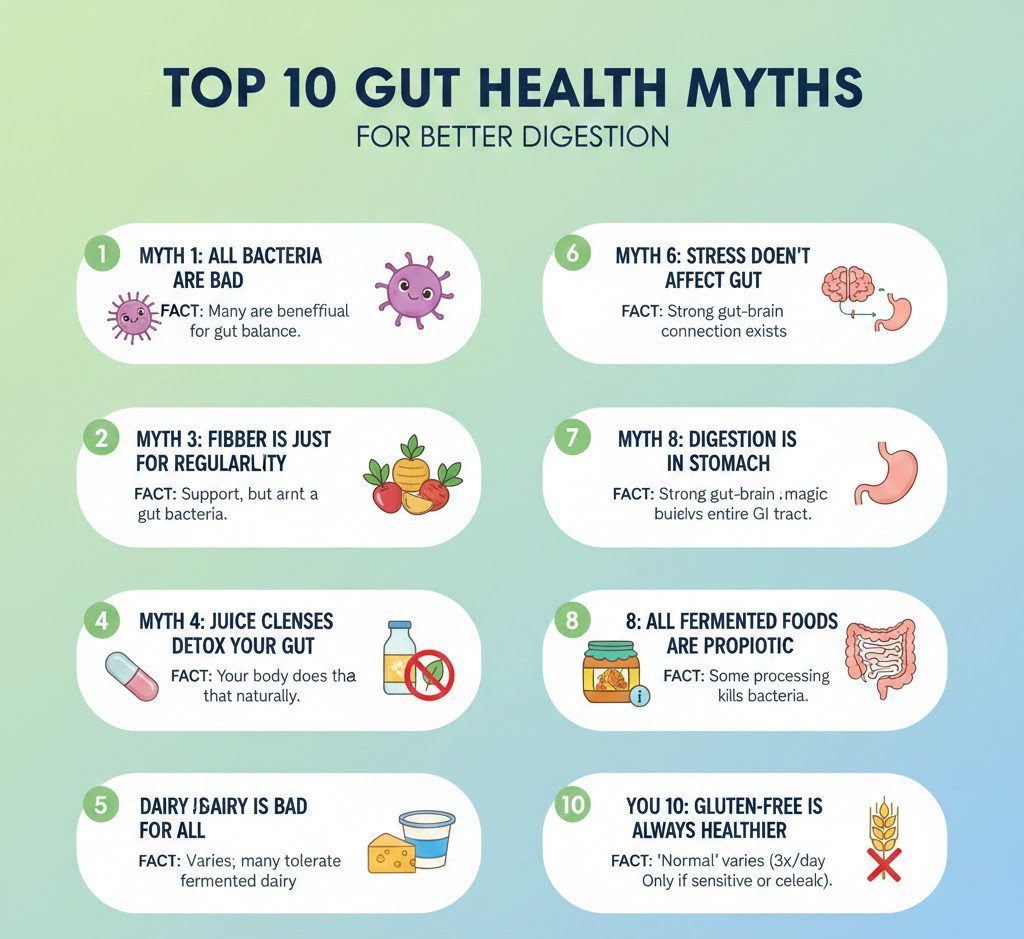
Gut health plays a vital role in digestion, immunity, mental well being, and overall wellness, yet it is often misunderstood due to widespread misinformation. With the growing influence of wellness trends and social media advice, many people unknowingly follow habits based on myths rather than science, which can lead to poor digestive choices, unnecessary food restrictions, and long term gut imbalance. Understanding the top 10 gut health myths and replacing them with evidence based information helps improve digestion, reduce bloating and inflammation, and support long term gut health especially for women, older adults, and individuals with sensitive digestion.
Key Takeaways
- Many popular gut health tips are based on myths and may worsen digestion if followed without proper understanding.
- A healthy gut depends on balance and consistency rather than extreme diets, detoxes, or excessive supplements.
- Probiotics can support gut health, but they are not a standalone solution for digestive problems.
- Diet, lifestyle, stress levels, sleep quality, hydration, and physical activity all influence gut health.
- Understanding and avoiding the top gut health myths helps prevent unnecessary restrictions and digestive discomfort.
- Science backed habits and personalized approaches are more effective than trending wellness advice for long term gut wellness.
Understanding Why Gut Health Myths Exist

Gut health myths exist because digestive health is complex and influenced by many factors, making it easy for misinformation to spread. Scientific findings are often oversimplified or misinterpreted, while wellness trends and marketing promote quick fixes that appeal to people seeking fast results. This combination leads to widespread confusion about what truly supports gut health.
Common reasons gut health myths develop and spread include:
- Gut health research is complex and often misunderstood by the general public
- Scientific studies are taken out of context or exaggerated
- Social media and wellness trends promote one size fits all advice
- Supplement, detox, and cleanse marketing encourages unrealistic expectations
- Individual differences in digestion are frequently ignored
- Lack of clear, evidence based education fuels misinformation
How Gut Health Myths Can Affect Your Digestion
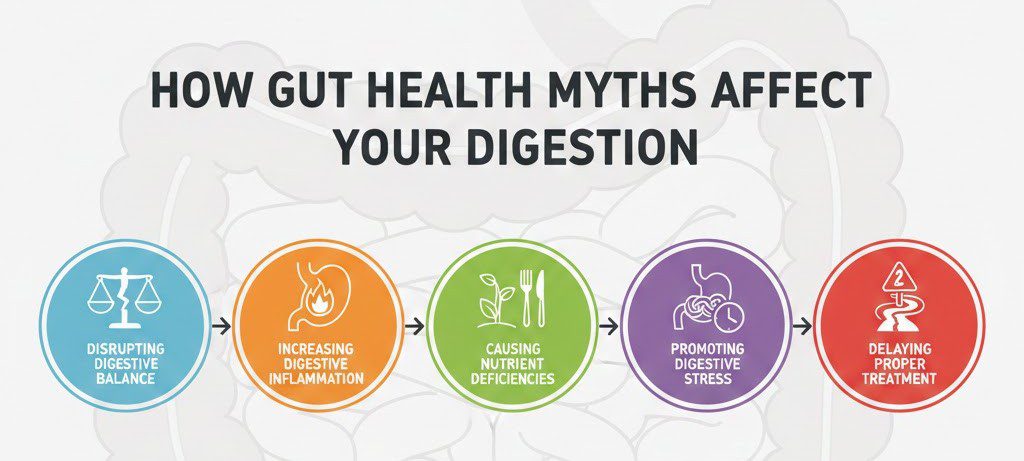
Gut health myths can significantly impact digestive health by encouraging habits that disrupt the gut microbiome and digestive balance. Following misinformation instead of science based guidance may lead to unnecessary food restrictions, poor nutrient intake, increased inflammation, and digestive discomfort. Over time, these myths can weaken digestion, worsen bloating, and interfere with the body’s natural ability to maintain gut health. Reasons why gut health myths can affect your digestion include:
- Disrupting Digestive Balance: Believing and following gut health myths can lead to imbalanced diets or extreme food eliminations, which may reduce beneficial gut bacteria and impair digestion.
- Increasing Digestive Inflammation: Misguided practices such as detox cleanses or excessive supplement use can irritate the gut lining, leading to inflammation, bloating, and discomfort.
- Causing Nutrient Deficiencies: Unnecessary avoidance of entire food groups based on myths can limit essential nutrients needed for healthy digestion and gut function.
- Promoting Digestive Stress: Constantly switching diets or following conflicting advice can stress the digestive system, making symptoms like gas, cramps, and irregular bowel movements worse.
- Delaying Proper Treatment: Ignoring persistent digestive symptoms due to myths may prevent individuals from seeking appropriate dietary changes or medical guidance, allowing gut issues to worsen over time.
Top 10 Gut Health Myths You Should Stop Believing
Gut health advice is everywhere, but not all of it is accurate. Many commonly accepted beliefs about digestion are based on oversimplified information, marketing trends, or misinterpreted research. Believing these myths can lead to unnecessary dietary restrictions, digestive stress, and long term gut imbalance. Understanding the truth behind these misconceptions helps support better digestion, nutrient absorption, and overall gut wellness.
Myth 1: Probiotics Fix All Gut Problems
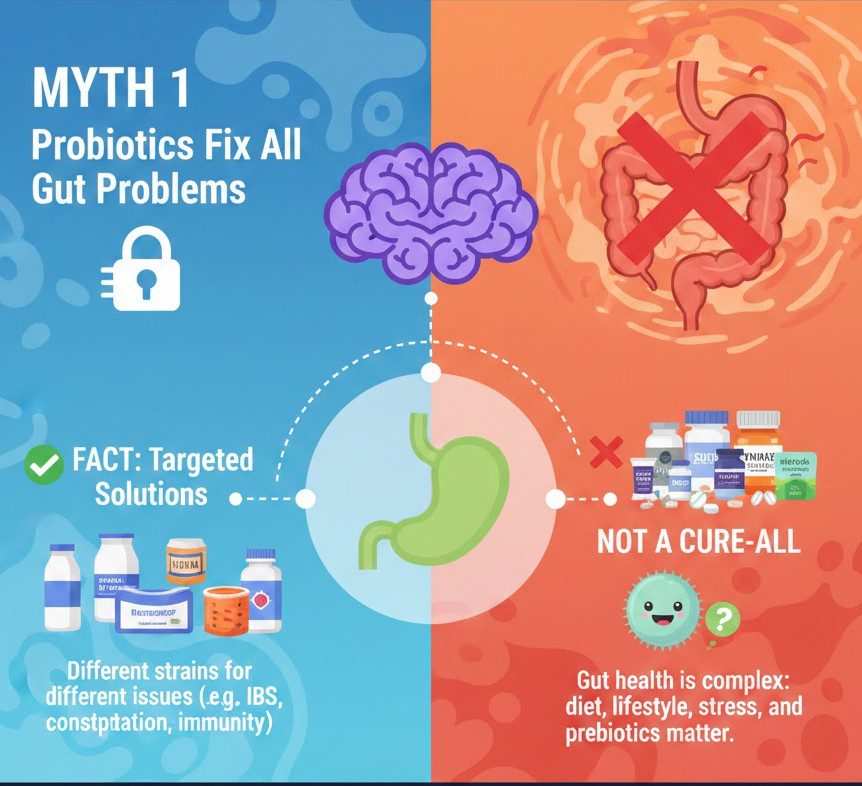
Probiotics are widely marketed as a quick solution for bloating, constipation, gas, and other digestive concerns, which leads many people to rely on them as a standalone fix. While probiotics do support beneficial gut bacteria, they cannot override poor dietary habits, chronic stress, dehydration, lack of sleep, or irregular eating patterns. Using probiotics alone may temporarily ease symptoms but often fails to address the underlying causes of digestive imbalance, leading to recurring issues.
The Truth: Probiotics are most effective when used as part of a comprehensive gut health approach that includes a balanced diet rich in whole foods, adequate fiber intake, proper hydration, stress reduction, and consistent healthy lifestyle habits that support long term gut balance.
Myth 2: All Bacteria in the Gut Are Bad
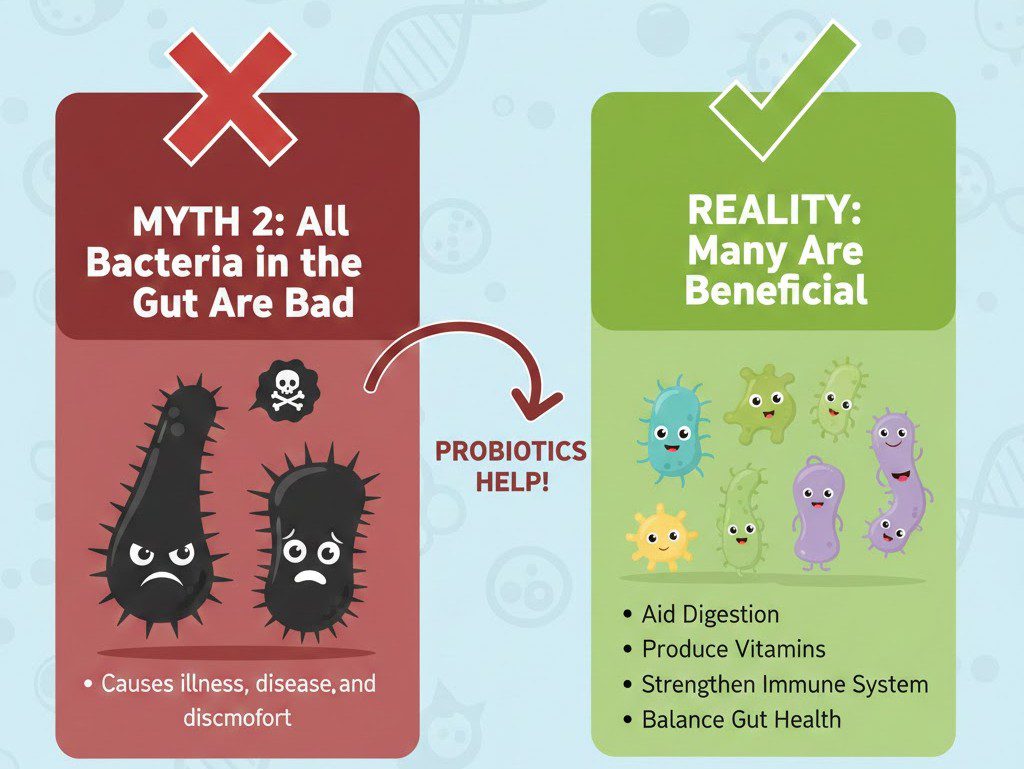
Many people associate bacteria with illness and believe that eliminating bacteria improves health. In reality, the gut contains trillions of microorganisms that play essential roles in digestion, vitamin production, immune regulation, and protection against harmful pathogens. Attempting to eliminate bacteria through extreme diets or excessive sanitization can disrupt this delicate balance and harm digestion.
The Truth: A healthy gut depends on a diverse and balanced population of beneficial bacteria that work together to support digestion, immunity, metabolism, and overall well being.
Myth 3: You Should Avoid All Dairy for Gut Health
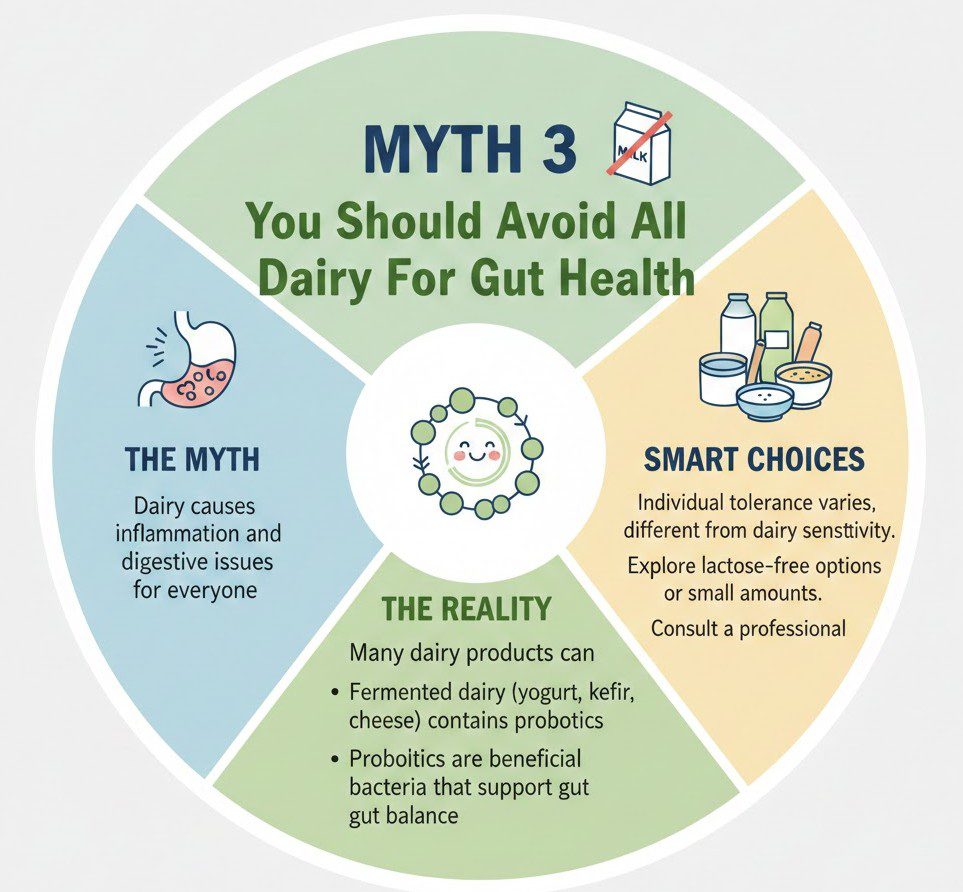
Dairy is often blamed for bloating and digestive discomfort, causing many people to remove it entirely without understanding their personal tolerance. While lactose intolerance or dairy sensitivity does affect some individuals, fermented dairy products contain probiotics that can actually support digestion and gut balance by improving microbial diversity.
The Truth: Unless you have a diagnosed intolerance or sensitivity, fermented dairy products like yogurt and kefir can support gut health by providing beneficial bacteria and aiding digestion.
Myth 4: Gluten Is Bad for Everyone’s Gut
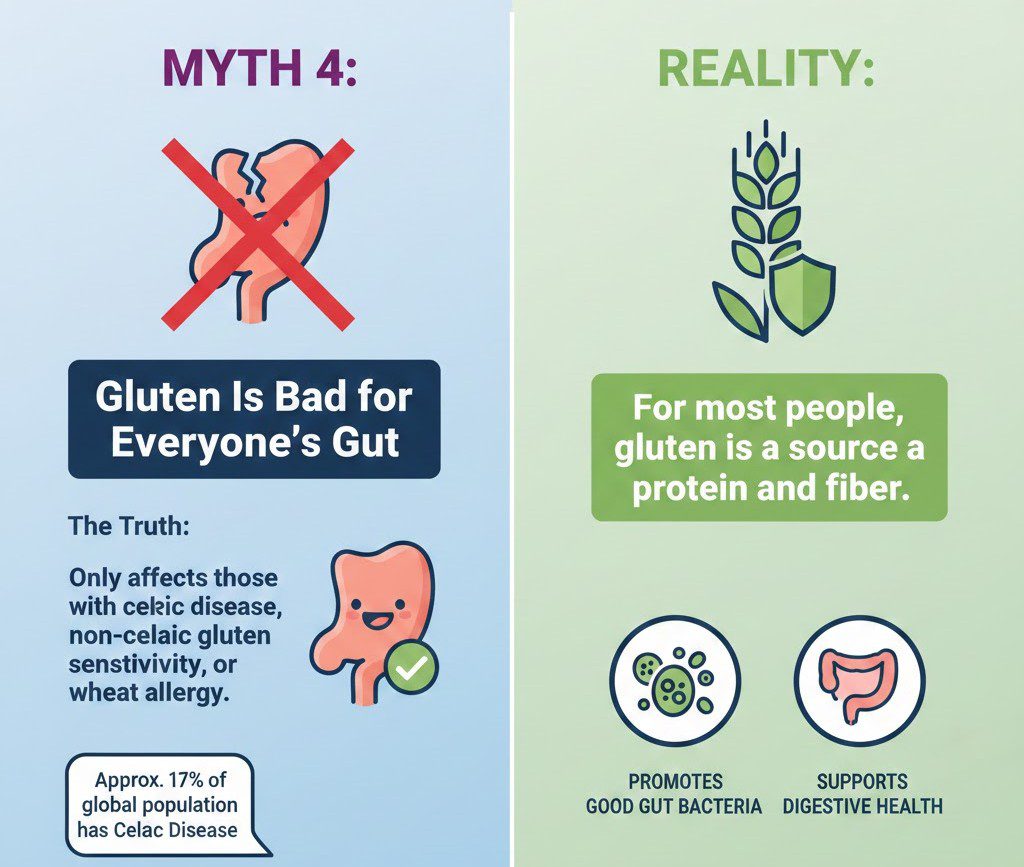
Gluten has gained a negative reputation due to increased awareness of celiac disease and non celiac gluten sensitivity, which has led many people to eliminate gluten without medical necessity. This widespread avoidance often results in reduced intake of whole grains, which are a key source of fiber, B vitamins, and minerals that support digestion. Removing gluten unnecessarily can limit dietary variety and negatively affect gut bacteria diversity, potentially worsening digestive health rather than improving it.
The Truth: For most people, whole grains that contain gluten such as wheat, barley, and rye provide essential fiber and nutrients that nourish beneficial gut bacteria, support regular bowel movements, and contribute to overall digestive health.
Myth 5: More Fiber Is Always Better
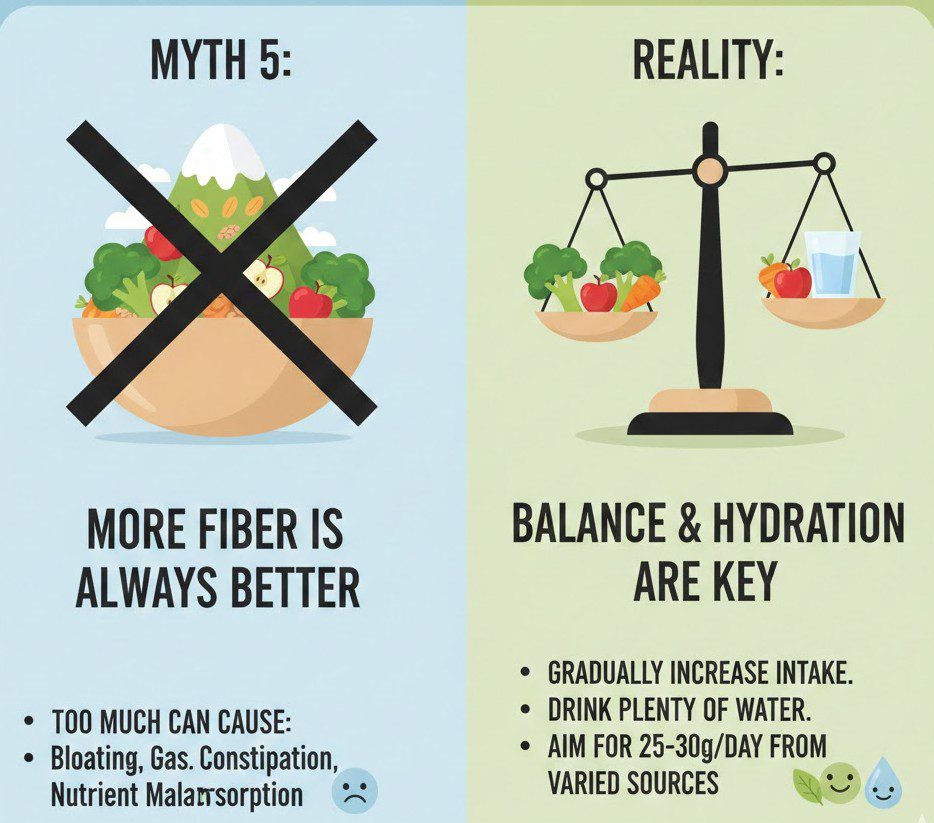
Fiber is essential for gut health, but the idea that more is always better can be misleading. Consuming excessive fiber, especially when increased suddenly, can overwhelm the digestive system and disrupt gut comfort. This often leads to bloating, gas, cramping, and irregular bowel movements, particularly in individuals with sensitive digestion or underlying gut conditions.
The Truth: Fiber intake should be personalized and increased gradually to allow the gut microbiome time to adapt, ensuring improved digestion without discomfort while maintaining long term gut balance.
Myth 6: Gut Health Is Only About What You Eat
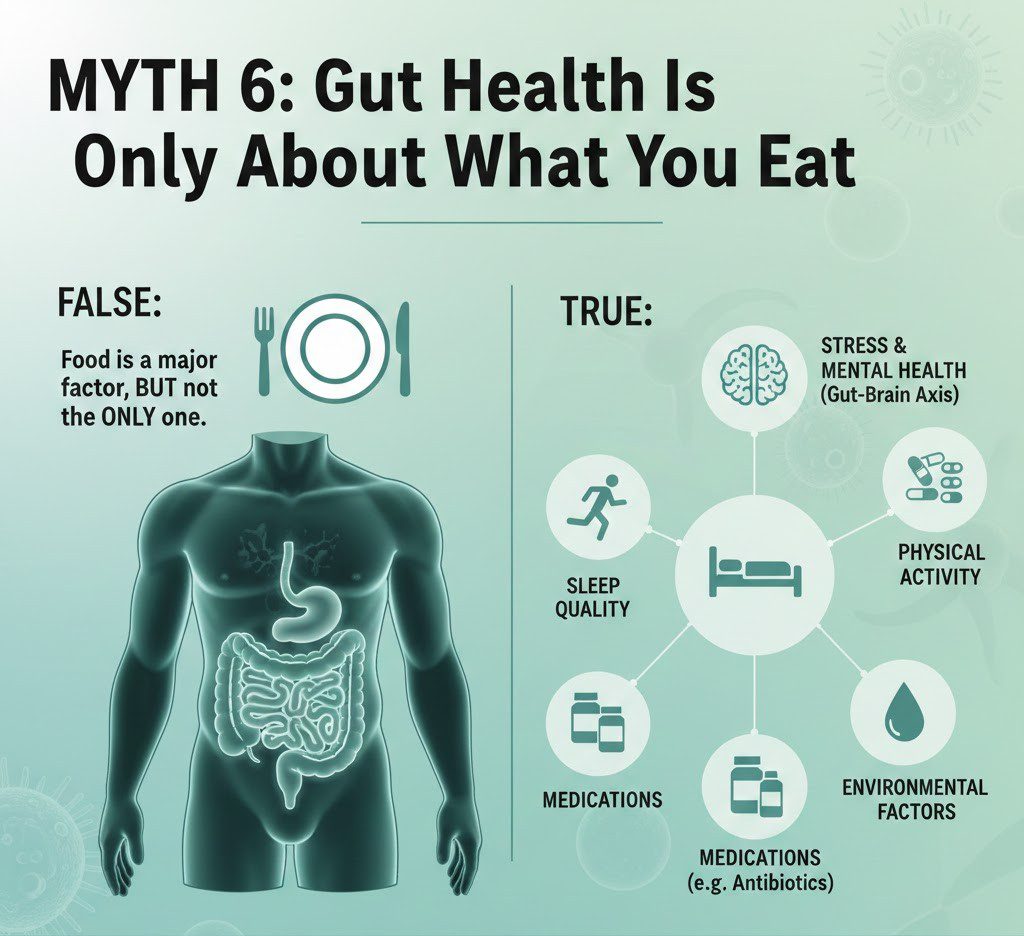
Diet plays a major role in gut health, but focusing only on food overlooks other powerful influences on digestion. Chronic stress, poor sleep quality, dehydration, and a sedentary lifestyle can negatively impact gut bacteria, slow digestion, and increase inflammation even when dietary choices are otherwise healthy.
The Truth: Gut health is shaped by a combination of balanced nutrition, effective stress management, proper hydration, quality sleep, and regular physical activity working together to support optimal digestive function.
Myth 7: Detox Cleanses Heal the Gut
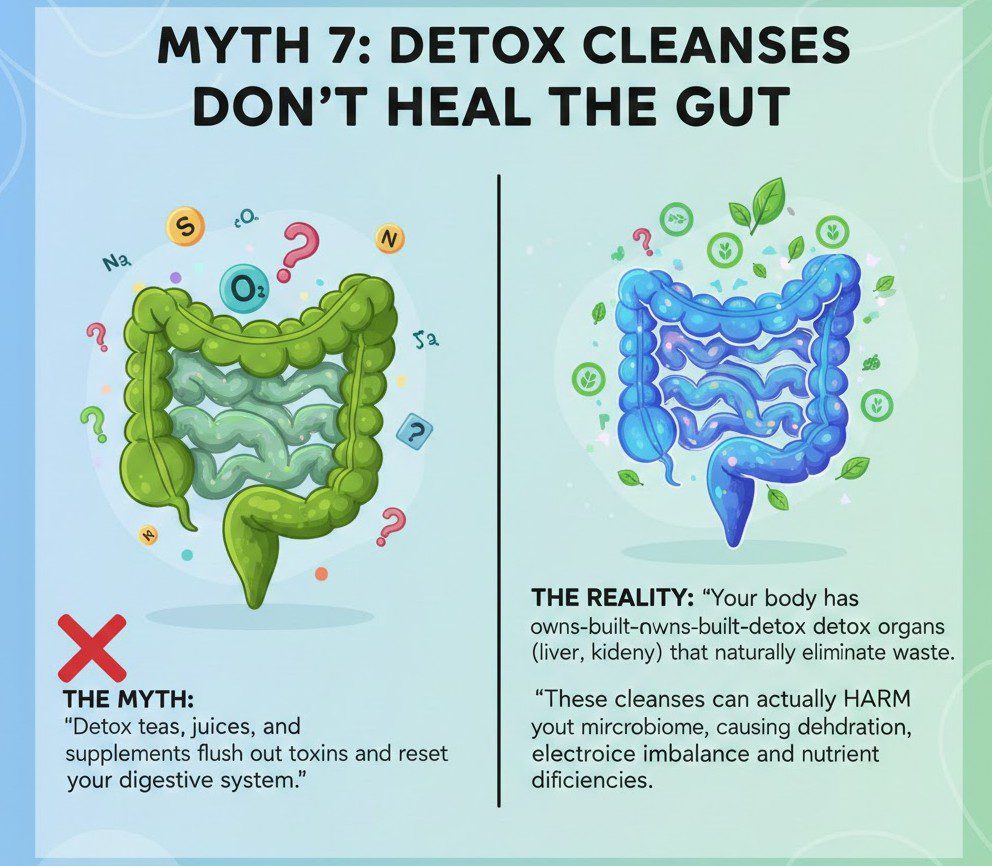
Detox teas, juice cleanses, and restrictive detox programs are often marketed as gut healing solutions, but they can place unnecessary stress on the digestive system. Extreme detox methods may disrupt the gut microbiome, cause dehydration and electrolyte imbalances, and reduce essential nutrient intake, which can ultimately weaken digestive health.
The Truth: The body naturally detoxifies through the liver and digestive system, and gut health is best supported through balanced nutrition, adequate hydration, and consistent healthy habits rather than extreme or short term cleanses.
Myth 8: Digestive Discomfort Is Normal and Should Be Ignored
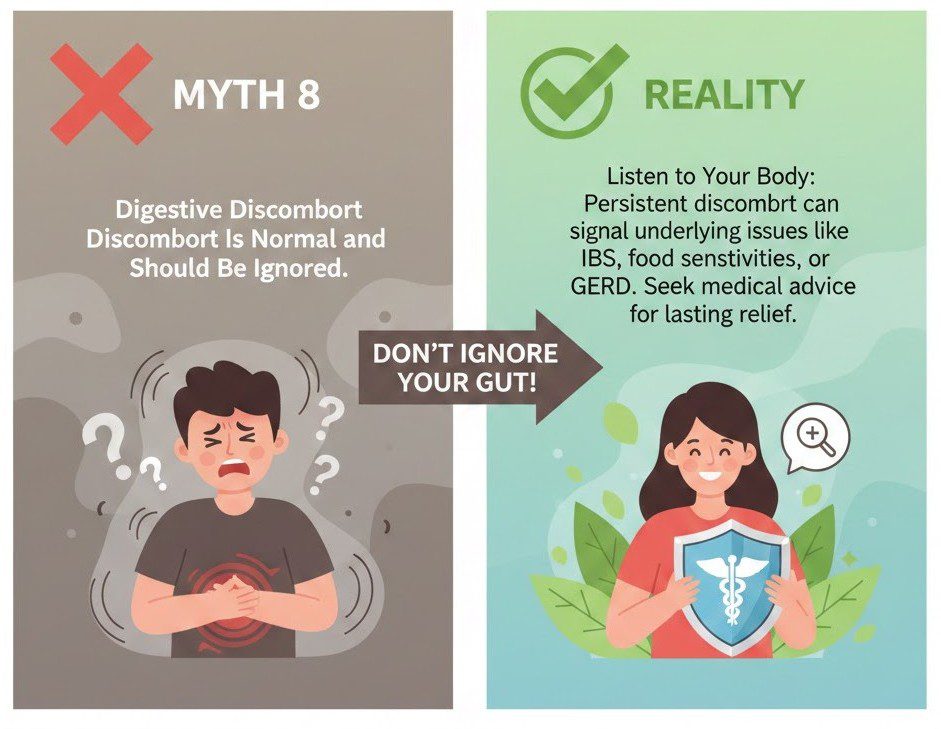
Many people accept frequent bloating, gas, or digestive discomfort as normal, assuming it is simply part of everyday life. Ignoring persistent symptoms can delay proper care and allow gut imbalances, food sensitivities, or digestive conditions to worsen over time.
The Truth: Ongoing digestive discomfort should be addressed through thoughtful dietary changes, lifestyle adjustments, and when needed, professional guidance to restore gut balance and prevent long term digestive issues.
Myth 9: Antibiotics Are Always Bad for Gut Health
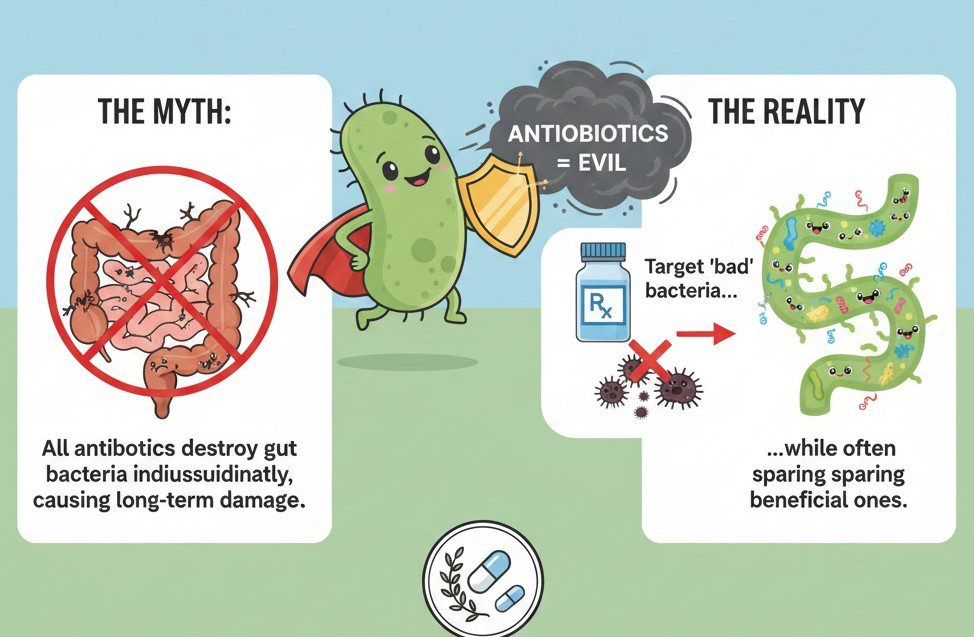
Antibiotics often have a negative reputation because they can temporarily disrupt gut bacteria, leading some people to avoid them completely. However, refusing antibiotics when medically necessary can be dangerous, as they are essential for treating bacterial infections and preventing serious complications.
The Truth: Antibiotics should be used responsibly and only when needed, followed by gut supportive foods and habits such as probiotic rich foods and adequate fiber to help restore a healthy gut microbiome.
Myth 10: Gut Health Can Be Fixed Quickly
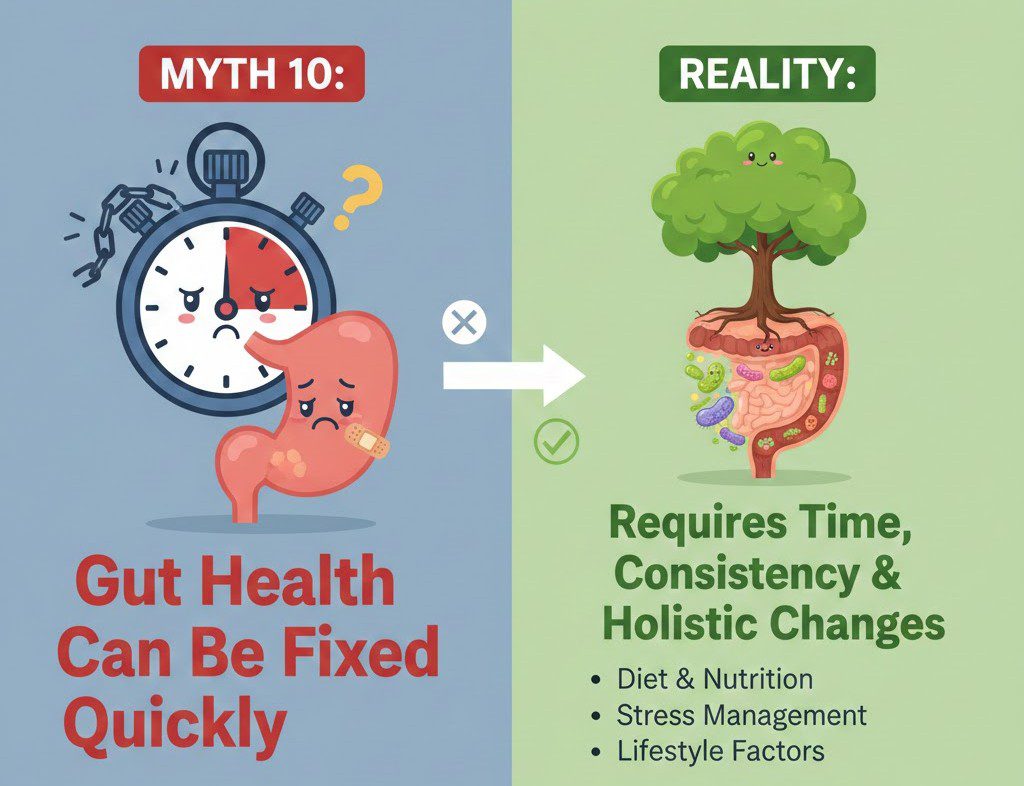
Many people expect rapid improvements in digestion from supplements, detoxes, or short term dietary changes. This mindset often leads to frustration when results are temporary or inconsistent, as gut health reflects long term patterns rather than quick interventions.
The Truth: Improving gut health requires patience, consistency, and sustainable lifestyle choices that support digestion and gut balance over time, rather than overnight solutions.
How to Support Gut Health the Right Way
Supporting gut health the right way requires a balanced, science based approach rather than quick fixes or extreme dietary changes. A healthy gut thrives on consistency, variety, and supportive lifestyle habits that work together to maintain digestive balance and microbial diversity. Focusing on long term habits helps improve digestion, reduce inflammation, and promote overall gut wellness.
- Eat a balanced diet rich in whole foods, including fruits, vegetables, whole grains, and legumes to support beneficial gut bacteria.
- Include fermented foods such as yogurt, kefir, sauerkraut, and kimchi in moderation to introduce probiotics naturally.
- Consume adequate prebiotic fiber to nourish good bacteria and support regular digestion.
- Stay properly hydrated to aid digestion and bowel regularity.
- Manage stress through relaxation techniques, as stress can negatively affect the gut brain connection.
- Prioritize quality sleep to support gut microbiome balance and digestive recovery.
- Engage in regular physical activity to promote healthy gut motility.
- Avoid unnecessary food restrictions and extreme detoxes.
- Use antibiotics responsibly and support gut recovery afterward.
Conclusion
Gut health is essential for digestion, immunity, and overall well being, but it is often misunderstood due to myths spread by wellness trends and oversimplified advice. Believing misconceptions such as probiotics fixing everything, avoiding entire food groups, or relying on detoxes can lead to poor digestion, nutrient deficiencies, inflammation, and long term gut imbalance. In reality, gut health depends on balance, consistency, and personalized, science backed habits. Understanding the facts behind common gut health myths helps people make better dietary and lifestyle choices, reduce digestive discomfort, and support long term digestive health through proper nutrition, hydration, stress management, sleep, and physical activity.
FAQs
What are the most common gut health myths people believe?
Some of the most common gut health myths include believing that probiotics fix all digestive problems, all bacteria in the gut are harmful, gluten and dairy should always be avoided, detox cleanses heal the gut, and gut health can be fixed quickly.
Why are gut health myths so widespread?
Gut health myths spread easily because digestion is complex, scientific research is often oversimplified, and wellness trends and social media promote quick, one-size-fits-all solutions that may not be evidence-based.
Do probiotics really fix all gut problems?
No, probiotics can support gut health, but they are not a cure-all. Gut health also depends on diet quality, fiber intake, hydration, stress management, sleep, and overall lifestyle habits.
Are all gut bacteria harmful to health?
No, most gut bacteria are beneficial and essential for digestion, immunity, vitamin production, and protection against harmful pathogens. A healthy gut requires bacterial diversity and balance.
Should everyone avoid gluten for better gut health?
No, only individuals with celiac disease or gluten sensitivity need to avoid gluten. For most people, whole grains containing gluten provide fiber and nutrients that support healthy digestion.
Is avoiding dairy necessary for good gut health?
Not necessarily. While some people are lactose intolerant, fermented dairy products like yogurt and kefir can support gut health by providing beneficial probiotics unless a true intolerance exists.
Can detox cleanses improve gut health?
Detox cleanses are not necessary for gut health and may even be harmful. The body naturally detoxifies through the liver and digestive system, and balanced nutrition supports gut health more effectively than extreme cleanses.
Is frequent bloating or digestive discomfort normal?
Occasional bloating can happen, but frequent or persistent digestive discomfort is not normal and may indicate gut imbalance, food sensitivities, or other digestive issues that should be addressed.
Are antibiotics always bad for gut health?
Antibiotics can temporarily disrupt gut bacteria, but they are sometimes essential and lifesaving. When used responsibly and followed by gut-supportive habits, the gut can recover effectively.
How long does it take to improve gut health naturally?
Gut health improves gradually over time. Consistent, long-term habits such as balanced nutrition, hydration, stress management, and regular physical activity are more effective than quick fixes.
References
- Busting 8 Common Gut Health Myths. (n.d.). Boots Health Hub. Retrieved December 19, 2025, from https://www.boots.com/healthhub/digestive-health-advice/gut-health-myths-busted?srsltid=AfmBOop8rbELJ4wdk-Fcbf1H0IpMb7sL73_8VUWJemNGyYhJZk1Eiwgf
- Common Gut Health Myths and What Science Really Says. (n.d.). Love One Today. Retrieved December 19, 2025, from https://loveonetoday.com/nutrition/gut-health-myths/
- Dr. Preethi Mrinalini. (n.d.). Top 5 Myths About Gut Health Debunked. Marinas Clinic. Retrieved December 19, 2025, from https://marinasclinic.com/top-5-myths-about-gut-health-debunked/
- 5 Gut Health Myths (and Why They’re Wrong). (n.d.). Huel UK. Retrieved December 19, 2025, from https://uk.huel.com/pages/most-common-gut-health-myths
- 5 Myths About Gut Health You Should Stop Believing. (2025, April 15). Fodbods. Retrieved December 19, 2025, from https://www.fodbods.com/blogs/fodbods-things/5-myths-about-gut-health-you-should-stop-believing?srsltid=AfmBOorESr1D_w2KCaijHtU0ibyd0YA3NqT_7YK38KVpaDMF-fez6Fmm
- Tien, C. (2025, April 28). 7 Gut Health Myths GI Docs and Dietitians Really Wish You’d Stop Believing. Retrieved December 19, 2025, from https://www.self.com/story/gut-health-myths

Dr. Emily Zhang, MD, is a gastroenterologist and integrative medicine specialist with 10 years of clinical experience in digestive health and microbiome science. She completed her medical degree at University of Chicago Pritzker School of Medicine and fellowship at Massachusetts General Hospital. Dr. Zhang specializes in gut-brain interactions, microbiota diversity, and nutrition-driven gut repair. She has contributed to NIH-funded studies on probiotics and authored patient education resources on functional gut disorders.